
EXPLAINER
⭐ TOP PICK
Direct Cool vs Frost Free Refrigerator: Comparison Guide
Understand the key differences between Direct Cool and Frost Free refrigerators. Compare cooling technology, defrosting, power consumption, maintenance.
Read more
Recent
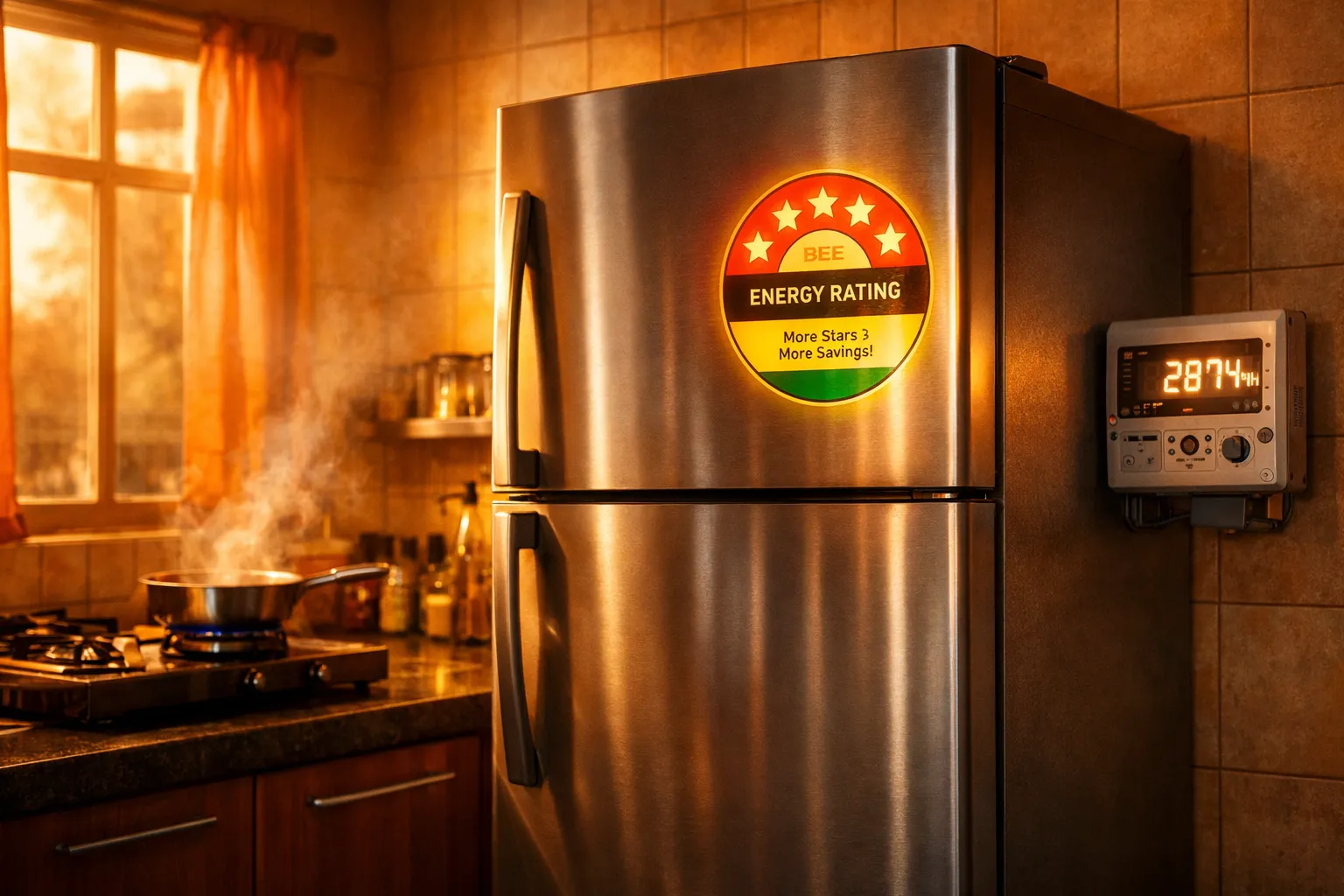
That BEE 5-star sticker was earned in a lab at 25 degrees. Your kitchen is not a lab.
Key Takeaway
BEE star ratings are tested at 25°C ambient and half-load. In a real Indian kitchen at 35–42°C with a stuffed fridge, your 5-star rated 165-unit refrigerator can easily consume 400–500+ units per year.
You bought a 5-star refrigerator. The sticker says 165 units per year. You did the math: 165 × ₹8 = ₹1,320 a year. Excellent.
Then the electricity bill arrives. And it does not add up. Not even close.
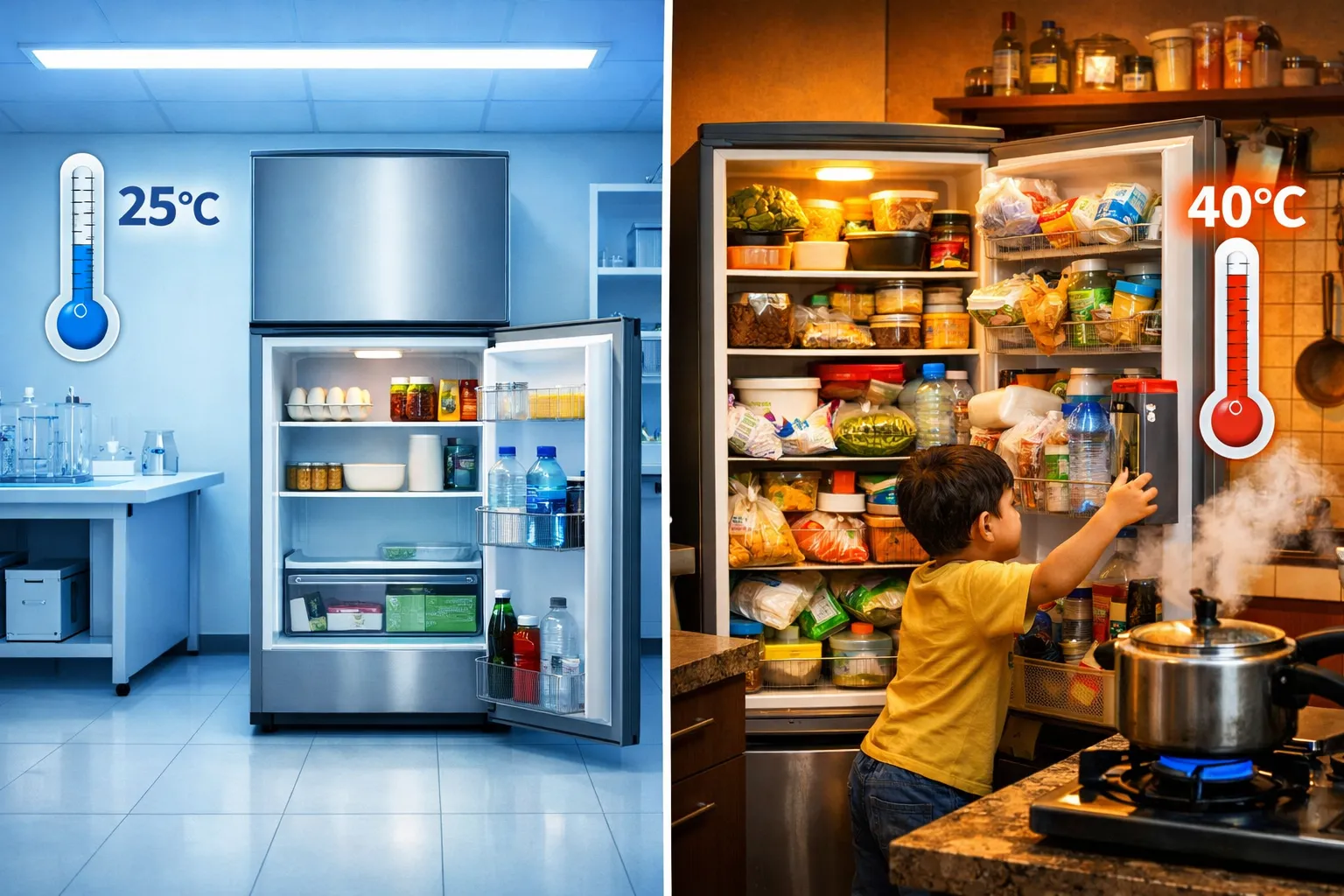
The Bureau of Energy Efficiency tests refrigerators at a controlled 25°C ambient, roughly half capacity, with stable voltage and minimal door openings. Your May kitchen is 38–42°C. The fridge is stuffed. The door opens 20–30 times a day. Voltage swings between 180V and 260V. Every one of these factors multiplies consumption.
BEE Lab Conditions
Your Kitchen Reality
Most Indian households have at least three of these problems. Each one silently inflates your electricity bill.
Fridge against the wall, near a stove, or in direct sunlight. The condenser cannot dissipate heat.
Set to the coldest level and forgotten. Every degree below optimal wastes 5–6% more energy.
Gaskets crack, lose elasticity, and let warm air leak in 24/7. Most people never check this.
Dust, pet hair, and kitchen grease coating the coils. Takes 10 minutes to clean, saves thousands.
No airflow inside. Hot dal going straight in. The compressor runs overtime for every mistake.
For a typical 260-litre double-door 5-star refrigerator rated at 165 units/year, at ₹8/unit.
BEE Lab Rating
0
units/year
₹1,320/year
Typical Indian Home
0
units/year
₹2,800/year
Worst Case
0
units/year
₹4,000/year
Over 10 years, the gap between BEE-rated and real consumption costs you ₹20,000–27,000 in excess electricity.
How To Do It
Take a regular sheet of paper or a ₹10 note
Close the fridge door on it so half is inside, half outside
Try to pull the paper out
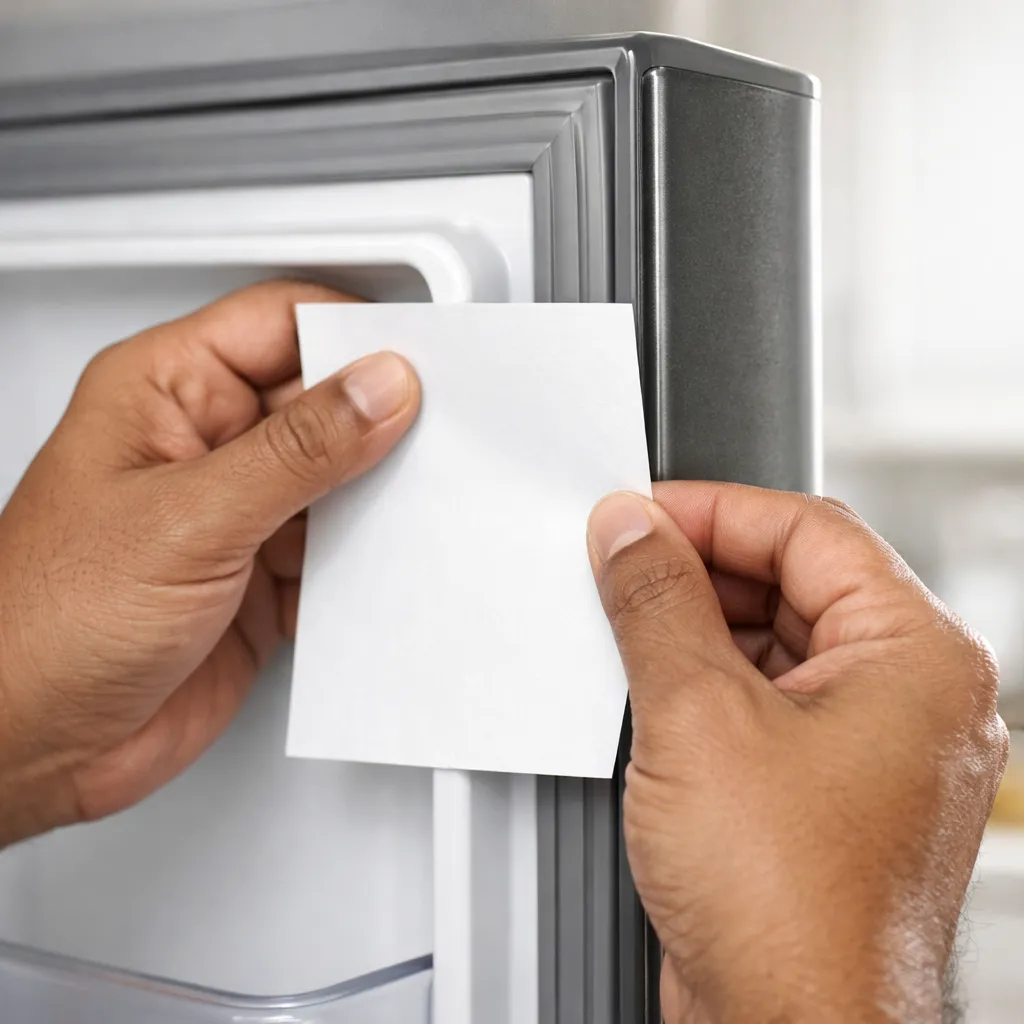
✓ Paper holds firm
Your gasket is fine. Move on to the other checks.
✗ Paper slides out easily
Warm air is leaking in constantly. Clean the gasket with warm soapy water. If it is cracked or stiff, replace it (₹500–1,500). Saves ₹2,000–3,000/year in electricity — the highest-ROI home fix.
You do not need a new fridge. You need to fix the one you have. These five changes take under an hour and save ₹1,000–1,500 per year with zero investment.
Pull the fridge 4–6 inches from the wall
Move it away from the stove, window, or any heat source. This alone can save 20%+ on consumption.
Clean the condenser coils
Back or bottom of the fridge. Vacuum or brush off dust and grease. Takes 10 minutes, do it twice a year.
Do the paper test on the door seal
If the paper slides out, clean the gasket with warm soapy water. If cracked, replace it (₹500–1,500).
Set thermostat to 3–4°C (fridge) and −18°C (freezer)
If it is a dial, level 3 is usually right. Lower settings in winter. Every extra cold degree wastes 5–6% energy.
Stop putting hot food directly in the fridge
Let it cool to room temperature first (20–30 minutes). A hot pot of dal at 60°C triggers a long, expensive cooling cycle.

If your current fridge is a non-inverter model older than 8 years, upgrading to a modern inverter compressor refrigerator can genuinely halve your consumption. Inverter compressors adjust speed based on demand instead of cycling on-off at full power.
But if you already have a relatively modern fridge and it is using more power than expected, the problem is almost certainly placement, maintenance, or habits. Fix those first before spending ₹25,000–40,000 on a new fridge.
Upgrade Checklist
Fridge is 8+ years old — consider upgrading
Non-inverter compressor — inverter saves 30–50%
Already inverter, under 5 years — fix habits first
Monthly bill unexpectedly high — check all 5 drains above
If you are shopping for a new fridge or want to understand the tech behind it, these guides will help.
Refrigerator Buying Guide
Complete guide to types, sizes, and features.
BEE Star Rating for Fridges
How star ratings affect your electricity bill.
Inverter Compressor Explained
How variable speed compressors save energy.
Direct Cool vs Frost Free
Which cooling tech uses less power?
Fridge Maintenance Tips
Keep your fridge running efficiently for years.
Total Cost of Ownership
True cost of an appliance beyond sticker price.
Discover more helpful guides and reviews to make informed decisions
Understand the key differences between Direct Cool and Frost Free refrigerators. Compare cooling technology, defrosting, power consumption, maintenance.
Refrigerator configurations. Compare single door, double door, and side-by-side refrigerators. Capacity, space, features, and family size recommendations.
Find the best 4 door multi door refrigerator India offers in 2026. Compare Samsung, Haier, Electrolux, Whirlpool french door refrigerators from ₹95,990 to ₹1,93,400 for premium family storage. Updated Jan 2026.
Top 5 convertible refrigerators in India (₹34,990-₹41,190). Compare Samsung AI Bespoke, LG Smart Choice, Haier 14-in-1, and Bosch MaxFlex with expert reviews. Updated Jan 2026.
Best frost-free double door refrigerators under Rs.25,000 in India. Compare Samsung, LG, Haier, Whirlpool, Godrej with real specs, pros/cons, and verified prices. Updated Feb 2026.
Find the best hot and cold water dispenser India offers in 2026. Compare Voltas, Blue Star, Rockwell, BonKaso dispensers from ₹7,889 to ₹12,350 with refrigerator for home and office. Updated Feb 2026.
The cheapest electricity is the electricity you do not use.
And most of that saving starts with pulling your fridge six inches from the wall.