
Why Your Desert Cooler Smells Bad (And the 2-Minute Fix Nobody Talks About)
That familiar rotten-egg stink is not “just how coolers are.” It is a bacterial colony thriving in warm, stagnant water — and killing it takes less time than making chai.
Key Takeaway
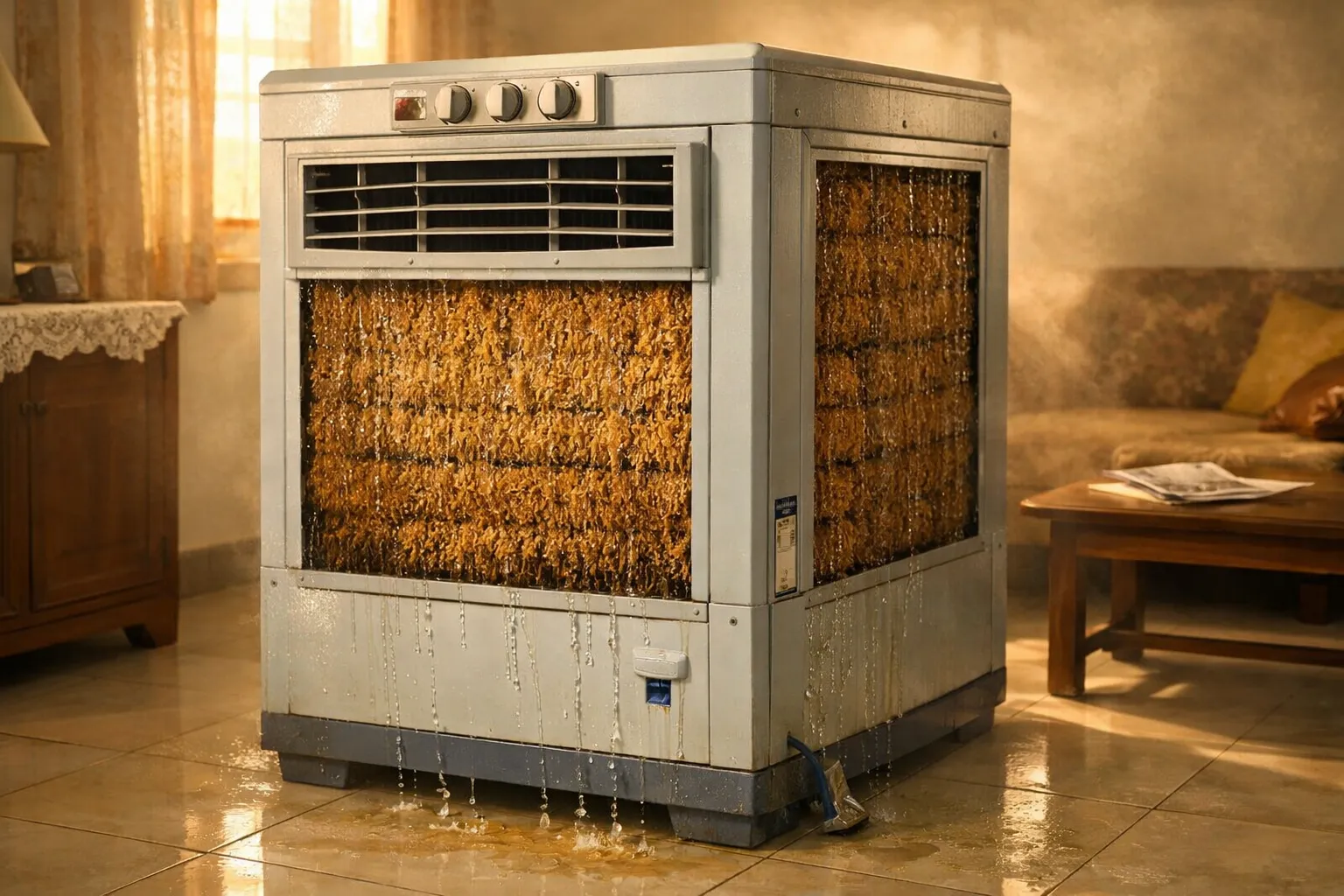
The smell is not from the water or the pads alone — it is from a bacterial biofilm that forms when wet pads stay damp overnight. Run your cooler in fan-only mode for 2 minutes after every use to dry the pads and starve the colony. That single habit eliminates 80% of the stink.
The Tandoor Comes With a Free Stink
April hits. The electricity bill from the AC last year still haunts you. So you drag the desert cooler out of storage, fill the tank, flip the switch — and the room fills with a smell that is somewhere between wet socks and a forgotten tiffin box.
You change the water. Still stinks. You replace the pads. Better for two days, then it is back. You add perfume drops to the water tank because your neighbour’s aunty swore by it. Now the room smells like rotten flowers. Somehow worse.
Here is the thing: 75% of Indian households that use desert coolers experience this smell, and almost everyone treats the symptom instead of the cause. The cause is not dirty water. It is not bad pads. It is a living, growing organism called biofilm — and it loves your cooler more than you do.
What Is Actually Growing Inside Your Cooler
When water sits in your cooler tank at 30–45°C — which is exactly the temperature range inside any cooler tank during Indian summers — bacteria do not just survive. They thrive.
Within 24 hours of stagnant water, bacterial microcolonies begin forming on every wet surface. The cooling pads, the tank walls, the water distribution tray — all of it becomes a breeding ground. These microcolonies link up into a slimy layer called a biofilm. That biofilm is what produces the smell.
The biofilm is not just bacteria. It is a cocktail of bacteria, algae, and fungi all living together in a self-produced slime matrix. This is the same type of growth you see as green slime on the inside of a bucket that has been sitting with water for a week. Except in your cooler, the fan actively blows that smell directly into your room.
And here is the part nobody tells you: simply changing the water does not remove biofilm. The biofilm clings to the pad fibres and tank surfaces. Fresh water flows over it, picks up the smell, and carries it to your face. You need to either physically scrub it off, chemically kill it, or — best of all — prevent it from forming in the first place.
The Biofilm Timeline
Bacteria attach to wet pad surfaces
Microcolonies form, slime production begins
Biofilm matures, smell becomes noticeable
Full biofilm colony — changing water will not help now
Health Note
Stagnant water between 25–45°C is also the danger zone for Legionella bacteria, which can cause severe pneumonia. Domestic desert coolers pose lower risk than industrial cooling towers, but keeping water fresh and pads dry is a good health practice regardless.
The Numbers Behind the Stink
Biofilm Forms In
0
hours of stagnant water
Bacteria Danger Zone
25–45°C
your cooler tank in summer
Fan-Only Dry Time
0
minutes to prevent overnight growth
Wood Wool vs Honeycomb: Which Smells Worse?
Wood Wool (Khas Pads)
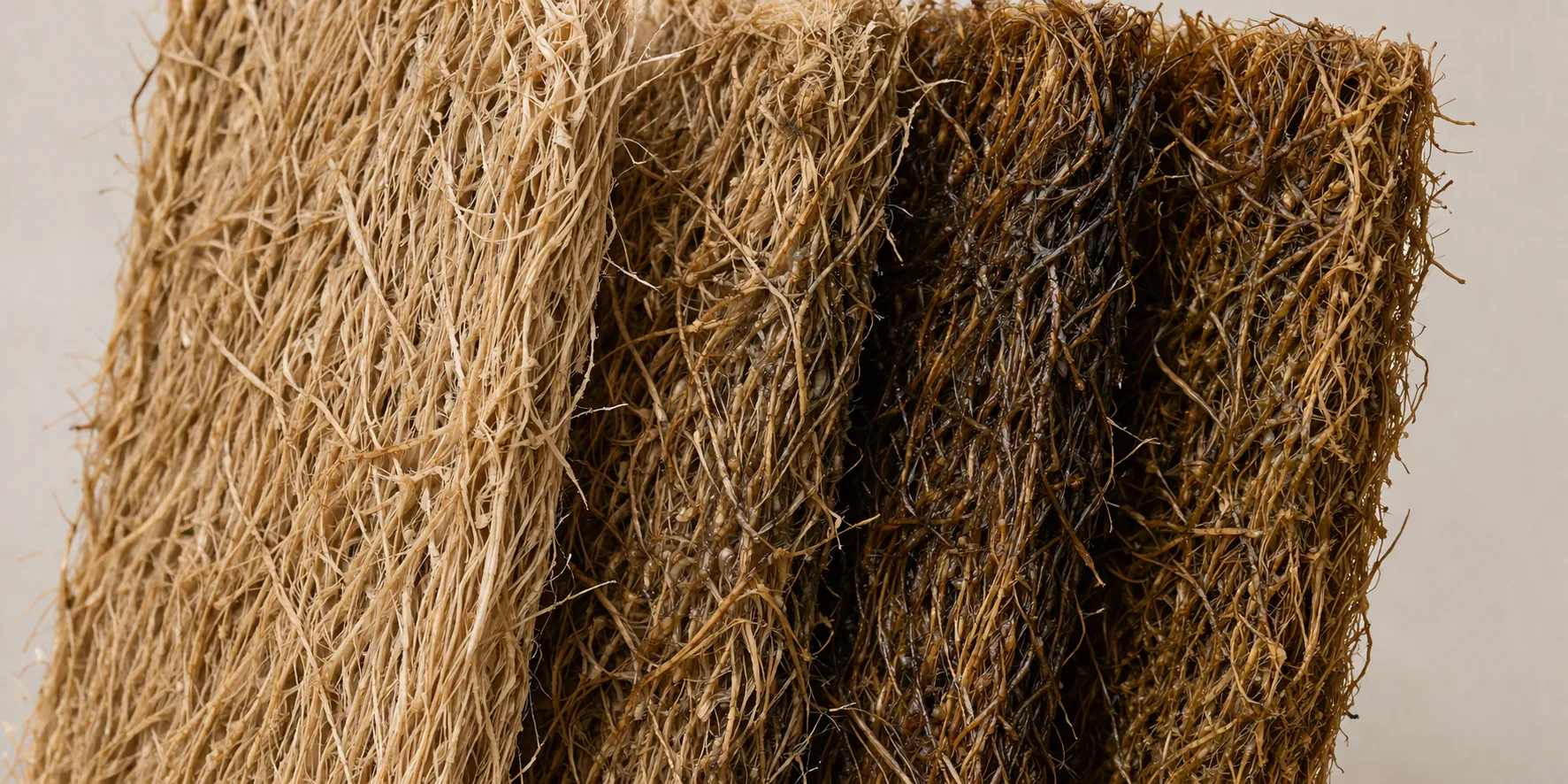
Cost: ₹80–150 per set
Lifespan: 1 season (replace yearly)
Smell tendency: High — natural grass fibres decompose and trap organic matter faster
Cooling: Slightly better evaporation due to irregular surface texture
Main problem: The grass itself rots if quality is poor — the smell comes from the pad and the biofilm
Honeycomb Pads (Cellulose)
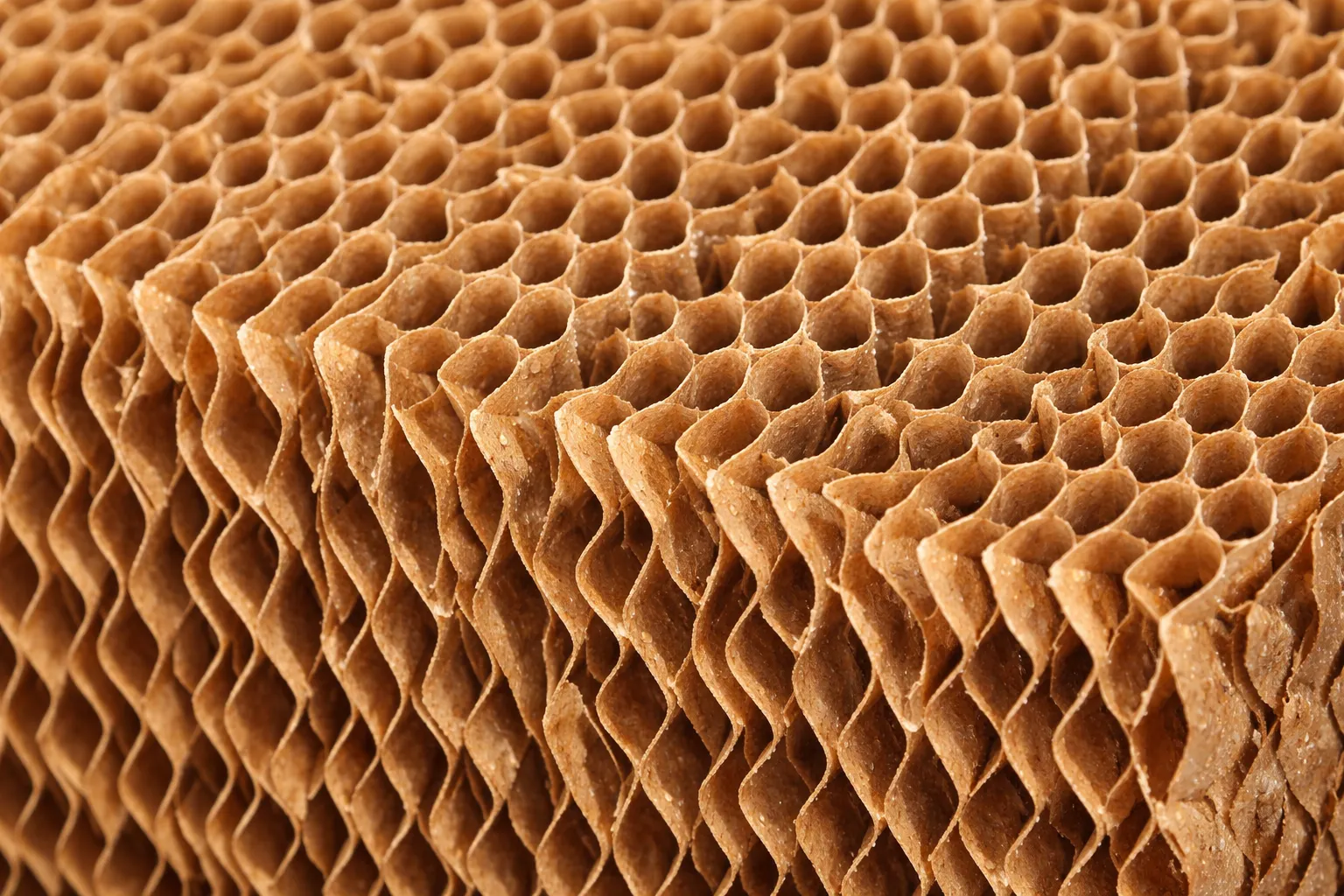
Cost: ₹300–800 per set
Lifespan: 2–3 seasons with proper maintenance
Smell tendency: Medium — denser structure means slower drying, but does not decompose like grass
Cooling: More uniform airflow, better efficiency in most tests
Advantage: Does not rot — the smell is only from biofilm, which is fixable
Bottom line: Both pad types breed bacteria at the same rate if kept wet. Honeycomb pads smell less because the pad material itself does not decompose. But neither stays fresh without the drying habit described below.
The 2-Minute Fix Nobody Talks About
This is the single most effective thing you can do. It costs nothing, takes 2 minutes, and prevents the smell from forming in the first place. Most people skip this because no cooler manual mentions it clearly.
Before you sleep: switch off the water pump, keep the fan running
Every cooler has a separate pump switch. Turn off the pump but leave the fan on for 2 minutes. The dry air passing through the pads pulls moisture out. This is the critical step — dry pads do not grow bacteria overnight.
Drain and refill the tank every 2–3 days
Not weekly — every 2–3 days. In peak summer, water at 35–40°C forms biofilm within 48 hours. Draining flushes out loose bacteria before the colony establishes. Takes 5 minutes if you use the drain plug.
Weekly vinegar soak: 50:50 vinegar and water for 15 minutes
Fill the tank with a 50:50 mix of white vinegar and water. Run the pump for 15 minutes so the acidic water soaks through the pads. Vinegar kills biofilm and dissolves mineral deposits from hard water. Drain completely after. Cost: ₹30 per session.
Add 10–15 drops of tea tree oil to fresh water
Tea tree oil has documented antimicrobial and antifungal properties. It actively inhibits bacterial growth in the water between drain cycles. Add it every time you refill. A ₹200 bottle lasts the entire summer. Bonus: it smells clean, not perfumy.
Before the season: deep clean with a scrub brush
Before first use in April, scrub the tank walls and water tray with a brush and baking soda paste. Replace wood wool pads if they are from last year. Honeycomb pads can be soaked in vinegar solution and reused if they are not crumbling.
Desi Hacks That Actually Work (And One That Does Not)
Camphor Tablets
Drop 2–3 camphor tablets in the tank. Camphor has documented antibacterial properties and repels mosquitoes that breed in stagnant cooler water. Replace every 3–4 days. Cost: ₹10 per session.
Works — kills bacteria + repels mosquitoes
Neem Leaves
A handful of fresh neem leaves in the tank water. Neem has natural antifungal and antibacterial compounds (azadirachtin). Your dadi was right about this one. Replace every 2–3 days as they decompose.
Works — natural antimicrobial
Lemon + Salt
Squeeze 2 lemons and add a tablespoon of salt to the water. The citric acid lowers pH and inhibits bacterial growth. Salt adds mild antimicrobial action. Cheap and effective for 2–3 days per dose.
Works — acidic environment slows growth
White Vinegar
Add 1 cup of white vinegar per 10 litres of water. Acetic acid kills most bacteria and dissolves the calcium deposits from hard water that give biofilm something to cling to. The vinegar smell dissipates within minutes.
Works — best all-round solution
Ice in the Tank
People add ice to cool the air further. This does lower water temperature below the bacterial danger zone temporarily, but the effect lasts only 30–45 minutes before the ice melts and the water warms back up.
Partially works — temporary cooling only
Perfume or Itra Drops
Adding perfume, itra, or room freshener to the tank is the most common “hack” — and the worst. It masks the smell without killing anything. The bacteria keep growing. Now you have rotten-perfume smell instead of just rotten smell.
Does not work — masking is not solving
When to Just Replace the Pads
If the smell persists after a vinegar soak and a full 24-hour dry-out, the pads are done. Wood wool pads older than one season should be replaced every April — they cost ₹80–150 and take 10 minutes to swap. Honeycomb pads that are crumbling, visibly stained dark brown/green, or have a sour smell even when dry should be replaced — budget ₹300–800 depending on cooler size.
Also check the water distribution tray at the top of the cooler. If it has a thick layer of mineral crust or slime, scrub it with baking soda paste. A clogged tray means uneven water distribution, which means some pads stay dry (no cooling) and others stay soaked (more smell).
Explore More on Air Coolers
Whether you are fixing your current cooler or shopping for a new one, these guides will help.
Air Cooler Buying Guide
How to pick the right type and size for your room.
Air Cooler Not Cooling?
Troubleshooting guide for cooling and smell issues.
Air Coolers and Climate
Why coolers work in Rajasthan but not in Mumbai.
Best Air Coolers Under ₹10,000
Top picks with honeycomb pads and good tank capacity.
Best Air Coolers Under ₹7,000
Budget and mid-range coolers that get the job done.
Portable Cooler Technology
How modern coolers work and what tech matters.
Tonight, switch off the pump. Leave the fan on for 2 minutes.
That is it. That is the whole fix. Your cooler will smell like air tomorrow — not like a biology experiment.