
PRODUCT REVIEW
Best 3D Printer in India 2026
Find the best 3d printer under 30000 in India 2026. Research-based reviews with detailed comparisons, prices, pros & cons to help you pick the right one.
 By Naveen Bhavnani
Updated
By Naveen Bhavnani
Updated
As an Amazon Associate we earn from qualifying purchases. We could also earn a fee through some links when you click on them.

3D printer picks by skill level
Already covered the winner above — here are the picks for specific needs.


Creality Ender 3 V2 Neo

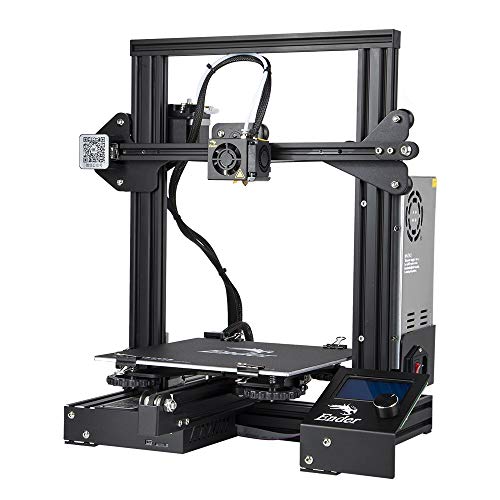
Creality Ender 3 Base Model
3D printers compared on features
How the shortlist stacks up. Scroll sideways on mobile.
| Product | Key Feature | Price | Deal |
|---|---|---|---|
| Creality Ender 3 V3 SE | Auto-Leveling + Direct Drive | ₹18,399 | Check Price |
| Anycubic Kobra 2 Neo | LeviQ 2.0 Auto-Leveling | ₹15,499 | Check Price |
| WOL3D Ender 3 (2026) | Silent Motherboard V4.2.2 | ₹14,999 | Check Price |
| Creality Ender 3 V2 Neo | Full-Metal Extruder + LCD | ₹24,998 | Check Price |
| Creality Ender 3 Pro | Magnetic Build Surface | ₹18,499 | Check Price |
| Creality Ender 3 Base | Most Affordable Entry | ₹15,699 | Check Price |
| Creality CR-10 DIY Kit | 300×300×400mm Volume | ₹29,999 | Check Price |


3D printer reviews: leveling, speed and build size
Specs, the honest pros and cons, and who each one is for.
Creality Ender 3 V3 SE
- Build Volume
- 220×220×250mm
- Print Speed
- Up to 250mm/s
- Extruder
- Direct Drive Sprite
- Auto-Leveling
- CR Touch Sensor
- Nozzle Temp
- Max 260°C
- Bed Temp
- Max 100°C
The Ender 3 V3 SE represents Creality's best budget offering with professional features at a hobbyist price. Its CR Touch auto-leveling system eliminates the frustration of manual bed calibration that plagues budget printers. The Sprite direct drive extruder handles flexible TPU filaments with ease - something competing Bowden systems struggle with. Print speeds of 250mm/s reduce an 8-hour print to under 3 hours without sacrificing quality, thanks to intelligent input shaping that compensates for vibrations. Perfect for students, hobbyists, and small businesses wanting reliability without complexity.
- + Automatic bed leveling saves hours of manual calibration
- + direct drive extruder handles flexible filaments easily
- + excellent print quality out of box
- + fast 250mm/s speeds reduce print time by 73%
- + beginner-friendly setup within 30 minutes
- - Smaller build volume than competitors
- - occasional firmware updates needed
- - touchscreen could be larger
- - no WiFi connectivity in base model
Anycubic Kobra 2 Neo
- Build Volume
- 220×220×250mm
- Print Speed
- Up to 250mm/s
- Extruder
- Integrated System
- Auto-Leveling
- LeviQ 2.0
- Noise Level
- Below 50dB
- Leveling Time
- Under 2 minutes
Anycubic delivers premium auto-leveling at a mid-range price with their proprietary LeviQ 2.0 system. Unlike competitors using basic 4-point leveling, LeviQ performs 25-point bed mapping with smart Z-offset compensation ensuring perfect first layers even on slightly warped beds. The integrated extruder design reduces filament path by 40%, minimizing clogging issues and improving retraction performance for cleaner overhangs. Ultra-quiet operation below 50dB makes it apartment-friendly - you can print overnight without disturbing neighbors. The 250mm/s speed matches pricier models while maintaining excellent dimensional accuracy of ±0.1mm.
- + Exceptional value for money
- + intelligent auto-leveling works flawlessly
- + integrated extruder reduces maintenance
- + ultra-quiet operation below 50dB
- + ideal for beginners with easy assembly
- - Limited to PLA and TPU filaments initially
- - smaller community support than Creality
- - upgrade options more limited
- - basic LCD screen interface
WOL3D Creality Ender 3 (2025 Model)
- Motherboard
- Silent V4.2.2
- Build Volume
- 220×220×250mm
- Power Supply
- Mean Well Certified
- Print Resume
- Yes (Power Failure)
- Heated Bed
- Up to 100°C
- Includes
- Black PLA Filament
This 2026 refresh of the classic Ender 3 brings silent operation through upgraded V4.2.2 motherboard with TMC2208 stepper drivers, reducing noise from 65dB to under 48dB - quieter than a modern refrigerator. The Mean Well power supply ensures safety and reliability critical for Indian homes with voltage fluctuations. WOL3D includes original Creality black PLA filament worth ₹600 enabling immediate printing. The resume print function saves multi-hour prints during power cuts common in tier-2/3 cities. While lacking auto-leveling, the proven design has 10+ million users worldwide providing unlimited troubleshooting resources and upgrade guides.
- + Most affordable Creality option
- + silent operation ideal for home use
- + proven reliable design with massive community support
- + excellent upgrade path available
- + comes with starter filament
- - Manual bed leveling required
- - slower print speeds than V3 models
- - basic feature set
- - no direct drive extruder
- - assembly takes 2-3 hours
Creality Ender 3 V2 Neo
- Auto-Leveling
- CR Touch Included
- Extruder
- Full-Metal Design
- Build Surface
- Carborundum Glass
- LCD Screen
- 4.3" Color Display
- Z-Axis
- Dual Lead Screws
- Max Temp
- 260°C Nozzle
The V2 Neo strikes the perfect middle ground between affordability and features. Its full-metal extruder handles ABS, PETG, and even nylon at temperatures up to 260°C - a capability budget plastic extruders lack. The carborundum glass bed provides exceptional adhesion without needing glue sticks or hairspray, while prints pop off effortlessly when cooled. Dual Z-axis lead screws with belt tensioners eliminate the Z-wobble that creates layer inconsistencies in single-screw designs. The 4.3" color LCD upgrade from the original's tiny screen makes navigation intuitive. At ₹24,998, it delivers 80% of premium printer features at 40% of the cost.
- + Perfect balance of features and price
- + auto-leveling eliminates frustration
- + carborundum bed provides excellent adhesion
- + full-metal extruder handles high-temp filaments
- + great community support
- - Still uses Bowden extruder design
- - WiFi requires addon module
- - slightly noisy compared to newer models
- - limited to 220mm build volume
Creality Ender 3 Pro
- Build Surface
- Magnetic Plate
- Power Supply
- Mean Well UL
- Y-Axis
- Industrial Grade
- Build Volume
- 220×220×250mm
- Resume Print
- Yes
- Certification
- UL/CE/FCC
The Pro model addresses the two biggest pain points of the base Ender 3: bed adhesion and power reliability. Its magnetic flexible build plate makes print removal effortless - just flex the plate and prints pop off without scraping. The UL-certified Mean Well power supply is crucial for Indian homes with voltage spikes, preventing board damage that plagues cheaper PSUs. Upgraded industrial Y-axis profile reduces wobble by 40% improving surface finish quality. While lacking auto-leveling, it's the most reliable workhorse in the Ender lineup - ideal for batch printing where downtime costs money. Many Indian printing services use dozens of Ender 3 Pros proving its commercial-grade durability.
- + Proven workhorse design
- + magnetic bed makes print removal effortless
- + industrial-grade components ensure longevity
- + worldwide replacement parts availability
- + excellent for learning 3D printing mechanics
- - No auto bed leveling
- - manual calibration required every few prints
- - slower speeds
- - basic feature set
- - requires patience for first-time users
Creality Ender 3 Base Model
- Type
- DIY Assembly Kit
- Build Volume
- 220×220×250mm
- Frame
- V-Slot Design
- Bed
- Heated 220×220mm
- Leveling
- Manual (4-Point)
- Resume Print
- Basic Function
The original Ender 3 represents the most successful 3D printer design ever with over 10 million units sold worldwide. At ₹15,699, it's the cheapest entry into Creality's ecosystem with unlimited upgrade potential. The hands-on assembly teaches fundamental printer mechanics - understanding belt tension, stepper motor alignment, and hotend assembly proves invaluable for troubleshooting. The massive global community provides 10,000+ free mod designs on Thingiverse including direct drive conversions (₹2,500), auto-leveling kits (₹2,500), and silent board upgrades (₹3,000). While basic out-of-box, it's a blank canvas for learning and customization that can evolve into a ₹50,000-class printer over time.
- + Most budget-friendly entry into 3D printing
- + massive online community and tutorials
- + unlimited upgrade potential
- + teaches fundamental printer mechanics
- + widely available spare parts
- - Most time-consuming assembly
- - requires manual bed leveling
- - basic features only
- - no auto-resume from power failure
- - steep learning curve for absolute beginners
Creality CR-10 DIY Kit
- Build Volume
- 300×300×400mm
- Frame
- Aluminum Extrusion
- Z-Axis
- Dual Lead Screws
- Bed Surface
- Tempered Glass
- Filament Sensor
- Run-Out Detection
- Resume Print
- Yes
The CR-10 pioneered large-format printing at hobbyist prices - its 300×300×400mm volume is 2.5× larger than standard Ender 3 enabling single-piece prints of helmets, vases up to 40cm tall, and architectural models. The rigid aluminum frame reduces vibrations critical for maintaining dimensional accuracy across 12+ hour prints. Dual Z-axis lead screws with separate motors ensure synchronization preventing layer shifting common in tall prints. The filament run-out sensor pauses prints when spool empties, allowing filament change without ruining the project. At ₹29,999, it's the most affordable way to access 300mm+ build volume that typically costs ₹60,000+.
- + Massive build volume perfect for large projects
- + stable aluminum frame reduces vibrations
- + dual Z-axis ensures print accuracy
- + great for prototyping and functional parts
- + proven reliability
- - Larger footprint requires dedicated space
- - manual bed leveling on large surface challenging
- - higher filament consumption
- - longer print times
- - assembly complexity moderate
Which 3D printer to buy
Here is who each pick is for, based on the comparison above.
Creality Ender 3 V3 SE · ₹18,399
Auto-leveling, direct drive, 250mm/s speed
Check Price on Amazon →Anycubic Kobra 2 Neo · ₹15,499
Auto-leveling at unbeatable price point
Check Price on Amazon →Creality Ender 3 V2 Neo · ₹24,998
Auto-leveling, glass bed, great community
Check Price on Amazon →Creality Ender 3 Base Model · ₹15,699
Unlimited upgrade potential, huge community
Check Price on Amazon →How to choose a 3D printer
-
FDM vs Resin 3D Printing
FDM (Fused Deposition Modeling) printers under ₹30,000 use plastic filament spools and are ideal for functional parts, prototypes, and larger prints. They are beginner-friendly, low-maintenance, and filament costs ₹500-1000 per kg. Resin printers offer higher detail but require ventilation, post-processing with IPA, and cost ₹3000+ per liter of resin. For this budget, FDM printers provide better value, larger build volumes, and easier material handling - perfect for hobbyists, students, and makers. -
Auto Bed Leveling vs Manual
Auto bed leveling (ABL) uses sensors like CR Touch or LeviQ to automatically calibrate the print bed before each print, saving 15-30 minutes per session. Manual leveling requires adjusting corner screws with paper method every 5-10 prints. ABL models cost ₹3,000-5,000 more but eliminate 90% of failed prints from poor bed adhesion. For beginners, ABL is strongly recommended - models like Ender 3 V3 SE or Kobra 2 Neo justify the extra cost with hassle-free printing. -
Build Volume Considerations
Standard 220×220×250mm build volume handles 95% of hobbyist projects including miniatures (up to 200mm tall), phone cases, decorative items, and functional prototypes. Larger 300×300×400mm printers like CR-10 suit architectural models, cosplay armor pieces, or multi-part assemblies but consume 40% more filament and take longer to heat. First-time buyers should start with standard volume - you can always print large objects in parts and assemble later. -
Direct Drive vs Bowden Extruder
Direct drive extruders mount the motor directly on the hotend, providing precise control for flexible filaments (TPU, TPE) and faster retraction reducing stringing. Bowden systems use a tube to push filament from a remote motor - lighter print head allows faster speeds but struggles with flexible materials. Budget: Bowden (₹15K-20K). Mid-range: Direct drive (₹20K-25K). For PLA-only printing, Bowden suffices. For material versatility, invest in direct drive models like Ender 3 V3 SE. -
Print Speed and Quality Trade-offs
Modern budget printers achieve 150-250mm/s speeds vs older 50mm/s models, reducing 8-hour prints to 3 hours. However, maximum quality requires 30-60mm/s speeds. Layer height matters more: 0.1mm ultra-detailed (slow), 0.2mm balanced (standard), 0.3mm draft (fast). For general use, prioritize reliable 150mm/s over claimed 250mm/s - actual speed depends on model complexity, material, and acceleration settings. All printers in this budget handle 0.1-0.3mm layers. -
Essential Features for Beginners
Must-haves: Heated bed (prevents PLA warping), resume print function (saves multi-hour prints from power cuts common in India), filament run-out sensor, and touch screen interface. Nice-to-haves: WiFi printing, webcam support, dual Z-axis (reduces wobble), silent stepper drivers (below 50dB). Budget allocations: ₹15-18K basic features, ₹20-24K auto-leveling + direct drive, ₹25-30K premium features + larger volume. Start with mid-range ₹20-24K for best learning experience. -
Maintenance and Running Costs
Monthly costs: PLA filament ₹500-1000/kg (prints 50-100 small objects), electricity ₹150-300 (assuming 100 hours printing), nozzle replacement ₹100-300 every 6 months, PTFE tube ₹200 yearly. Total: ₹800-1500/month active use. One-time upgrades: spare nozzles ₹500, extra build plates ₹600, BL Touch kit ₹2500 (if not included), upgraded hotend ₹3000. Budget printers have lower replacement costs but need more frequent maintenance vs premium models.
Frequently asked questions
What is the best 3d printers under 30000 in India?
Which 3D printer is best for absolute beginners under ₹25,000?
Is auto bed leveling really necessary or just a luxury feature?
Can I print phone cases and flexible parts with these printers?
What are the monthly running costs for 3D printing in India?
Should I buy Creality or Anycubic for long-term reliability?
Do I need an enclosure for 3D printing in India?
Can I run a small printing business with a ₹25,000 printer?
You may also like
More guides and reviews to help you decide.
Find the best ink tank printer under 20000 in India 2026. Compare HP, Epson, Canon with research-based reviews, prices, pros & cons.
Read more →Find the best laser printer under 30000 in India 2026. Compare HP & more with research-based reviews, prices & pros and cons.
Read more →