Our top picks across every budget and playing style - beginner frames, attacking and defensive specialists, all-rounders and tour-level flagships. Compare prices, then dive into the full ranking.
Under ₹2K to premium Attack & defence All-round frames Updated 10 Aug 2026
As an Amazon Associate we earn from qualifying purchases. We could also earn a fee through some links when you click on them.
The Quick Answer
BEST OVERALL
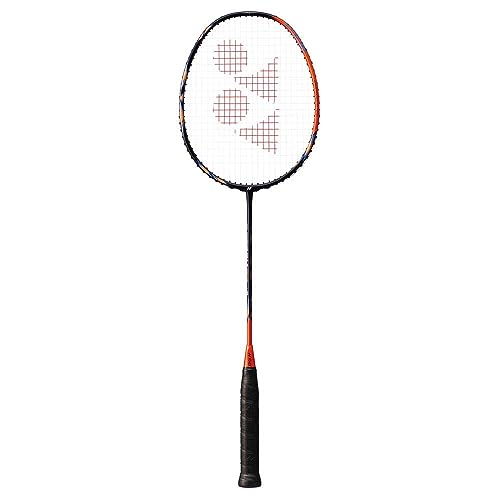
For most players, the Yonex Astrox 99 Play is the best badminton racket in India right now - genuine head-heavy Astrox smashing power in an accessible 4U frame at around ₹3,619.
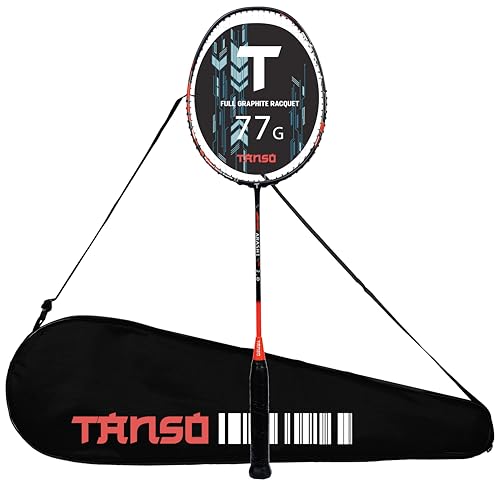
Just starting out? The TANSO Arashi 2.0 (₹1,299) is a full-graphite beginner frame that embarrasses rackets twice its price. Prefer control over power? The even-balance Yonex ArcSaber 11 Play (₹3,299) is the all-round pick. And tournament-level attackers should look at the Yonex Astrox 99 Tour (₹10,499).
Yonex's Namd shaft and a stiff head-heavy frame deliver the biggest, steepest smashes in the segment - for advanced attackers with the technique to use them.
Find your level and style in the first column - it tells you the right
racket category before you ever compare models, then points you to our
pick and the full ranking for that category.
The style decision matters more than any spec - it sets the balance, stiffness and feel that either amplify or fight your natural game. Here's who each one suits, then open the full ranking for your pick.
Four decisions separate a racket that improves your game from one that fights it. Get the style match and budget right first - the spec sheet matters far less than the fit.
● Match your playing style
Be honest about how you win points. Finish rallies with smashes → attacking frame. Win with speed, blocks and placement → defensive frame. Do a bit of everything → all-round frame. Our style-specific reviews go deep on balance points and stiffness for each - pick the style first, then the racket within it.
● The budget ladder
Under ₹2,000 buys a genuine full-graphite beginner frame; ₹3,000-5,000 is the sweet spot where real Yonex and Li-Ning play-tier tech appears; ₹8,000-10,000+ is tour-level gear that rewards developed technique. Skill moves you up the ladder faster than money does - buy the rung you can use.
● Weight & balance basics
Racket weight runs on the U scale (3U ≈ 85-89g, 4U ≈ 80-84g) and balance from head-heavy to head-light - together they set how the racket swings. Most improving players do best around 4U with a balance matching their style. Each spoke review breaks down the exact weight and balance of every pick.
● Strings & grip
The factory string on most rackets is serviceable at best - a ₹300-600 restring at the right tension often improves feel more than a costlier frame. Replace the grip as soon as it glazes over; a fresh ₹100-200 overgrip restores control instantly. Budget for both when you plan a racket purchase.
Frequently Asked Questions
How do I choose a racket for my playing style - attack, defense or all-round?
Start from how you actually win points, not how you would like to play. If your instinct is to end rallies with steep smashes from the rear court, you want an attacking-class frame built to add mass behind the shuttle. If you win with reflex blocks, drives and net play - typical of doubles specialists - a defensive-class frame that moves fastest in hand suits you better. If you genuinely do a bit of everything, or have not settled into a style yet, an all-round frame keeps every option open. Our style-specific reviews then match exact rackets to each profile.
How much should a beginner spend on a first racket?
Between ₹1,000 and ₹2,000 is the honest answer. That now buys a full-graphite frame - like our ₹1,299 top pick in the under-₹2,000 ranking - which is all a developing player can exploit. Spending ₹8,000 on a stiff tour racket as a beginner actively hurts: pro frames demand precise technique and fast swing speeds to bend the shaft, and feel harsh and unforgiving without them. Save the difference for coaching and shuttles, and upgrade once your strokes are consistent.
When should I upgrade my racket, and what actually improves?
Upgrade when your game outgrows the frame, not on a calendar: telltale signs are smashes that feel capped despite good technique, a racket that feels sluggish as your swing speeds up, or clears that go long because the frame is too flexible for your stroke. Moving up a tier genuinely improves shaft responsiveness, sweet-spot feedback and stability on off-centre hits. What it does not do is fix technique - a mid-tier racket with a proper restring beats a flagship with factory strings for most club players.
Does the racket or the string matter more for performance?
For most players below advanced level, the string setup matters more than the frame. A ₹3,000 racket restrung with a quality string at the right tension will outplay a ₹10,000 racket on tired factory strings - tension and string type control repulsion, feel and control more directly than frame tech does. The frame sets the ceiling; the strings decide how close you get to it. Budget a ₹300-600 restring every few months of regular play before budgeting a frame upgrade.
How do I know a racket is genuine? (the fake Yonex problem in India)
Counterfeit Yonex and Li-Ning rackets are widespread in India, especially at prices that look too good. Checks that work: buy only from authorised sellers or trusted large retailers, verify the hologram sticker and serial number on the cone (Yonex India lets you validate codes), inspect print quality and paint finish (fakes have blurry decals and rough joints), and weigh it - fakes are often 5-15g off spec. The strongest signal is price: a "₹4,000 Astrox 99 Tour" is fake with near certainty. If a deal materially undercuts every authorised seller, walk away.
How long does a badminton racket last?
A quality graphite racket lasts 2-5 years of regular club play if it avoids clashes and floor hits - the graphite does not really wear out, but it fails suddenly from impacts, mis-hits near the frame, or over-tensioning beyond the rated limit. Strings are the real consumable: expect to restring every 2-4 months with regular play, or immediately after a break. Grips glaze over in weeks to months. Store the racket in a padded cover away from car-boot heat, and never string above the printed tension range - that is what cracks frames.
Go Deeper: Racket Reviews by Budget
Each budget review tests and ranks the full field at that price - with in-depth verdicts and buying advice.