PRODUCT REVIEW
Best Power Bank Under 1000 in India 2026
Find the best power bank under 1000 in India 2026. Compare Boat & more with research-based reviews, prices & pros and cons.
 By Naveen Bhavnani
Updated
By Naveen Bhavnani
Updated
As an Amazon Associate we earn from qualifying purchases. We could also earn a fee through some links when you click on them.

Power bank picks under ₹1,000
Already covered the winner above — here are the picks for specific needs.

boAt Energyshroom PB300 10000mAh 22.5W Power Bank

FLiX MagConnect Elite 10000mAh Magnetic Wireless Power Bank

ZEBRONICS MB10000S4 Power Bank 10000mAh with LED Display
Power banks scored and compared
How the shortlist stacks up. Scroll sideways on mobile.
| WWCD Score | Product | Capacity | Output | Score | Price | Deal |
|---|---|---|---|---|---|---|
| 9.5/10 | ZEBRONICS MB10000S15 | 10000mAh | 22.5W | 95/100 | u20B9699 | Check Price |
| 9.2/10 | boAt Energyshroom PB300 | 10000mAh | 22.5W | 92/100 | u20B9939 | Check Price |
| 9.1/10 | FLiX MagConnect Elite | 10000mAh | 15W Wireless | 91/100 | u20B9599 | Check Price |
| 9.0/10 | URBN 20000mAh | 20000mAh | 22.5W | 90/100 | u20B9949 | Check Price |
| 8.9/10 | ZEBRONICS MB10000S4 | 10000mAh | 12W | 89/100 | u20B9499 | Check Price |
| 8.8/10 | Portronics Luxcell B 10K | 10000mAh | 22.5W | 88/100 | u20B9679 | Check Price |
| 8.7/10 | ZEBRONICS MB10000S6 | 10000mAh | 12W (5 Cables) | 87/100 | u20B9649 | Check Price |
| 8.5/10 | DR VAKU CYREX | 10000mAh | 12W | 85/100 | u20B9499 | Check Price |


Power bank reviews under ₹1,000: real capacity and watts
Specs, the honest pros and cons, and who each one is for.
ZEBRONICS MB10000S15 Power Bank 10000mAh 22.5W
- Capacity
- 10000mAh
- Output
- 22.5W Fast
- Ports
- Dual USB-A + Type-C
- Display
- LED Percentage
- Weight
- ~220g
- Made In
- India (BIS)
The ZEBRONICS MB10000S15 delivers the perfect combination of fast 22.5W charging and LED percentage display at an unbeatable ₹699 price point. With genuine PD 3.0 support, it charges both iPhones and Android flagships at maximum speed. The matte finish feels premium, Made in India ensures quality control, and ZEBRONICS' established service network provides peace of mind. Whether you're topping up during commute or powering through a full day, this power bank delivers consistently.
- + Best fast charging at ₹699 price point
- + genuine 22.5W PD 3.0 support
- + LED percentage display rare at this price
- + Made in India quality
- + matte finish premium feel
- + charges iPhone and Android equally fast
- + reliable ZEBRONICS brand
- - No built-in cables
- - slightly heavier than plastic alternatives
- - requires compatible 18W+ charger for fast input
- - LED display could be brighter in sunlight
boAt Energyshroom PB300 10000mAh 22.5W Power Bank
- Capacity
- 10000mAh
- Output
- 22.5W Fast
- Build
- Aluminum Alloy
- Protection
- 12-Layer IC
- Thickness
- 16mm Slim
- Weight
- 255g
The boAt Energyshroom PB300 brings premium aluminum build quality to the budget segment with its sleek carbon black finish. The 12-layer Smart IC Protection is the most comprehensive in this price range, protecting against overcharging, over-discharging, short circuits, and temperature extremes. Pass-through charging lets you charge devices while the power bank itself is charging. Despite the slim 16mm profile, it feels solid and premium - perfect for those who want both style and substance.
- + Premium aluminum build quality feels expensive
- + 12-layer protection most comprehensive in segment
- + stylish boAt design with brand value
- + pass-through charging convenient
- + slim 16mm profile fits pockets
- + fast charging works excellently
- + good for travel
- - Higher price near budget limit at ₹939
- - heavier at 255g due to metal body
- - some early failure reports
- - customer service can be slow
- - no percentage display only LED dots
FLiX MagConnect Elite 10000mAh Magnetic Wireless Power Bank
- Capacity
- 10000mAh
- Wireless
- 15W Magnetic
- Wired
- 22.5W QC PD
- Display
- LED Percentage
- Compatibility
- iPhone 12+
- Technology
- PPS Support
The FLiX MagConnect Elite revolutionizes portable charging with 15W magnetic wireless charging that snaps perfectly onto iPhone 12 and newer models. Simply attach your iPhone and charging begins - no cables, no fumbling. The LED percentage display shows exact battery level. When you need maximum speed, switch to wired 22.5W charging via Type-C. PPS (Programmable Power Supply) technology optimizes charging voltage for each device. At ₹599, it's the most innovative power bank in the budget segment.
- + Unique 15W magnetic wireless charging feature
- + perfect for iPhone users without cables
- + LED percentage display very useful
- + 22.5W wired charging as backup
- + excellent value at ₹599
- + magnetic alignment works perfectly
- + charges while on-the-go
- - Wireless charging only works with iPhone 12+
- - wireless mode slower than wired
- - heats up during wireless charging
- - magnetic strength could be stronger
- - not ideal for non-iPhone users
URBN 20000mAh 22.5W Super Fast Charging Power Bank
- Capacity
- 20000mAh
- Output
- 22.5W PD/PPS
- Ports
- 2x USB-A + Type-C
- Protection
- 12-Layer
- Warranty
- 6 months
- Weight
- ~380g
The URBN 20000mAh power bank packs double the capacity of standard models, charging an iPhone 16 up to 4.2 times or Samsung S24 3.7 times. The triple output ports let you charge phone, tablet, and earbuds simultaneously - perfect for families or heavy users. Despite the massive capacity, it's still airline-safe (74Wh) and fits in most bags. The 22.5W fast charging with PPS technology intelligently adjusts voltage for optimal charging safety. At ₹949, it offers incredible value for multi-day power needs.
- + Double capacity charges iPhone 16 up to 4.2 times
- + excellent for multi-day trips
- + 22.5W fast charging
- + triple output charges 3 devices simultaneously
- + great for families
- + 12-layer protection ensures safety
- + 6-month warranty reassuring
- - Significantly heavier and bulkier due to 20000mAh
- - just under budget at ₹949
- - takes longer to recharge itself (4-5 hours)
- - may exceed some airline limits if heavily used
ZEBRONICS MB10000S4 Power Bank 10000mAh with LED Display
- Capacity
- 10000mAh
- Output
- 12W Dual USB
- Display
- LED Percentage
- Input
- Type-C + Micro-USB
- Cable
- Type-C Included
- Made In
- India (BIS)
At just ₹499, the ZEBRONICS MB10000S4 proves you don't need to spend big for essential features. The LED percentage display is virtually unheard of at this price - most budget models only have basic LED dots. The textured finish provides excellent grip, dual USB outputs let you charge two devices, and the included Type-C cable saves you ₹100-200. Made in India with BIS certification ensures safety standards. While it's not fast charging, the reliable 12W output is perfect for overnight charging or topping up during work hours.
- + Unbeatable value at ₹499
- + LED percentage display uncommon at this price
- + dual input flexibility
- + includes Type-C cable saves money
- + textured finish good grip
- + Made in India quality
- + reliable ZEBRONICS brand
- - Only 12W output not fast charging
- - slower charging compared to 22.5W models
- - basic design
- - no Type-C output only input
- - LED display small size
Portronics Luxcell B 10K 10000mAh 22.5W Power Bank
- Capacity
- 10000mAh
- Output
- 22.5W Fast
- Design
- Ultra Slim
- Ports
- Type-C PD + Dual USB-A
- Feature
- Wake-Up Button
- Color
- Green
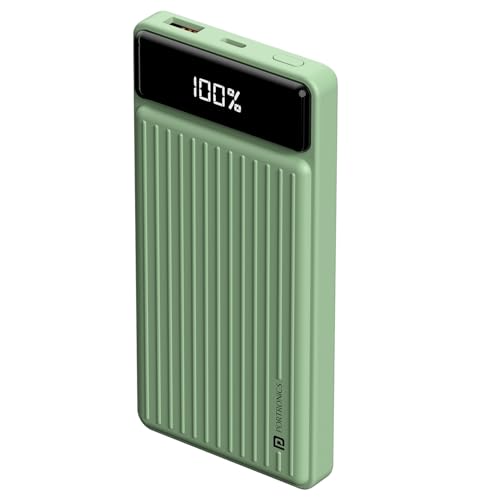
Portronics brings its established brand reputation and service network to the budget segment with the Luxcell B 10K. The ultra-slim design slides easily into pockets, bags, or even phone cases. The 22.5W fast charging delivers quick power-ups at a competitive ₹679. The unique wake-up button prevents accidental battery drainage - press to activate charging only when needed. Available in eye-catching green color, it stands out from generic black power banks. Good build quality backed by Portronics' reliable customer service.
- + Reputable Portronics brand with service network
- + 22.5W fast charging at ₹679
- + ultra-slim design fits anywhere
- + good build quality
- + wake-up button prevents accidental drainage
- + green color option stands out
- - Limited feature details from manufacturer
- - newer model less reviews
- - no percentage display only LED indicators
- - Type-C input not mentioned clearly
ZEBRONICS MB10000S6 Power Bank with 5 Built-in Output Cables
- Capacity
- 10000mAh
- Output
- 12W (5 ports)
- Built-in Cables
- Type-C, Micro, Lightning
- USB Ports
- Dual USB-A
- Display
- LED Percentage
- Extra
- Carry Loop
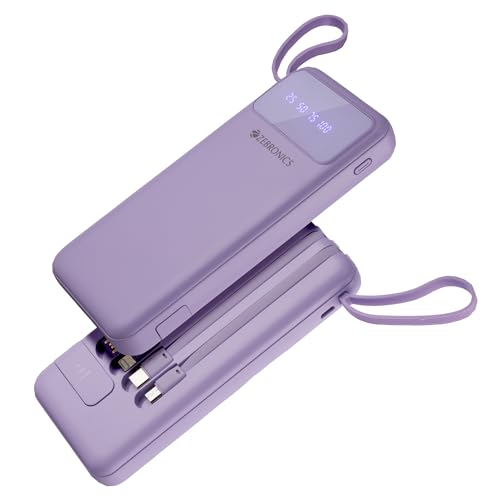
The ZEBRONICS MB10000S6 solves the "forgot my cable" problem permanently with 5 built-in output cables: Type-C, Micro USB, Lightning (rare!), plus dual USB-A ports. Charge 5 devices simultaneously - perfect for families or multi-device users. The Lightning cable is particularly valuable for iPhone users, eliminating the need to carry Apple's expensive cables. LED percentage display tracks battery level, carry loop attaches to bags, and Made in India ensures quality. While not fast charging, the convenience factor makes it invaluable for travelers.
- + Built-in cables eliminate need to carry extras
- + charges 5 devices simultaneously
- + Lightning cable rare feature
- + LED percentage display
- + carry loop convenient
- + perfect for travel
- + Made in India
- + works with all phones
- - Only 12W output not fast charging
- - built-in cables can wear over time
- - slightly bulkier due to cables
- - cables may not suit all phone cases
- - limited cable length
DR VAKU CYREX 10000mAh Slim Power Bank
- Capacity
- 10000mAh
- Output
- 12W Dual USB
- Type-C
- Bidirectional
- Input
- Type-C + Micro-USB
- Warranty
- 1 Year
- Certified
- BIS
The DR VAKU CYREX offers the best warranty at ₹499 - a full 1-year replacement warranty versus typical 6-month coverage. BIS certification ensures safety standards are met, with multi-layer protection against common charging issues. The Type-C bidirectional port handles both input and output, making it future-proof. Slim and stylish design available in attractive colors. While DR VAKU is a lesser-known brand, the combination of BIS certification, 1-year warranty, and ₹499 price makes it a solid budget alternative to more expensive options.
- + Budget champion at ₹499
- + BIS certification ensures safety
- + 1-year warranty better than competitors
- + Type-C bidirectional port
- + slim and stylish design
- + dual USB useful
- + compatible with all smartphones
- - DR VAKU lesser-known brand
- - only 12W output not fast charging
- - mixed long-term durability reviews
- - basic LED indicators
- - customer service limited
Which power bank under ₹1,000
Here is who each pick is for, based on the comparison above.
ZEBRONICS MB10000S15 Power Bank 10000mAh 22.5W · ₹699
22.5W fast charging with LED display
Check Price on Amazon →boAt Energyshroom PB300 10000mAh 22.5W Power Bank · ₹939
Aluminum build, 12-layer protection
Check Price on Amazon →FLiX MagConnect Elite 10000mAh Magnetic Wireless Power Bank · ₹599
15W magnetic wireless for iPhone
Check Price on Amazon →ZEBRONICS MB10000S4 Power Bank 10000mAh with LED Display · ₹499
LED display at incredible ₹499
Check Price on Amazon →Travel-sized 20,000mAh banks and laptop-grade 100W units are compared too. So is the BIS mark every bank sold in India must carry.
Find the capacity you actually need →Choosing a power bank under ₹1,000
-
Understanding Actual vs Rated Capacity
All 10000mAh power banks deliver 6500-7000mAh actual usable capacity due to conversion losses - this is normal physics. Li-Polymer batteries provide 3.7V which converts to 5V USB output with 65-70% efficiency. For example: a 10000mAh power bank will charge a 4000mAh phone 1.5-1.75 times, not 2.5 times. The 20000mAh URBN model provides actual ~13000-14000mAh usable capacity. Budget brands claiming higher efficiency are misleading. Look for honest sellers mentioning 65-70% conversion rate. This applies to all brands equally. -
Fast Charging: 12W vs 18W vs 22.5W Explained
12W charging: Basic standard charging, charges typical 4000mAh phone in ~120 minutes, works with all phones, no special requirements. 18W charging: Supports Quick Charge 3.0, charges in ~90 minutes, works with most Android phones. 22.5W charging: Fastest option, supports newer devices, charges in ~60-70 minutes, better for 5000mAh+ batteries. For iPhone fast charging, look for Power Delivery (PD) support. Real-world difference: 12W sufficient for overnight charging, 18W good for daily use, 22.5W worth extra ₹100-200 if you need quick top-ups or have latest flagship phones. -
Magnetic Wireless Charging - New Technology
Magnetic wireless charging (like FLiX MagConnect) uses MagSafe-compatible magnets to align perfectly with iPhone 12 and newer models. Advantages: No cables needed, charges while using phone, perfect magnetic alignment, convenient for on-the-go. Limitations: Only works with iPhone 12/13/14/15/16, slower than wired (15W vs 22.5W), causes more heat, drains power bank faster. Best for: iPhone users who value convenience over speed. Still includes wired ports as backup for maximum flexibility. -
Built-in Cables vs Separate Cables
Built-in cables (ZEBRONICS MB10000S6): Pros - never forget cables, charges multiple device types, convenient for travel, one less thing to carry. Cons - cables can wear out, may not fit thick phone cases, limited cable length (usually 10-15cm), adds bulk. Separate cables: Pros - replaceable if damaged, use high-quality cables, works with any case, cleaner design. Cons - must remember to carry, can lose cables, need multiple cables for different devices. Best choice: Built-in for frequent travelers, separate for everyday use. -
Capacity Guide: 10000mAh vs 20000mAh
10000mAh (most models): Weight ~180-250g, pocket-portable, charges phone 1.5-2 times, recharges in 2-3 hours, sufficient for daily use, airline-safe. 20000mAh (URBN model): Weight ~350-400g, bag-portable, charges phone 3-4 times, recharges in 4-5 hours, perfect for multi-day trips, still airline-safe under 100Wh. Choose 10000mAh for: Daily commute, light travel, pocket portability. Choose 20000mAh for: Multi-day trips, multiple devices, family sharing, heavy phone usage. -
BIS Certification & Airline Safety
BIS (Bureau of Indian Standards) certification mandatory for power banks in India since 2018. Ensures basic safety standards, temperature controls, and short-circuit protection. All recommended models are BIS certified. For airline travel: Power banks under 100Wh (27000mAh at 3.7V) allowed in carry-on luggage only, never in checked baggage. 10000mAh = ~37Wh, 20000mAh = ~74Wh, both well within limits. Always carry original packaging or specs showing capacity for airport security. International flights have same rules.
Frequently asked questions
What is the best power banks under 1000 in India?
Which is the best power bank under ₹1000 in India for 2026?
How many times can a 10000mAh power bank charge my phone in 2026?
Is magnetic wireless charging worth it on power banks?
Do I really need 22.5W fast charging, or is 12W enough?
Are power banks with built-in cables better than separate cables?
Can I carry these power banks in flights to India and international?
How long do budget power banks last before needing replacement?
Should I buy 10000mAh or 20000mAh for under ₹1000?
What's the difference between Made in India and Chinese power banks?
You may also like
More guides and reviews to help you decide.
Find the best 20000mAh power bank in India 2026 from ₹679 to ₹2,499. Compare Xiaomi, Boat, Amazon Basics & more with in-depth reviews, prices, pros & cons.
Read more →Find the best laptop power bank charger in India 2026. Compare 65W-100W USB-C PD models for MacBook and Windows laptops, with real prices, pros & cons.
Read more →Find the best 30000mah power bank in India 2026. Research-based reviews with detailed comparisons, prices, pros & cons to help you pick the right one.
Read more →Find the best solar power bank in India 2026. Research-based reviews with detailed comparisons, prices, pros & cons to help you pick the right one.
Read more →5 best gaming phones under 30000 in India 2026 — Motorola Edge 70 Fusion, Lava Agni 4, iQOO Z11x compared on chipset, 144Hz displays, battery and heating.
Read more →Find the best 5g phone under 20000 in India 2026. Compare Samsung, Realme, OnePlus, Motorola with research-based reviews, prices, pros & cons.
Read more →