
PRODUCT REVIEW
Best SD Cards in India 2026
Best SD cards for cameras in India 2026 — SanDisk Extreme Pro, Lexar Silver PRO V60, V90 & budget picks compared on speed, video class, reliability and price.
 By Naveen Bhavnani
Updated
By Naveen Bhavnani
Updated
As an Amazon Associate we earn from qualifying purchases. We could also earn a fee through some links when you click on them.
SD card picks by video class
Already covered the winner above — here are the picks for specific needs.
SanDisk Ultra 64GB SDXC UHS-I Memory Card (140 MB/s)

Lexar Professional Silver PRO 128GB SDXC UHS-II V60 Memory Card

SanDisk Extreme PRO 128GB SDXC UHS-II V90 Memory Card (300 MB/s, 8K)
SD cards compared on read/write
How the shortlist stacks up. Scroll sideways on mobile.
| WWCD Score | Product | Capacity | Bus | Video Class | Read | Write | Rating | Price | Deal |
|---|---|---|---|---|---|---|---|---|---|
| 9.3/10 | SanDisk Extreme Pro 128GB SDXC UHS-I | 128 GB | UHS-I | V30 | Up to 200 MB/s | Up to 90 MB/s | 4.5 (87,643) | ₹5,990 | Check Price |
| 9.3/10 | Lexar Professional Silver PRO 128GB SDXC UHS-II V60 | 128 GB | UHS-II | V60 | Up to 280 MB/s | Up to 120 MB/s | 4.6 (1,256) | ₹8,699 | Check Price |
| 9.1/10 | SanDisk Extreme 128GB SDXC UHS-I | 128 GB | UHS-I | V30 | Up to 180 MB/s | Up to 90 MB/s | 4.4 (21,544) | ₹3,700 | Check Price |
| 9.0/10 | SanDisk Extreme PRO 32GB SDHC UHS-II V90 | 32 GB | UHS-II | V90 | Up to 300 MB/s | Up to 260 MB/s | 4.8 (2,008) | ₹3,490 | Check Price |
| 9.0/10 | Lexar ARMOR Silver PRO 256GB SDXC UHS-II V60 | 256 GB | UHS-II | V60 | Up to 280 MB/s | Up to 160 MB/s | 4.7 (3,029) | ₹16,699 | Check Price |
| 8.9/10 | SanDisk Extreme PRO 128GB SDXC UHS-II V90 | 128 GB | UHS-II | V90 | Up to 300 MB/s | Up to 260 MB/s | 4.8 (763) | ₹25,169 | Check Price |
| 8.9/10 | SanDisk Extreme PRO 128GB SDXC UHS-II V60 | 128 GB | UHS-II | V60 | Up to 280 MB/s | Up to 100 MB/s | 4.7 (3,235) | ₹13,799 | Check Price |
| 8.8/10 | SanDisk Ultra 64GB SDXC UHS-I | 64 GB | UHS-I | V10 / Class 10 | Up to 140 MB/s | ~40 MB/s | 4.3 (19,926) | ₹1,989 | Check Price |
| 8.8/10 | ProGrade Digital 256GB SDXC UHS-II V60 | 256 GB | UHS-II | V60 | Up to 250 MB/s | Up to 130 MB/s | 4.8 (649) | ₹33,734 | Check Price |


Buy genuine — memory cards are heavily counterfeited
SD cards are among the most counterfeited products online. Common scams relabel a small chip as a larger capacity, or sell non-genuine cards that corrupt data. Several India reviewers in our research reported fake-capacity or DOA cards from third-party sellers.
Buy from the genuine brand listing (look for "ships from / sold by Amazon" or the official brand store and brand holograms), and after purchase run a capacity-verification tool such as H2testw before any important shoot. A card that corrupts irreplaceable photos is worthless however fast it is.
SD card reviews: bus, class and capacity
Specs, the honest pros and cons, and who each one is for.
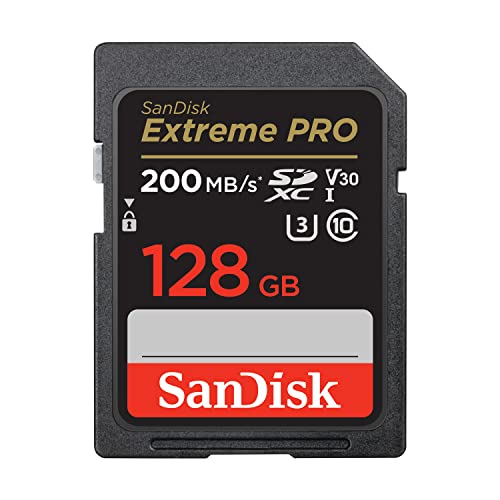
SanDisk Extreme Pro 128GB SDXC UHS-I Memory Card (200 MB/s)
The proven workhorse most camera owners should buy
- Capacity
- 128 GB
- Bus
- UHS-I
- Video Class
- V30
- Read Speed
- Up to 200 MB/s
- Write Speed
- Up to 90 MB/s
- Warranty
- Lifetime Limited
For the vast majority of DSLR and mirrorless shooters who film 4K30/60 and shoot stills, this is the safe, fast-enough, sensibly priced default — backed by the largest review base of any card here.
- + Fastest UHS-I speeds (200/90 MB/s)
- + reliable 4K30/60 capture
- + backed by 87,000+ ratings
- + lifetime-limited warranty
- + fair value at ~₹47/GB
- + universal compatibility with any SD slot
- - UHS-I write (90 MB/s) is far slower than UHS-II for sustained 6K/8K
- - not ideal for 4K120 recording
- - occasional marketplace counterfeits — verify the genuine listing
Lexar Professional Silver PRO 128GB SDXC UHS-II V60 Memory Card
UHS-II speed for serious shooters, without the SanDisk premium
- Capacity
- 128 GB
- Bus
- UHS-II
- Video Class
- V60
- Read Speed
- Up to 280 MB/s
- Write Speed
- Up to 120 MB/s
- Warranty
- 2 Year
The Lexar Silver PRO V60 is the sweet spot of this list: genuine UHS-II read/write speeds and reliable 4K60 capture at a price most enthusiasts can justify. Just remember you only get its full speed in a UHS-II camera body.
- + True UHS-II 280/120 MB/s
- + V60 rating handles 4K60 and 6K
- + cheapest 128GB UHS-II card here (~₹68/GB)
- + backward compatible with UHS-I cameras
- + praised for high-volume photo workflows
- + cheaper than equivalent SanDisk UHS-II
- - Only delivers full speed in a UHS-II camera
- - frame drops possible at 120fps high-bitrate
- - 2-year warranty is shorter than SanDisk's lifetime cover
- - a few India reviewers reported early-life failures
SanDisk Extreme 128GB SDXC UHS-I Memory Card (180 MB/s)
The cheapest dependable 128GB card for everyday 4K
- Capacity
- 128 GB
- Bus
- UHS-I
- Video Class
- V30
- Read Speed
- Up to 180 MB/s
- Write Speed
- Up to 90 MB/s
- Warranty
- Lifetime Limited
If you want a no-fuss 128GB card for stills and 4K30/60 at the lowest price, the Extreme delivers — India shooters confirm it runs 4K60 smoothly on popular mirrorless bodies. Buy genuine to avoid the fakes.
- + Best value-per-GB here (~₹29/GB)
- + smooth 4K30/60 confirmed on Sony ZV-E10 II and Canon R100
- + UHS-I 180 MB/s read
- + lifetime-limited warranty
- + 21,000+ ratings back its track record
- - UHS-I write (90 MB/s) limits sustained high-bitrate video
- - slightly slower than the Extreme Pro
- - counterfeit/fake-capacity units reported — buy genuine
- - not for 6K/8K or 4K120
SanDisk Extreme PRO 32GB SDHC UHS-II V90 Memory Card (300 MB/s, 8K)
The cheapest way to taste true V90 speed
- Capacity
- 32 GB
- Bus
- UHS-II
- Video Class
- V90
- Read Speed
- Up to 300 MB/s
- Write Speed
- Up to 260 MB/s
- Warranty
- Lifetime Limited
A clever budget route to genuine V90 performance — great for short high-frame-rate clips or as a fast backup card. Just know that 32GB disappears quickly when you are recording 4K/8K.
- + Full V90 speed (300/260 MB/s)
- + lowest-cost entry into UHS-II V90
- + lifetime-limited SanDisk warranty
- + solid India review base
- + great as a fast backup/overflow card
- - 32GB fills very quickly for 4K/8K video
- - poor value-per-GB versus larger cards
- - not suited to long burst sessions
- - needs a UHS-II camera to deliver its speed
Lexar ARMOR Silver PRO 256GB SDXC UHS-II V60 Memory Card (Stainless Steel)
A tough, high-capacity V60 card built for long video days
- Capacity
- 256 GB
- Bus
- UHS-II
- Video Class
- V60
- Read Speed
- Up to 280 MB/s
- Write Speed
- Up to 160 MB/s
- Build
- Stainless steel armour, IP68
The ARMOR pairs the fastest V60 write here (160 MB/s) with 256GB and a rugged stainless body — a great fit for videographers who hate swapping cards. It is newer in India, so the long-term reliability record is still building.
- + Fastest V60 write here (160 MB/s sustained)
- + large 256GB capacity for long 4K/6K takes
- + durable stainless-steel armour build
- + UHS-II 280 MB/s read
- + lowest price-per-GB of any UHS-II card here (~₹65/GB)
- + backward compatible with UHS-I cameras
- - Thin India-specific review base for this newer SKU
- - only full speed in UHS-II bodies
- - low stock at time of research
- - 2-year warranty trails SanDisk's lifetime cover
SanDisk Extreme PRO 128GB SDXC UHS-II V90 Memory Card (300 MB/s, 8K)
The no-compromise V90 card for 8K and high-frame-rate pros
- Capacity
- 128 GB
- Bus
- UHS-II
- Video Class
- V90
- Read Speed
- Up to 300 MB/s
- Write Speed
- Up to 260 MB/s
- Warranty
- Lifetime Limited
If you shoot 8K, 4K120 or RAW bursts that overwhelm slower cards, the Extreme PRO V90 never blinks — 260 MB/s sustained write is the real deal. The catch is the price and a still-thin India review base for this exact SKU.
- + Fastest card here (300 MB/s read, 260 MB/s sustained write)
- + V90 rating for 8K and 4K120 high-bitrate video
- + buffer clears instantly on pro RAW bursts
- + lifetime-limited warranty
- + smooth cropped-4K on Canon EOS R confirmed
- - Very expensive at ~₹197/GB (worst value in the set)
- - overkill unless you shoot 8K or 4K120
- - needs a UHS-II V90-capable camera
- - India-specific review base is still small for this SKU
SanDisk Extreme PRO 128GB SDXC UHS-II V60 Memory Card (280 MB/s)
SanDisk UHS-II reliability, if you can find it on discount
- Capacity
- 128 GB
- Bus
- UHS-II
- Video Class
- V60
- Read Speed
- Up to 280 MB/s
- Write Speed
- Up to 100 MB/s
- Warranty
- 5 Year
A capable V60 card that real users run on Sony and Nikon bodies without trouble, but its 100 MB/s write and high price make the Lexar Silver PRO the smarter buy unless you specifically want SanDisk.
- + UHS-II 280 MB/s read
- + V60 rated for 4K60 and 6K
- + validated by India users on Sony A6700 and Nikon Z50 II
- + 5-year warranty
- + backward compatible with UHS-I cameras
- - Slowest sustained write of the V60 cards (100 MB/s)
- - expensive at ~₹108/GB versus the Lexar Silver PRO V60
- - some India reviewers suspected counterfeit units
- - only full speed in UHS-II bodies
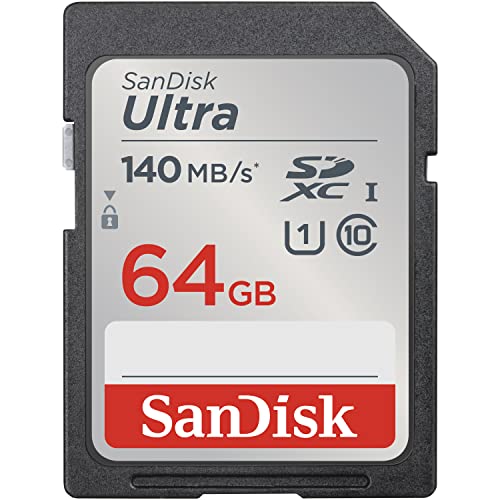
SanDisk Ultra 64GB SDXC UHS-I Memory Card (140 MB/s)
The budget spare card for casual and entry shooters
- Capacity
- 64 GB
- Bus
- UHS-I
- Video Class
- V10 / Class 10
- Read Speed
- Up to 140 MB/s
- Write Speed
- ~40 MB/s (typical)
- Warranty
- 10 Year Limited
For point-and-shoots, entry DSLRs and casual 1080p/4K, the Ultra is a cheap, dependable card. Serious shooters should look higher up the list — its slow write buffers during burst and high-bitrate video.
- + Very affordable entry price
- + 140 MB/s read for fast offload
- + proven SanDisk line with 19,000+ ratings
- + long 10-year limited warranty
- + universal UHS-I compatibility
- - Slow write speed buffers on DSLR burst shooting
- - V10/Class 10 only (not for sustained 4K or burst RAW)
- - small 64GB capacity
- - a few reports of corruption/fakes — buy genuine
ProGrade Digital 256GB SDXC UHS-II V60 Memory Card (Gold)
A pro-grade workhorse for photographers who trust the brand
- Capacity
- 256 GB
- Bus
- UHS-II
- Video Class
- V60
- Read Speed
- Up to 250 MB/s
- Write Speed
- Up to 130 MB/s
- Warranty
- 3 Year
ProGrade has a cult following among working pros, and this 256GB V60 backs it up with strong, consistent write speeds. The drawbacks are thin India availability, low stock and premium pricing.
- + Pro-grade UHS-II 250/130 MB/s performance
- + 256GB for long professional shoots
- + respected brand among working photographers
- + India reviewers rate it best in class
- + 3-year warranty
- - Thin India review base and distribution
- - low stock at time of research
- - premium pricing (~₹132/GB)
- - only full speed in UHS-II cameras
SD Card Technology Guide
UHS Bus Speeds (UHS-I vs UHS-II)
Video Speed Class (V30 / V60 / V90)
Capacity: how much do you need?
Durability & data safety
Which SD card to buy
After comparing all nine on real-world speed, video class, reliability and price-per-GB, here is who each top pick is for.
SanDisk Extreme Pro 128GB UHS-I · ₹5,990
The safe default for almost everyone — 200/90 MB/s, V30, proven by 87,000+ ratings and a lifetime warranty at ~₹47/GB. Fast enough for 4K30/60 and stills on any camera.
Check Price on Amazon →Lexar Professional Silver PRO 128GB V60 · ₹8,699
Buy this if your camera is UHS-II — genuine 280/120 MB/s and V60 4K60/6K at the lowest price of any 128GB UHS-II card here.
Check Price on Amazon →SanDisk Ultra 64GB UHS-I · ₹1,989
The cheapest dependable card — fine for casual stills and 1080p/basic 4K, backed by a 10-year warranty. A great spare card.
Check Price on Amazon →SanDisk Extreme PRO 128GB V90 · ₹25,169
For 8K, 4K120 and pro RAW bursts only — 300/260 MB/s V90 clears any buffer instantly. Overkill (and pricey) for everyone else.
Check Price on Amazon →A fast card is one link in the chain. Compare cameras, lenses, tripods and padded bags in their own rankings.
Browse cameras, lenses and bags →How to choose an SD card
-
UHS-I vs UHS-II: do you actually need the faster bus?
UHS-II cards (a second row of pins) can read/write far faster than UHS-I, but ONLY in a camera that has a UHS-II slot. Many entry and mid-range DSLRs/mirrorless are UHS-I only — in those bodies a UHS-II card runs at UHS-I speeds, so you would be paying for headroom you can't use. Check your camera's slot before spending up. If your camera is UHS-I, the SanDisk Extreme Pro UHS-I (200/90) is the practical ceiling. -
Read the Video Speed Class (V30/V60/V90), not just MB/s
The "up to 200 MB/s" figure is READ speed (offloading to your PC). For video, what matters is the guaranteed minimum SUSTAINED WRITE, shown as the V-number inside a U-shape. V30 = 30 MB/s minimum (fine for most 4K), V60 = 60 MB/s (4K60/6K and high-bitrate), V90 = 90 MB/s (8K, 4K120, ProRes-style codecs). Match the V-class to your camera's most demanding recording mode. -
Capacity: match it to how you shoot
For stills, 64–128GB is plenty. For 4K video, 128GB is the sweet spot; for long 4K60/6K days, step up to 256GB so you are not swapping cards mid-shoot. Avoid tiny 32GB cards for video — even at V90 they fill in minutes. Two smaller cards can be safer than one huge card (less data lost if one fails). -
Beware counterfeits and fake-capacity cards
Memory cards are among the most counterfeited products online. Common scams: a 64GB chip relabelled as 128GB, or non-genuine cards that corrupt data. Buy from the genuine brand listing, check the seller, and after purchase run a capacity-verification tool (like H2testw) before an important shoot. Genuine SanDisk/Lexar cards carry brand holograms and proper warranty. -
Warranty and brand reliability
Stick to established brands (SanDisk, Lexar, ProGrade, Samsung, Kingston). SanDisk's premium cards carry lifetime-limited warranties; Lexar and ProGrade offer 2–3 years. For a memory card, reliability matters more than a few extra MB/s — a card that corrupts a wedding shoot is worthless however fast it is. -
Don't forget a UHS-II card reader
A UHS-II card paired with an old UHS-I reader will offload at UHS-I speeds. If you bought a fast UHS-II card specifically to speed up your import workflow, pair it with a UHS-II/USB 3.x reader to actually see the 250–300 MB/s read speeds.
Frequently asked questions
What is the best sd cards cameras in India?
Which SD card is best for 4K video recording?
What's the difference between UHS-I and UHS-II?
Is 64GB or 128GB better for DSLR cameras?
Can I use a microSD card in my DSLR camera?
Why are SanDisk cards more expensive than budget brands?
How long do SD cards last?
Is the SanDisk Extreme PRO V90 worth ₹25,169?
Do I need different SD cards for Canon vs Sony cameras?
Where can I buy genuine SD cards in India?
Should I format SD cards in my computer or camera?
Do I need a UHS-II card?
What does V30, V60 and V90 mean?
Is a 256GB card better than two 128GB cards?
Why is the card slower than the advertised speed?
You may also like
More guides and reviews to help you decide.
Find the best landscape photography lens India offers. Compare Sony, Canon, Nikon wide-angle 14-35mm lenses with f/2.8 aperture. Verified prices & reviews.
Read more →Find the best macro photography lens India offers. Compare Sony, Canon, Nikon 1:1 macro lenses with 50-105mm focal lengths. Verified prices & in-depth reviews.
Read more →Find the best camera bag India offers. Compare Lowepro, Vanguard, K&F Concept backpacks, slings & cases for DSLR/mirrorless. Verified prices & in-depth reviews.
Read more →Find the best portrait photography lens India offers. Compare Canon, Nikon, Sony 50mm & 85mm lenses with f/1.4-f/1.8 aperture. Verified prices & reviews.
Read more →Complete camera buying guide 2026: Compare DSLR vs mirrorless, sensor sizes, megapixels & video features. Find the perfect camera for beginners to.
Read more →Find the best webcam under 3000 in India 2026. Compare Lenovo, Logitech & more with research-based reviews, prices & pros and cons.
Read more →