
PRODUCT REVIEW
Best Sous Vide Machines in India 2026
Best sous vide machines in India 2026, ranked. Voltage compatibility, prices, precision, WiFi and pros & cons — find the right immersion circulator for you.
 By Naveen Bhavnani
Updated
By Naveen Bhavnani
Updated
As an Amazon Associate we earn from qualifying purchases. We could also earn a fee through some links when you click on them.

Sous vide machine picks by price
Already covered the winner above — here are the picks for specific needs.

Vpcok Direct Sous Vide Stick 1000W

Lonkion Sous Vide Cooker 1100W IPX7
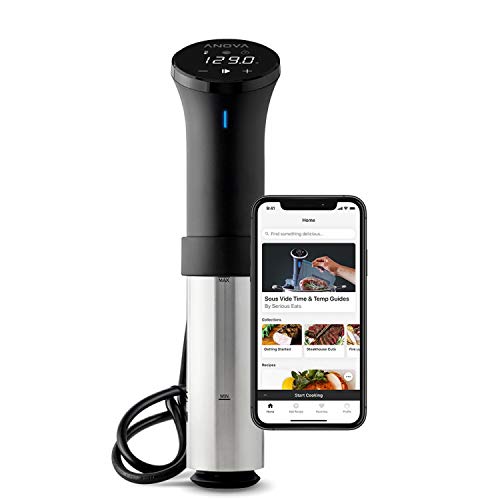
Anova Culinary Precision Cooker (WiFi) AN500
Sous vide machines compared
How the shortlist stacks up. Scroll sideways on mobile.
| WWCD Score | Product | Voltage | Wattage | Temp Range | Connectivity | Price | Deal |
|---|---|---|---|---|---|---|---|
| 9.0/10 | KitchenBoss G310S | 230V (India) | 1100W | 40-90°C | None | ₹24,800 | Check Price |
| 8.7/10 | Anova WiFi AN500 | 110V (US) | 1000W | N/A | WiFi + App | ₹18,500 | Check Price |
| 8.7/10 | Lonkion | 120V (US) | 1100W | 25-90°C | None | ₹8,407 | Check Price |
| 8.7/10 | Inkbird ISV-100W Bundle | 110V (US) | 1000W | 25-99°C | WiFi + App | ₹27,128 | Check Price |
| 8.7/10 | Greater Goods | 120V (US) | 1100W | 20-95°C | None | ₹20,112 | Check Price |
| 8.7/10 | Karinear WiFi | Unknown | 1100W | 10-90°C | WiFi + App | ₹14,800 | Check Price |
| 8.6/10 | Anova Nano | 120V (US) | 800W | N/A | Bluetooth + App | ₹12,353 | Check Price |
| 8.5/10 | Cattleman Cuisine | 120V (US) | 1000W | N/A | WiFi + Smart Home | ₹21,515 | Check Price |
| 8.5/10 | Rocyis Kit | 120V (US) | 1000W | 25-97°C | None | ₹15,585 | Check Price |
| 8.4/10 | Vpcok Direct | 240V (India) | 1000W | 25-92.5°C | None | ₹15,890 | Check Price |


Read this first: voltage compatibility is the #1 factor in India
India runs on 220-240V, but most sous vide machines sold on Amazon.in are built for US 110-120V outlets. Plugging a 110V unit straight into an Indian socket will destroy it instantly.
Only two picks here run directly off Indian power — the KitchenBoss G310S (230V) and the Vpcok Direct (240V). The Karinear doesn't list its voltage, so confirm with the seller before buying. Every other model is 110-120V and needs a step-down transformer rated for at least 1,500W continuous (₹1,500-3,000 extra). Factor that cost — and the lack of India warranty on imported units — into your decision.
Sous vide machine reviews: voltage, precision and noise
Specs, the honest pros and cons, and who each one is for.
KitchenBoss Sous Vide Garer Stick Precision Cooker G310S
The only premium sous vide that works straight out of the box in India — no transformer needed
- Voltage
- 230V (India-compatible)
- Wattage
- 1100W
- Temperature Range
- 40°C - 90°C
- Circulation
- 16 L/min metal propeller
- Material
- SUS304 Stainless Steel
- Waterproofing
- IPX7
- Connectivity
- None (standalone)
The KitchenBoss G310S is the clear top pick for Indian buyers thanks to its 230V compatibility — you simply plug it in and start cooking without a step-down transformer. Backed by 1100W power, a brushless motor and full stainless steel construction, it delivers restaurant-quality precision. The premium price is justified once you factor in the transformer savings and hassle-free operation.
- + Only premium 230V sous vide on Amazon.in
- + 1100W brushless motor — fastest heating in the field
- + Full SUS304 stainless steel — no plastic in water
- + IPX7 waterproof for easy cleaning
- + Innovative clamp works on 7cm-deep pots
- + Best-in-class 16 L/min circulation
- - Highest price in the field
- - No WiFi or app connectivity
- - European reviews report display/motor failures after 9-18 months heavy use
- - Temperature caps at 90°C
- - No India-specific warranty or service centre
Vpcok Direct Sous Vide Stick 1000W
India-compatible sous vide at the most accessible price point
- Voltage
- 240V (India-compatible)
- Wattage
- 1000W
- Temperature Range
- 25°C - 92.5°C
- Temperature Accuracy
- ±0.5°C
- Material
- Stainless Steel
- Timer
- Up to 99:59 hours
- Connectivity
- None (standalone)
The Vpcok Direct is the budget-friendly India-compatible option. Its 240V rating means no transformer hassle, and the 25-92.5°C range is the widest among plug-and-play units. However, global reviews reveal concerning temperature-accuracy issues and some early failures — treat it as a starter sous vide rather than a long-term investment.
- + 240V India-compatible — no transformer needed
- + Most affordable India-compatible option
- + Widest temperature range among India-compatible units (25-92.5°C)
- + Includes recipe book
- + 12-month warranty claimed
- + Lightweight at 1.44 kg
- - UK reviews report temperature 1.6-1.8°C off set point
- - Multiple reports of units dying within 5 months
- - Clip design keeps unit from fully submerging
- - Chemical smell reported during initial uses
- - ±0.5°C accuracy below premium rivals
Anova Culinary Precision Cooker (WiFi) AN500
The global gold standard in precision — if you can handle the 110V requirement
- Voltage
- 110V (needs step-down transformer)
- Wattage
- 1000W
- Temperature Accuracy
- ±0.1°C
- Capacity
- 8L
- Material
- Stainless Steel
- Connectivity
- WiFi + Anova App
The Anova WiFi is objectively the best sous vide machine for temperature precision and app features. However, Indian buyers face real hurdles: 110V means a transformer, there's no India warranty, and every India-based reviewer reports product failures with no support. Recommended only for buyers who accept these trade-offs for best-in-class accuracy.
- + Industry-leading ±0.1°C precision — the gold standard
- + WiFi app with guided recipes and remote monitoring
- + Most-reviewed sous vide globally (11663 ratings)
- + Stainless steel and lightweight at 0.9 kg
- + Most recognised brand in sous vide
- - 110V — requires a step-down transformer for India
- - All India reviews report failures within weeks with no support
- - No warranty or service in India
- - App now charges for some features
- - Limited stock at time of research
Lonkion Sous Vide Cooker 1100W IPX7
Maximum power at the minimum price — the budget king
- Voltage
- 120V (needs step-down transformer)
- Wattage
- 1100W
- Temperature Range
- 25°C - 90°C
- Material
- Stainless Steel + Plastic
- Waterproofing
- IPX7
- Weight
- 0.77 kg
- Connectivity
- None
The Lonkion offers the best power-to-price ratio at ₹8,407 with 1100W heating. It's IPX7 waterproof and the lightest in class. The catch: it's 120V (so you'll need a transformer for India) and has zero India reviews, so you're taking a leap of faith on support.
- + Lowest price in the field
- + 1100W — joint-highest wattage for fast heating
- + IPX7 waterproof with overheat protection
- + Lightest in the field at 0.77 kg
- + 3D water circulation for even heat
- + Auto-shutoff with alarm
- - 120V — requires a step-down transformer for India
- - Zero India reviews — untested by Indian buyers
- - Mixed stainless steel + plastic build
- - No WiFi or app
- - New product with limited long-term data
Inkbird WiFi Sous Vide ISV-100W with Vacuum Sealer
The complete starter kit — cooker plus vacuum sealer in one bundle
- Voltage
- 110V (needs step-down transformer)
- Wattage
- 1000W
- Temperature Range
- 25°C - 99°C
- Temperature Accuracy
- ±0.1°C
- Noise
- <40dB at 1m
- Connectivity
- WiFi + Inkbird App
- Includes
- Cooker + vacuum sealer + bags
The Inkbird bundle is the best value proposition for someone starting from scratch — you get a precision sous vide cooker plus a vacuum sealer in one purchase, from a brand trusted for precision instruments. The 110V requirement and high price are the trade-offs.
- + Most complete bundle — includes vacuum sealer
- + bags and roll
- + Widest temperature range (25-99°C)
- + ±0.1°C precision from a measurement-instrument brand
- + WiFi app with recipes
- + Ultra-quiet at <40dB
- + 12-month warranty claimed
- - 110V — requires a step-down transformer for India
- - Most expensive in the field
- - Heaviest bundle at 2.99 kg
- - Limited stock
- - Zero India reviews
Greater Goods Kitchen Sous Vide 1100W
The precision purist's choice — manual calibration meets brushless power
- Voltage
- 120V (needs step-down transformer)
- Wattage
- 1100W
- Temperature Range
- 20°C - 95°C
- Material
- Stainless Steel (dishwasher-safe)
- Motor
- Brushless DC
- Controls
- Adjustable dial + LED display
- Connectivity
- None (standalone)
The Greater Goods stands out with its unique manual calibration feature and dial controls — perfect for precision purists who prefer physical controls over apps. The brushless motor ensures quieter, longer-lasting operation. Worth the premium if you value hands-on control.
- + Manual calibration to correct temperature drift (unique)
- + Brushless DC motor — quieter and more durable
- + 1100W joint-highest wattage
- + Dishwasher-safe removable stainless steel cover
- + Intuitive dial control
- + Negative timer for overshoot tracking
- - 120V — requires a step-down transformer for India
- - No WiFi or app despite premium price
- - Expensive for a manual unit once you add a transformer
- - Zero India reviews
- - No India warranty or service centre
Karinear Sous Vide Machine WiFi 1100W
The most affordable WiFi sous vide — with a voltage caveat
- Voltage
- Not listed — verify before purchase
- Wattage
- 1100W
- Temperature Range
- 10°C - 90°C
- Temperature Accuracy
- ±0.17°C
- Noise
- 15dB
- Connectivity
- WiFi (2.4GHz) + App
- Timer
- Up to 99 hours
Karinear offers the cheapest WiFi-enabled sous vide at ₹14,800. The specs are strong — 1100W, ±0.17°C accuracy, 15dB noise. The critical unknown: voltage isn't listed, so verify with the seller before buying. The 4.2 rating is the lowest among our selections.
- + Cheapest WiFi-enabled sous vide in the field
- + 1100W highest wattage class with WiFi
- + 15dB noise claim — quietest in the field
- + App control with preset menus
- + ±0.17°C accuracy claimed
- + 99-hour timer for long cooks
- - Voltage not listed — could be 110V or 220V (verify first)
- - 4.2 rating is lowest among selected products
- - Karinear is a little-known brand
- - Zero India reviews
- - 2.4GHz WiFi only
Anova Culinary Bluetooth Nano Precision Cooker
The most proven sous vide on earth — compact Anova precision in a Nano
- Voltage
- 120V (needs step-down transformer)
- Wattage
- 800W
- Temperature Accuracy
- ±0.1°C
- Material
- Plastic body
- Weight
- 0.77 kg
- Connectivity
- Bluetooth + Anova App
The Anova Nano is the world's most reviewed sous vide with unmatched precision, and its compact size suits small kitchens. However, at only 800W it's the slowest heater, uses plastic construction, and Indian buyers report zero support when it fails. Best for those who already own a transformer and prioritise precision over power.
- + Most compact sous vide — ideal for small kitchens
- + 14401 global ratings — most reviewed in the world
- + Anova ±0.1°C precision proven at scale
- + Bluetooth app with guided recipes
- + Lightweight at 0.77 kg
- - 120V — requires a step-down transformer for India
- - Only 800W — weakest and slowest heating
- - Plastic body (not stainless steel)
- - All India reviews are negative with no support
- - High-pitched whine reported by US reviewers
Cattleman Cuisine Sous Vide Machine
The smart-home chef's sous vide — biggest capacity with WiFi control
- Voltage
- 120V (needs step-down transformer)
- Wattage
- 1000W
- Capacity
- 16L (largest in field)
- Weight
- 0.85 kg
- Control
- Touch
- Connectivity
- WiFi (smart-home compatible)
The Cattleman Cuisine stands out with smart-home compatibility and the largest 16L capacity for batch cooking — ideal for smart-home enthusiasts who cook for groups. The 120V requirement and limited specs data are the main caveats.
- + Smart-home compatible — integrates with home automation
- + Largest capacity at 16L for batch cooking
- + 4.6 rating from US reviewers
- + WiFi connectivity for remote control
- + Lightweight at 0.85 kg
- - 120V — requires a step-down transformer for India
- - Expensive once you add a transformer
- - Very limited published specs
- - Only 62 global reviews — small sample
- - Zero India reviews
Rocyis Sous Vide Machine Kit 1000W
The ready-to-go kit — machine, lid, stand and recipes included
- Voltage
- 120V (needs step-down transformer)
- Wattage
- 1000W
- Temperature Range
- 25°C - 97°C
- Temperature Accuracy
- ±0.1°C
- Material
- BPA-free Stainless Steel
- Includes
- Cooker + stand + lid + recipe book
- Connectivity
- None
The Rocyis kit is ideal for beginners who want everything in one box — the included lid is particularly valuable for long cooks as it prevents water evaporation. Good 4.6 rating and ±0.1°C precision. The 120V requirement is the main limitation for Indian buyers.
- + Most complete non-WiFi kit — includes lid
- + stand and recipe book
- + Lid prevents evaporation during long cooks
- + ±0.1°C accuracy claimed
- + 4.6 rating from 85 reviewers
- + BPA-free stainless steel
- + Good 25-97°C range
- - 120V — requires a step-down transformer for India
- - No WiFi or app
- - Only 85 global reviews — limited data
- - Limited stock
- - Zero India reviews
Which sous vide machine to buy
Only two of these ten run straight off an Indian 230V socket — so your first decision is whether you'll deal with a step-down transformer. Here's the quick call for each kind of buyer.
KitchenBoss G310S · ₹24,800
Buy this for true plug-and-play in India — 230V, 1100W, full stainless steel and the best circulation in the field, no transformer needed.
Check Price on Amazon →Vpcok Direct · ₹15,890
The cheapest India-compatible (240V) unit — a low-risk way to try sous vide without buying a transformer, if you accept good-enough accuracy.
Check Price on Amazon →Lonkion 1100W IPX7 · ₹8,407
Maximum 1100W power for the lowest price and IPX7 cleaning — ideal if you already own a step-down transformer.
Check Price on Amazon →Anova WiFi AN500 · ₹18,500
Gold-standard ±0.1°C accuracy and the best app ecosystem — for cooks who'll run a transformer and accept no India support.
Check Price on Amazon →Choosing a sous vide machine
-
Voltage Compatibility: The #1 Factor for Indian Buyers
This is the most critical factor when buying a sous vide machine in India. India uses 220-240V power, while most sous vide machines on Amazon.in are designed for US 110-120V outlets. Plugging a 110V device into a 240V outlet will destroy it instantly. If you buy a 110V sous vide, you MUST also buy a step-down transformer (₹1,500-3,000) rated for at least 1,200W continuous. Only two products in our research are India-compatible: the KitchenBoss G310S (230V) and Vpcok Direct (240V). Always verify the voltage in the product specs before purchasing. -
Wattage and Heating Speed
Sous vide machines range from 800W to 1100W. Higher wattage means faster water heating and better temperature recovery when you add food. For a standard 10-15L pot, 1000W is the sweet spot. 800W (like the Anova Nano) is suitable only for small batches. 1100W models heat water fastest and handle larger containers (up to 50L). If you're cooking for a family or doing long cooks with large cuts, opt for 1100W. -
Temperature Precision: What Really Matters
Sous vide cooking relies on precise temperature control — even 1-2°C can mean the difference between a perfect medium-rare steak and an overcooked one. Look for ±0.1°C accuracy (Anova, Inkbird, Rocyis). Budget models may claim ±0.5°C on paper but deliver worse in practice (as we found with the Vpcok Direct). The KitchenBoss and Greater Goods both offer manual calibration — letting you correct any temperature drift with a reference thermometer. -
WiFi/App vs Manual Controls
WiFi-enabled models (Anova, Inkbird, Karinear, Cattleman Cuisine) let you monitor and control cooks remotely via phone apps. This is genuinely useful for long cooks (12-48 hours) where you want notifications. However, WiFi adds cost and complexity — and the Anova app now charges for some features. Manual models (KitchenBoss, Greater Goods, Lonkion) are simpler and often more reliable. Choose WiFi if you do frequent long cooks; manual if you prefer set-and-forget simplicity. -
IPX7 Waterproof Rating Explained
IPX7 certification means the device can be fully submerged in water up to 1 metre for 30 minutes. This makes cleaning much easier as you can rinse the entire unit under running water. Non-waterproof models require careful cleaning around electronic components. For long-term durability and convenience, the waterproof premium is worthwhile — the KitchenBoss, Lonkion and Inkbird all carry IPX7. -
Noise Levels: Why They Matter for Overnight Cooks
Sous vide cooks often run for 12-48 hours, so motor noise matters if you cook overnight or live in an apartment. Under 20dB is ultra-quiet (quieter than a library) and ideal for overnight cooking; 20-30dB is whisper-quiet and fine for most homes; 30-40dB is comparable to soft music and acceptable for daytime cooks; above 40dB can be distracting during long sessions. Brushless-motor models (KitchenBoss, Greater Goods) tend to run quietest. -
Warranty and After-Sales Service in India
This is a significant gap. None of the sous vide machines on Amazon.in have an established India warranty or service centre. Anova India reviews consistently report zero after-sales support. Some products claim a 12-month warranty (Inkbird, Vpcok Direct) but this is through international sellers, not local service. If the product fails, your best bet is Amazon's return window. Buy from Amazon-fulfilled listings and consider Amazon's extended warranty if available. -
Essential Accessories You'll Need
Beyond the sous vide machine itself, you'll need: (1) a vacuum sealer and bags — essential for proper sous vide; the Inkbird bundle includes one, otherwise budget ₹2,000-4,000 separately; (2) a deep pot or sous vide container (at least 15-20cm deep); (3) a step-down transformer if your machine is 110V (₹1,500-3,000); (4) a kitchen torch for searing steaks after cooking (₹500-1,500); and (5) an instant-read thermometer to verify your sous vide's accuracy.
Frequently asked questions
What is the best sous vide machine in India?
Can I use a 110V sous vide machine in India without a transformer?
Which sous vide machines work directly with Indian power outlets?
What's the ideal step-down transformer for sous vide in India?
What is sous vide cooking and why should I try it?
Do I need WiFi connectivity or are manual controls sufficient?
Is IPX7 waterproof certification worth the extra cost?
How important is ultra-quiet operation for a sous vide machine?
Should I choose 1000W or 1100W power?
What accessories do I need to start sous vide cooking?
Can I use regular zip-lock bags or do I need a vacuum sealer?
How long does sous vide cooking typically take?
Are sous vide machines safe to leave unattended overnight?
Why are there so few India reviews for sous vide machines?
Which brands have the best after-sales service in India?
You may also like
More guides and reviews to help you decide.
Best multi-function air fryer ovens in India for 2026 — Ninja, Inalsa, Morphy Richards, Philips, Solara & more from ₹8,299 to ₹25,999. Compare capacity & more.
Read more →Best air fryers in India 2026, ranked on watts per litre and a year of verified owner reviews. 8 models from ₹3,299 to ₹15,499, ceramic and dual-basket picks.
Read more →Find the best vacuum sealer in India 2026. Research-based reviews with detailed comparisons, prices, pros & cons to help you pick the right one.
Read more →Find the best otg oven under 10000 in India 2026. Compare Bajaj, Faber & more with research-based reviews, prices & pros and cons.
Read more →Air Fryer vs OTG vs Microwave comparison 2026: cooking results, power consumption, health benefits. Air fryer uses 80% less oil.
Read more →