PRODUCT REVIEW
Best Infrared Thermometers in India 2026
Find the best infrared thermometer in India 2026. Research-based reviews with detailed comparisons, prices, pros & cons to help you pick the right one.
 By Naveen Bhavnani
Updated
By Naveen Bhavnani
Updated
Medical disclaimer
This content is for educational purposes only and is not a substitute for professional medical advice, diagnosis, or treatment. Always consult a qualified healthcare provider before starting any supplement or making health decisions. For pediatric concerns, consult your child's paediatrician.
As an Amazon Associate we earn from qualifying purchases. We could also earn a fee through some links when you click on them.
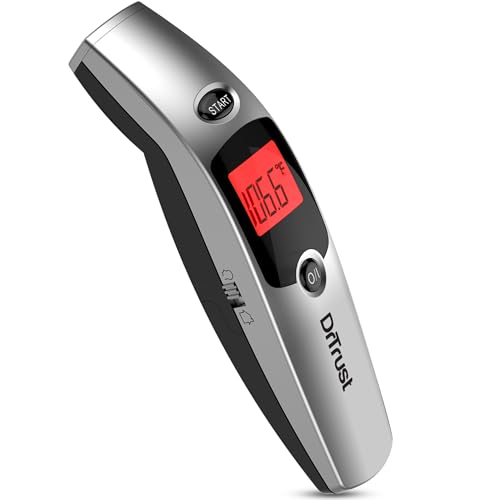
Infrared thermometer picks by mode
Already covered the winner above — here are the picks for specific needs.


AccuSure HS Non-Contact Infrared Thermometer
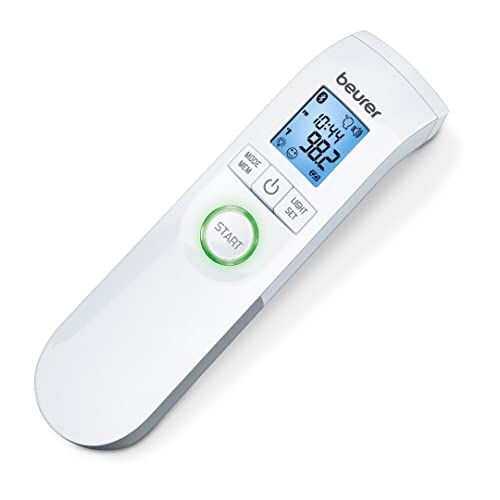
Beurer FT 95 3-in-1 Bluetooth
Thermometers compared on accuracy
How the shortlist stacks up. Scroll sideways on mobile.
| Product | Reading Time | Memory | Price | Deal |
|---|---|---|---|---|
| Dr Trust 603 (₹1,299) | 1 sec | 32 | ₹1,299 | Check Price |
| HealthSense LFR30B (₹1,499) | 1-2 sec | 35 | ₹1,499 | Check Price |
| AccuSure HS (₹999) | 2 sec | 30 | ₹999 | Check Price |
| BPL AccuDigit IR-D2 (₹1,499) | 1 sec | 20 | ₹1,499 | Check Price |
| Vandelay CQR-T800 (₹899) | 1 sec | 32 | ₹899 | Check Price |
| Beurer FT95 (₹2,999) | 2 sec | 60 | ₹2,999 | Check Price |

Infrared thermometer reviews: reading speed and memory
Specs, the honest pros and cons, and who each one is for.
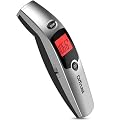
Dr Trust Forehead Infrared Thermometer 603
- Measurement
- Non-contact 3-5 cm
- Accuracy
- ±0.2°C
- Reading Time
- 1 second
- Display
- 3-color coded
- Memory
- 32 readings
- Modes
- Body + Object
- Auto Shut-off
- 30 seconds
The Dr Trust 603 combines clinical-grade accuracy (±0.2°C) with lightning-fast 1-second readings, making it perfect for restless babies and toddlers. Its color-coded fever guidance system (Green/Yellow/Red) lets you interpret results instantly at night without turning on lights. The dual mode functionality measures both body temperature and object surface temperature - invaluable for checking baby milk bottles (37°C ideal) or bath water safety. With 32 memory recall slots, you can track fever progression over multiple days for the entire family. At ₹1,299, it delivers exceptional value with features typically found in ₹2,000+ thermometers.
- + Fastest contactless reading
- + excellent price-to-performance ratio
- + color display easy at night
- + measures baby bottle temperature
- + large memory storage
- + best value under ₹1,500
- - Requires steady hand
- - battery not included
- - needs recalibration in extreme temperatures
HealthSense Accu-Scan LFR30B
- Sensor
- German technology
- Technology
- Blue Dot precision
- Modes
- 4 (Forehead/Ear/Object/Room)
- Display
- Tri-color backlight
- Memory
- 35 readings
- Accuracy
- ±0.2°C
- Warranty
- 1 year India
HealthSense LFR30B stands out with its German sensor technology and proprietary Blue Dot Technology for enhanced precision. The 4-in-1 measurement capability (Forehead/Ear/Object/Room) makes it the most versatile thermometer in this comparison - perfect for families wanting flexibility. The tri-color backlight system (Green/Yellow/Red) provides excellent visibility even in complete darkness during midnight fever checks. With 35 memory storage slots (more than most competitors), it's ideal for tracking temperature trends across multiple family members. The room temperature mode is particularly useful for monitoring nursery climate control. Backed by 1-year Indian warranty, it offers peace of mind beyond just the product quality.
- + Multiple measurement modes
- + German sensor reliability
- + excellent backlight visibility
- + stores 35 readings
- + measures room temperature
- + good warranty support
- - Slightly higher price
- - ear mode requires practice
- - AAA batteries not included
AccuSure HS Non-Contact Infrared Thermometer
- Sensor Type
- High-precision IR
- Reading Time
- 2 seconds
- Display
- 3-color backlit
- Fever Alarm
- Yes (visual+audio)
- Memory
- 30 readings
- Distance
- 1-5 cm
- Scale
- Dual °C/°F
AccuSure HS delivers remarkable value at under ₹1,000, proving budget doesn't mean compromise on essentials. The 2-second quick reading is only marginally slower than premium models, while the 3-color backlit fever alarm system matches competitors costing twice as much. With 30 memory storage slots, it provides adequate tracking capability for most families. The dual Celsius/Fahrenheit display adds flexibility, and the auto power-off function extends battery life significantly. While the build quality is admittedly basic plastic, the core functionality - accurate non-contact temperature measurement - performs reliably. This is the sweet spot for budget-conscious buyers who want infrared technology without premium pricing.
- + Best value under ₹1,000
- + simple operation
- + color-coded fever alarm
- + 30-reading memory
- + 2-second quick response
- + lightweight portable design
- - Basic build quality
- - limited service network
- - requires precise 1-5 cm distance
BPL AccuDigit IR-D2
- Brand
- BPL Medical (India)
- Reading Time
- 1 second
- Display
- Large LCD digits
- Memory
- 20 readings
- Modes
- Body + Object
- Auto Shut-off
- 10 seconds
- Certification
- ISO certified
BPL AccuDigit IR-D2 brings the credibility of India's trusted BPL Medical brand to contactless thermometry. With blazing-fast 1-second readings, it matches the speed of premium international brands while offering superior service network accessibility across tier-2 and tier-3 cities where foreign brands struggle. The large LCD display makes numbers easy to read even for elderly users without backlight dependency. ISO certification provides medical-grade reliability assurance. The dual mode functionality (body + object) adds practical value for checking baby bottle temperatures. While memory storage is limited to 20 readings (vs 30-35 in competitors), the trade-off comes with peace of mind from established local customer support and easier warranty claims. For Indian families prioritizing brand trust and service accessibility over cutting-edge features, BPL is the sensible choice.
- + Trusted Indian brand
- + fast 1-second reading
- + established service network
- + clear LCD display
- + reliable for home use
- + ISO certified
- - Lower memory storage (20 readings)
- - price slightly high for features offered
Vandelay CQR-T800 Made in India
- Certification
- Made in India
- Reading Time
- 1 second
- Display
- HD LED screen
- Memory
- 32 readings
- Warranty
- 3 years (sensor)
- Measurement
- Non-contact forehead
- Price
- ₹899
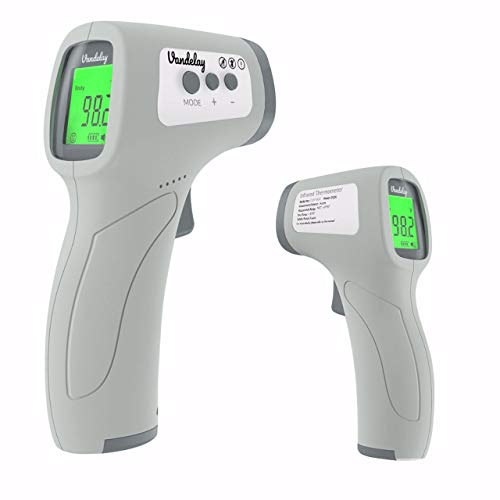
Vandelay CQR-T800 proudly carries the Made in India certification, supporting domestic manufacturing while delivering competitive features. The standout feature is the exceptional 3-year sensor warranty - significantly longer than most competitors offering 1-year coverage, demonstrating manufacturer confidence in product durability. At lightning-fast 1-second reading speed, it matches premium models while undercutting them on price. The HD LED display provides excellent visibility, and 32 memory recall slots match the best in class (Dr Trust 603). At just ₹899, it's the most affordable thermometer with this feature combination. While the brand is newer with fewer reviews compared to established names, the extended warranty and Made in India positioning make it an attractive patriotic choice for budget-conscious buyers.
- + Made in India product
- + excellent warranty (3 years on sensor)
- + affordable pricing
- + large memory storage
- + fast 1-second reading
- + good build quality
- - Newer brand with limited reviews
- - service network still expanding
Beurer FT 95 3-in-1 Bluetooth
- Connectivity
- Bluetooth app
- Modes
- 3-in-1 (Body/Surface/Room)
- Memory
- 60 slots (largest)
- Display
- Large backlit LCD
- Origin
- German engineering
- Alarm
- Visual + audible fever
- App
- Health tracking
Beurer FT95 represents the pinnacle of home thermometer technology with Bluetooth smartphone connectivity enabling comprehensive health tracking via dedicated app. The 60-memory storage capacity is the largest in this comparison, perfect for families managing chronic conditions requiring detailed temperature trend analysis. Its 3-in-1 measurement capability (body/surface/room temperature) offers unmatched versatility - check fever, verify baby bottle temperature, and monitor nursery climate with one device. German engineering quality from 100-year-old Beurer ensures reliability and precision. The comprehensive mobile app lets you share data with doctors remotely, track multiple family members separately, and visualize temperature trends over weeks/months. The large backlit display with visual/audible fever alarm makes it practical beyond just tech features. At ₹2,999, it's expensive - but for tech enthusiasts or medical needs requiring detailed tracking, the investment pays off.
- + Bluetooth smartphone app
- + largest memory (60 slots)
- + measures body/surface/room temperature
- + German quality
- + excellent for health tracking
- + comprehensive mobile app
- - Most expensive option
- - app setup required
- - overkill for basic fever checks
Which infrared thermometer to buy
Here is who each pick is for, based on the comparison above.
Dr Trust Forehead Infrared Thermometer 603 · ₹1,299
1-second reading, 32 memory, dual mode
Check Price on Amazon →HealthSense Accu-Scan LFR30B · ₹1,499
4 modes, German sensor, 35 memory
Check Price on Amazon →AccuSure HS Non-Contact Infrared Thermometer · ₹999
Best value under ₹1,000
Check Price on Amazon →Beurer FT 95 3-in-1 Bluetooth · ₹2,999
Bluetooth app, 60 memory, German tech
Check Price on Amazon →Choosing an infrared thermometer
-
Accuracy Standards for Medical Thermometers
Medical-grade infrared thermometers should maintain ±0.2°C accuracy in the critical 35.5-42°C fever detection range. All our recommended models meet this clinical standard. For consistent accuracy, measure on dry forehead center, maintain exact 3-5 cm distance, avoid direct AC/fan drafts, and wipe sweat before measurement. Always verify FDA/CE/ISO certification before purchase. -
Contactless vs Contact Thermometers
Infrared non-contact thermometers measure in 1-2 seconds from 3-5 cm distance - ideal for babies, sleeping persons, and COVID-conscious families. They enable hygienic multi-person use without cleaning between measurements. While requiring proper technique (steady hand, correct distance), they offer unmatched convenience for households with children or elderly members compared to traditional contact thermometers. -
Essential Features to Prioritize
Must-have features: Color-coded fever display (Green=Normal, Yellow=Elevated, Red=Fever) for instant interpretation, memory recall storing 20-60 readings to track fever progression, dual Celsius/Fahrenheit modes, backlit display for night use, fever alarm beep. Premium features include Bluetooth app connectivity for health tracking, dual body/object modes for checking milk bottles, and multi-mode forehead/ear measurement options. -
Indian Climate Considerations
Monsoon humidity affects infrared sensor accuracy - always wipe forehead completely dry and store thermometer with silica gel packets. Summer heat requires 10-minute cooldown after outdoor exposure before measurement. Extreme temperature storage (hot car to cold AC room) may need recalibration. Store in dry place away from bathroom humidity and kitchen steam for consistent performance year-round. -
Memory Storage and Tracking
Memory recall is crucial for tracking fever progression over 3-4 days during illness, managing multiple children temperatures, monitoring chronic conditions, or comparing morning/evening readings. Budget models store 20-30 readings, mid-range 32-35, premium models like Beurer FT95 store 60+ with Bluetooth sync. For occasional fever checks, 20-memory models suffice - save money on basic storage. -
Battery Life and Maintenance
Most infrared thermometers use 2 AAA batteries lasting 3-6 months with regular home use. Auto shut-off (10-30 seconds) extends battery life significantly. Clean infrared lens with dry microfiber cloth monthly to maintain accuracy. Store batteries separately in humid climates. Avoid touching lens with fingers - oils reduce accuracy. Replace thermometer after 3-4 years if calibration drifts beyond ±0.3°C.
Frequently asked questions
What is the best thermometers infrared in India?
Are infrared thermometers as accurate as contact thermometers?
Which thermometer is best for babies and toddlers?
Do infrared thermometers work accurately during Indian summer and monsoon?
Is the memory recall feature really necessary?
Should I buy Indian brands (BPL, Vandelay) or international brands (Beurer, HealthSense)?
Is the Bluetooth thermometer (Beurer FT95) worth ₹2,999?
How do I use an infrared thermometer correctly?
What is normal forehead temperature with an infrared thermometer?
Can infrared thermometer detect COVID-19 or other diseases?
Infrared thermometer vs digital thermometer - which is more accurate?
How do I know if my infrared thermometer is accurate?
You may also like
More guides and reviews to help you decide.