
PRODUCT REVIEW
Best 55 Inch Smart TVs in India 2026
Best 55 inch TV in India 2026 across every budget — OLED, Mini-LED, QLED and LED from LG, Hisense, Samsung, Sony, TCL, Vu and Xiaomi, with prices.
 By Naveen Bhavnani
Updated
By Naveen Bhavnani
Updated
As an Amazon Associate we earn from qualifying purchases. We could also earn a fee through some links when you click on them.

55 inch TV picks for every budget
Already covered the winner above — here are the picks for specific needs.

Hisense U7Q 55" QLED Mini-LED (55U7Q)
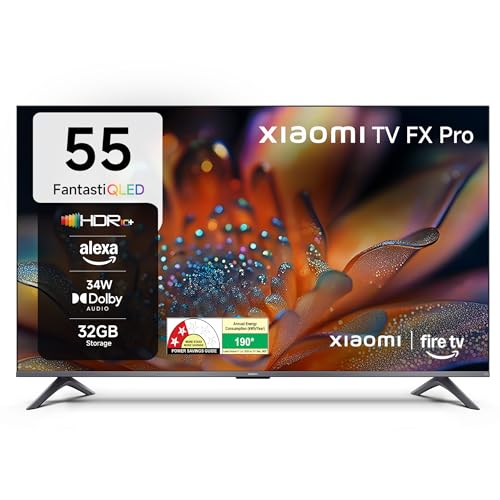
Xiaomi FX Pro 55" QLED Fire TV (L55MB-FPIN)

Vu GloLED 55" Google TV (55GloLED)
55 inch TVs compared on panel
How the shortlist stacks up. Scroll sideways on mobile.
| WWCD Score | Product | Panel | Refresh | HDR / Brightness | Smart OS | Sound | Rating | Price | Deal |
|---|---|---|---|---|---|---|---|---|---|
| 9.4/10 | LG OLED evo C5 55" (OLED55C56LA) | OLED evo (self-lit) | 120 Hz | ~700 nits / Dolby Vision, HDR10, HLG | webOS 25 | 40W 2.2ch, Dolby Atmos | 4.4★ (190) | ₹1,19,990 | Check Price |
| 9.1/10 | Hisense U7Q 55" QLED Mini-LED (55U7Q) | QLED Mini-LED (local dimming) | 144 Hz | 900 nits (peak) / Dolby Vision IQ, HDR10+, HLG | VIDAA U | 40W 2.1ch with built-in subwoofer, Dolby Atmos | 4.4★ (69) | ₹49,999 | Check Price |
| 8.8/10 | Samsung Q7F 55" QLED (QA55Q7FAAULXL) | QLED (Quantum Dot) | 60 Hz | HDR10, HDR10+, HLG | Tizen | 20W, Object Tracking Sound Lite, Adaptive Sound | 4.5★ (35) | ₹52,980 | Check Price |
| 8.8/10 | TCL 55T8C 55" QLED Google TV | QLED | 120 Hz | ~350 nits / HDR10+ | Google TV (Android 14 capable) | 35W, Dolby Atmos (rear subwoofer) | 4.1★ (1253) | ₹42,990 | Check Price |
| 8.7/10 | Sony BRAVIA 3 55" (K-55S30B) | 4K LED (Direct LED) | 60 Hz | ~410 nits / HDR10, HLG | Google TV | 20W, Bass Reflex, Dolby Atmos | 4.6★ (502) | ₹77,990 | Check Price |
| 8.7/10 | Vu GloLED 55" Google TV (55GloLED) | 4K LED (Glo Panel) | 60 Hz | ~400 nits / Dolby Vision IQ, HDR10+, HLG | Google TV | 104W (4 + 1 subwoofer), Dolby Atmos | 4.3★ (4211) | ₹32,990 | Check Price |
| 8.6/10 | VW Pro Series 55" QLED Google TV (VW55GQ2) | QLED (LED, high brightness) | 120 Hz | 700 nits / HDR10+ | Google TV | 50W, Dolby | 4.2★ (436) | ₹30,499 | Check Price |
| 8.5/10 | Sony BRAVIA KD-55X75L 55" | 4K LED (Direct LED) | 60 Hz | HDR10, HLG | Google TV | 20W, Dolby Audio | 4.7★ (1493) | ₹59,990 | Check Price |
| 8.5/10 | Philips 8100 55" QD-Mini LED Google TV (55MLED610/94) | QD-Mini LED, local dimming | 120 Hz | ~400 nits / HDR10+, HLG | Google TV | 36W, Dolby Atmos | 4.4★ (188) | ₹45,999 | Check Price |
| 8.5/10 | Xiaomi FX Pro 55" QLED Fire TV (L55MB-FPIN) | QLED | 60 Hz | HDR10+ | Fire OS 8 | 34W, DTS:X / DTS Virtual:X | 4.3★ (1816) | ₹37,999 | Check Price |


55 inch TV reviews: panel, brightness and sound
Specs, the honest pros and cons, and who each one is for.
LG OLED evo C5 55" (OLED55C56LA)
The reference 55-inch TV: flawless OLED picture, no compromises.
- Panel
- OLED evo (self-lit)
- Resolution
- 4K UHD (3840×2160)
- Refresh Rate
- 120 Hz
- Peak Brightness
- ~700 nits
- HDR
- Dolby Vision, HDR10, HLG
- Processor
- a9 AI Processor Gen8
- OS
- webOS 25
- Audio
- 40W 2.2ch, Dolby Atmos
- HDMI
- 4 (HDMI 2.1)
- Warranty
- 3 years (2yr full + 1yr panel)
If budget is no object, the LG C5 is simply the best 55-inch TV you can buy in India — perfect blacks, the slickest smart platform and gaming-grade 120Hz/HDMI 2.1. Just be ready for the premium price and pricey out-of-warranty panel repairs.
- + Reference-grade OLED picture with perfect blacks and infinite contrast
- + full Dolby Vision with 120Hz and 4× HDMI 2.1
- + fastest webOS platform on the a9 Gen8 processor
- + point-and-click Magic Remote
- + industry-leading 3-year warranty
- + genuinely good 40W 2.2ch sound
- - By far the most expensive TV here at ₹1·19L
- - out-of-warranty OLED panel repairs are very costly
- - ~700-nit peak trails the brightest mini-LEDs in bright rooms
- - very limited stock at research time
Hisense U7Q 55" QLED Mini-LED (55U7Q)
Flagship Mini-LED brightness and sound at a mid-range price.
- Panel
- QLED Mini-LED (local dimming)
- Resolution
- 4K UHD
- Refresh Rate
- 144 Hz
- Peak Brightness
- 900 nits (peak)
- HDR
- Dolby Vision IQ, HDR10+, HLG
- OS
- VIDAA U
- Audio
- 40W 2.1ch with built-in subwoofer, Dolby Atmos
- HDMI
- 4
- Warranty
- 2 years
The Hisense U7Q packs genuine Mini-LED, 900-nit brightness, 144Hz and a built-in subwoofer for half the price of premium rivals. App-store gaps and some panel-QC reports are the trade-offs, but on sheer value it is unbeatable in the mid tier.
- + Genuine Mini-LED with local dimming and 900-nit peak
- + 144Hz panel with Dolby Vision IQ for movies and gaming
- + 40W 2.1ch sound with a built-in subwoofer
- + flagship features at a mid-range price
- + 2-year warranty and 4× HDMI
- - VIDAA OS has a smaller app store than Google TV (no Spotify)
- - some panel-defect and warranty-claim reports
- - inconsistent install/service across regions
- - not quite OLED-level in deep blacks
- - low review count (69) as a newer model
Samsung Q7F 55" QLED (QA55Q7FAAULXL)
Trusted Samsung QLED with a slick, reliable smart experience.
- Panel
- QLED (Quantum Dot)
- Resolution
- 4K UHD
- Refresh Rate
- 60 Hz
- HDR
- HDR10, HDR10+, HLG
- OS
- Tizen
- Audio
- 20W, Object Tracking Sound Lite, Adaptive Sound
- HDMI
- 3
- Warranty
- 1yr + 1yr panel
The Q7F delivers Samsung's signature vivid QLED colour and a fast Tizen platform with dependable after-sales. Basic 20W audio, a 60Hz panel and a price above better-specced rivals are the catches, but brand-conscious buyers will be happy.
- + Quantum Dot QLED panel with vivid accurate colour
- + fast and polished Tizen platform with wide app support
- + trusted Samsung brand and wide service network
- + extra year of panel warranty
- + Object Tracking Sound Lite adds directionality
- - Only 20W audio with no subwoofer sounds basic
- - 60Hz panel and no Dolby Vision weaken gaming and HDR
- - pricey for the spec versus Hisense and TCL
- - very low review count (35)
- - limited stock at research time
TCL 55T8C 55" QLED Google TV
Feature-packed QLED value with sound that punches above its price.
- Panel
- QLED
- Resolution
- 4K UHD
- Refresh Rate
- 120 Hz
- Peak Brightness
- ~350 nits
- HDR
- HDR10+
- OS
- Google TV (Android 14 capable)
- Audio
- 35W, Dolby Atmos (rear subwoofer)
- HDMI
- 4
- Warranty
- 2 years
The TCL 55T8C crams QLED, 120Hz, four HDMI ports and a rear subwoofer into a ₹42,990 package with a 2-year warranty. Picture and sound impress for the money; the asterisk is TCL's inconsistent panel QC and after-sales service.
- + QLED panel with 120Hz and 4× HDMI at a mid price
- + good built-in sound with a rear subwoofer
- + fast responsive Google TV on Android 14
- + large established review base (1250+ ratings)
- + 2-year warranty
- - Noticeable QC complaints of panel dots/dust within months
- - after-sales and installation service draws frequent criticism
- - ~350-nit brightness and no Dolby Vision limit HDR
- - wall-mount stand sold separately
- - panel rated below LG/Sony by some owners
Sony BRAVIA 3 55" (K-55S30B)
Sony's acclaimed picture processing in a premium package.
- Panel
- 4K LED (Direct LED)
- Resolution
- 4K UHD
- Refresh Rate
- 60 Hz
- Peak Brightness
- ~410 nits
- HDR
- HDR10, HLG
- Processor
- 4K Processor X1 (AI upscaling)
- OS
- Google TV
- Audio
- 20W, Bass Reflex, Dolby Atmos
- HDMI
- 4
- Warranty
- 1 year
The BRAVIA 3 leans on Sony's superb X1 processor for natural colour and best-in-class upscaling, wrapped in premium build. But it's a basic 60Hz LED at a premium price — you're buying the Sony engine, not the panel.
- + Sony X1 processor delivers the best colour and upscaling in the field
- + natural film-like picture Sony loyalists love
- + bass-reflex speakers sound a step above other 20W TVs
- + Google TV with 4× HDMI and trusted Sony build
- + strong 4.6 rating
- - Basic 60Hz LED with no Mini-LED no 120Hz and no Dolby Vision at a premium ₹77,990
- - poor value on paper
- - no table stand in the box
- - UI lag and a colour-settings save bug reported
- - only 20W audio and a 1-year warranty
Vu GloLED 55" Google TV (55GloLED)
A built-in home theatre — 104W of sound no rival can match.
- Panel
- 4K LED (Glo Panel)
- Resolution
- 4K UHD
- Refresh Rate
- 60 Hz
- Peak Brightness
- ~400 nits
- HDR
- Dolby Vision IQ, HDR10+, HLG
- OS
- Google TV
- Audio
- 104W (4 + 1 subwoofer), Dolby Atmos
- HDMI
- 3
- Warranty
- 1 year
The Vu GloLED is the sound king of this list: 104W and a subwoofer mean you genuinely don't need a soundbar. The basic 60Hz panel and questions over long-term durability are the trade-offs for that big, bold audio at ₹32,990.
- + Massive 104W sound system with a dedicated subwoofer (best built-in audio here)
- + Dolby Vision IQ on a budget panel
- + excellent value with a huge 4200+ rating base
- + good colour and bright-enough panel for most rooms
- + full Google TV app ecosystem
- - Long-term durability is the weak spot with panel/LED faults after 1–1.5 years in several reviews
- - ₹1500 service-visit charge and poor after-sales reported
- - basic 60Hz LED with no local dimming
- - occasional corner backlight bleed
- - older 2022 model with 1-year warranty
VW Pro Series 55" QLED Google TV (VW55GQ2)
Big-spec budget QLED — brilliant value, if your unit is a good one.
- Panel
- QLED (LED, high brightness)
- Resolution
- 4K UHD
- Refresh Rate
- 120 Hz
- Peak Brightness
- 700 nits
- HDR
- HDR10+
- OS
- Google TV
- Audio
- 50W, Dolby
- HDMI
- 3
- Warranty
- 18 months
On paper the VW Pro is stunning value: a 700-nit QLED with 120Hz and 50W sound for ₹30,499. The catch is reliability — too many reviews report dead-on-arrival units and poor service, so buy only if you value spec-per-rupee over peace of mind.
- + 700-nit QLED with 120Hz at just ₹30,499 (strong spec-for-price)
- + punchy 50W sound for a budget set
- + vibrant sharp picture budget buyers praise
- + snappy Google TV with the full app library
- + 18-month warranty
- - Serious reliability red flags with DOA units and early failures in several reviews
- - unresponsive call centre and warranty complaints
- - reports of wrong/missing wall-mount brackets and surprise install charges
- - some panel edge-bleed
- - lesser-known brand with a thin service footprint
Sony BRAVIA KD-55X75L 55"
The safe Sony pick — trusted picture and the best ratings in class.
- Panel
- 4K LED (Direct LED)
- Resolution
- 4K UHD
- Refresh Rate
- 60 Hz
- HDR
- HDR10, HLG
- Processor
- 4K Processor X1
- OS
- Google TV
- Audio
- 20W, Dolby Audio
- HDMI
- 3
- Warranty
- 1 year
The X75L wins on trust: the best customer rating here, Sony's clean X1 processing and dependable build. But it's a basic 60Hz LED with weak 20W audio at ₹59,990 — you're paying for the badge and reliability, not the spec sheet.
- + Sony X1 processing for clean natural colour and excellent upscaling
- + highest customer rating in the field (4.7 across 1490+ ratings)
- + trusted Sony brand and build quality
- + Google TV with the full app ecosystem
- + good value within Sony's own range
- - Basic 60Hz LED with no 120Hz no Dolby Vision and no Mini-LED at ₹59,990
- - weak 20W audio that needs a soundbar
- - UI lag and stutter is a recurring complaint
- - some panel-defect reports after a few months
- - only 3 HDMI and a 1-year warranty
Philips 8100 55" QD-Mini LED Google TV (55MLED610/94)
Premium QD-Mini LED picture, let down by sluggish software.
- Panel
- QD-Mini LED, local dimming
- Resolution
- 4K UHD
- Refresh Rate
- 120 Hz
- Peak Brightness
- ~400 nits
- HDR
- HDR10+, HLG
- OS
- Google TV
- Audio
- 36W, Dolby Atmos
- HDMI
- 3
- Warranty
- 1 year
The Philips 8100 brings genuine QD-Mini LED and 120Hz to ₹45,999, and the picture earns real praise. But a laggy OS, streaming stutter and weak built-in sound hold it back — buy for the panel, plan for a soundbar and some software patience.
- + QD-Mini LED panel with local dimming and 120Hz (premium tech at ₹45,999)
- + sharp vibrant picture reviewers say rivals pricier brands
- + full Google TV app ecosystem
- + Dolby Atmos decoding and a slim clean design
- + strong MRP-to-price discount
- - Laggy occasionally hanging OS and slow remote response
- - streaming glitches/stutter on some units
- - built-in sound rated poor by several owners
- - multiple defective-unit and QC reports plus weak support
- - low review count (188) and a 1-year warranty
Xiaomi FX Pro 55" QLED Fire TV (L55MB-FPIN)
Vibrant QLED value — if you can live with Fire OS.
- Panel
- QLED
- Resolution
- 4K UHD
- Refresh Rate
- 60 Hz
- HDR
- HDR10+
- OS
- Fire OS 8
- Audio
- 34W, DTS:X / DTS Virtual:X
- HDMI
- 3
- Warranty
- 1 year
The Xiaomi FX Pro offers genuinely good QLED colour and an anti-reflection screen at ₹37,999, backed by a big review base. The main catch is Fire OS — no Google Play Store, so check your apps are supported — plus some panel-QC and sound-degradation reports.
- + Quantum Dot QLED with vibrant colour deep blacks and an anti-reflection screen
- + smooth lag-free navigation
- + strong value with a large 1800+ rating base
- + DTS:X audio support and a clean design
- + reliable Xiaomi distribution and pricing
- - Fire OS lacks the Google Play Store so some apps are unavailable
- - reports of backlight bleeding within ~8 months and a slow ~1-minute boot
- - basic 34W sound that degrades over time per some owners
- - 60Hz panel weaker for gaming/HDR
- - occasional Wi-Fi/app lag
Which 55 inch TV to buy
Four TVs cover almost every 55-inch buyer — the best picture, the best value, the safest budget choice and the best built-in sound.
LG OLED evo C5 55" · ₹1,19,990
Buy this if you want the best picture at 55 inches and the budget to match — perfect OLED blacks, 120Hz/HDMI 2.1 and a 3-year warranty.
Check Price on Amazon →Hisense U7Q 55" Mini-LED · ₹49,999
Buy this for flagship Mini-LED brightness, 144Hz and a built-in subwoofer at roughly half the price of premium rivals.
Check Price on Amazon →Xiaomi FX Pro 55" QLED · ₹37,999
Buy this for vibrant QLED colour and an anti-glare screen on a budget — just check your apps run on Fire OS.
Check Price on Amazon →Vu GloLED 55" · ₹32,990
Buy this if you want a built-in home theatre — 104W and a real subwoofer mean you genuinely don't need a soundbar.
Check Price on Amazon →Check your sofa distance against each size band, then see where QLED, Mini-LED and OLED start on price.
Compare every TV size →How to choose a 55 inch TV
-
Panel type: OLED vs Mini-LED vs QLED vs LED
Panel technology is the single biggest driver of picture quality. OLED (LG C5) gives perfect blacks and infinite contrast — the best image, at the highest price. Mini-LED (Hisense U7Q) uses thousands of tiny backlights with local dimming for bright, punchy HDR close to OLED contrast. QLED (Samsung, TCL, Xiaomi, VW) adds a quantum-dot layer for vivid colour but uses a normal backlight. Plain LED (Sony X75L/Bravia 3, Vu) is the most basic — fine in good lighting but weaker contrast. For HDR movies and gaming, prioritise Mini-LED or OLED. -
Brightness and HDR — what the numbers mean
Peak brightness (in nits) decides how much HDR highlights pop and how usable the TV is in a sunlit room. Under ~400 nits (Vu, Philips) is fine for dim or moderate rooms; 700+ nits (VW, LG C5) or the Hisense U7Q's 900-nit peak handles bright rooms and shows HDR at its best. Also check the HDR format: Dolby Vision (LG, Hisense, Vu) is the premium dynamic standard; HDR10+ (Samsung, TCL, Xiaomi, VW, Philips) is the next best. Sony's sets here support only HDR10. -
Refresh rate and gaming (120Hz / HDMI 2.1)
A 120Hz (or 144Hz) panel with HDMI 2.1 means smoother motion and proper next-gen gaming (4K@120 or 1080p@120 on PS5/Xbox). The VW, TCL, Philips and LG C5 are 120Hz; the Hisense U7Q goes to 144Hz. The Sony LEDs, Vu and Xiaomi are 60Hz — fine for movies and casual play, but limiting for serious gamers. If you game, make 120Hz + HDMI 2.1 a must-have. -
Smart platform — Google TV, Tizen, webOS, VIDAA, Fire OS
The OS shapes daily use. Google TV (TCL, Vu, VW, Sony, Philips) and LG's webOS (C5) have the widest app support and slickest navigation. Samsung's Tizen is fast and well-supported. Hisense's VIDAA is quick but has a smaller app store (no Spotify, for example). Xiaomi's Fire OS has no Google Play Store — check your must-have apps are available before buying. Adequate RAM matters too: 2GB sets can feel sluggish, so a TV with more RAM keeps the UI from lagging. For the full cross-size walkthrough of panels, HDR and ports, see our TV buying guide. -
Don't forget sound — and the soundbar budget
Most slim TVs have weak speakers. The standout exceptions here are the Vu GloLED (104W with subwoofer) and Hisense U7Q (40W 2.1 with subwoofer) — both genuinely usable without extra kit. The 20W Sony and Samsung sets, and the Philips, are widely reported as needing a soundbar. If a TV has only ~20–36W and no subwoofer, add a soundbar under ₹20,000 to match a 55-inch set. -
Warranty, installation and after-sales reality
In India, service quality varies hugely by brand and is a frequent complaint across price points — including premium names. Established brands (LG, Samsung, Sony) have the widest service networks; the LG C5's 3-year and TCL/Hisense's 2-year warranties are the longest here. Budget brands (VW, Vu) and even some premium models drew repeated complaints about defective units, slow technicians and surprise charges. Note that many TVs (notably Sony and LG OLED) do not include a table stand or wall mount in the box — confirm before you buy, and factor installation into your budget. -
What size and viewing distance — is 55 inches right for your room?
55 inches is the sweet spot for most Indian living rooms with a 7–10 feet (2.1–3 m) viewing distance, and suits rooms roughly 12×15 ft to 15×18 ft. The minimum comfortable distance is about 5.5 feet. If you sit closer than 5 feet, a 43-inch TV will look better; if you sit further than 10 feet, step up to 65 inches. Because 4K packs four times the pixels of Full HD, you can sit closer to a 55-inch 4K set than to an older 1080p TV without seeing pixels. For a second TV in a bedroom or kitchen, see our best 32-inch smart TVs.
Frequently asked questions
What is the best 55 inch TV in India in 2026?
Is 55 inch TV the right size for my room?
Should I buy a budget QLED or wait and buy OLED?
What is the best 55 inch TV under 50000?
What is the best 55 inch TV for gaming?
Is a Mini-LED TV worth it over a regular QLED or LED?
Do I need a soundbar with these TVs?
How reliable are budget brands like VW and Vu?
You may also like
More guides and reviews to help you decide.
Best 65 inch TV in India 2026: we compared 11 OLED, Mini LED and QLED models from LG, Sony, TCL, Toshiba and Hisense across budgets from ₹37K to ₹1.9L.
Read more →Best 43 inch TV in India 2026. We ranked 9 QLED, Mini LED & LED smart TVs from Vu, Sony, Samsung, Philips, Xiaomi, LG & more for picture, sound & value.
Read more →Best 75-inch TVs in India 2026 — Mini-LED, QLED & 4K gaming picks from ₹63,990. Compare Hisense, Sony, TCL, Vu and Philips on picture, sound and value.
Read more →Best 32 inch TV in India 2026 — 7 models from ₹12,999 to ₹28,990 compared. Sony BRAVIA wins on picture quality; TCL V5C is the only Full HD QLED under ₹16,000.
Read more →Find the best hdmi cable in India 2026. Research-based reviews with detailed comparisons, prices, pros & cons to help you pick the right one.
Read more →Android TV boxes compared for Indian homes: Google TV interface, Dolby Vision, Wi-Fi 6 and storage ranked, with current prices and honest pros and cons.
Read more →