
PRODUCT REVIEW
Best Baby Carriers and Hip Seats in India 2026
Best baby carriers and wraps in India 2026. Compare LuvLap, 1st Step and R for Rabbit hip-seat carriers from ₹1,182 to ₹1,996 on support and comfort.
 By Naveen Bhavnani
Updated
By Naveen Bhavnani
Updated
Medical disclaimer
This content is for educational purposes only and is not a substitute for professional medical advice, diagnosis, or treatment. Always consult a qualified healthcare provider before starting any supplement or making health decisions. For pediatric concerns, consult your child's paediatrician.
As an Amazon Associate we earn from qualifying purchases. We could also earn a fee through some links when you click on them.
Baby carrier picks by carrier type
Already covered the winner above — here are the picks for specific needs.


Baby carriers compared on price
How the shortlist stacks up. Scroll sideways on mobile.
| WWCD Score | Product | Key Feature | Price | Deal |
|---|---|---|---|---|
| 9.2/10 | LuvLap Comfy 3-in-1 | Detachable Hip Seat | ₹1,628 | Check Price |
| 9.0/10 | R for Rabbit Upsy Daisy | 8-in-1 Versatility | ₹1,996 | Check Price |
| 8.9/10 | Infantso Premium | Highest Rating | ₹1,845 | Check Price |
| 8.8/10 | LuvLap Royal Hip Seat | 4,600+ Reviews | ₹1,569 | Check Price |
| 8.8/10 | Baybee Neonest | Full Mesh Panels | ₹2,849 | Check Price |
| 8.7/10 | Butt Baby Comic | Made in India | ₹2,399 | Check Price |
| 8.6/10 | Anmol Hybrid Wrap | ASTM Certified | ₹2,700 | Check Price |
| 8.5/10 | 1st Step 5-in-1 Hip Seat | EN 13209 Certified | ₹1,182 | Check Price |
| 8.4/10 | Soulslings Imbu Buckle | 100% Cotton Sling | ₹2,374 | Check Price |


Baby carrier reviews: M-position, support and fit
Specs, the honest pros and cons, and who each one is for.
1st Step 5-in-1 Hip Seat
- Positions
- 5 carry modes
- Hip Seat
- Detachable
- Certification
- EN 13209 certified
- Weight Limit
- 15 kg
- M-Position
- Ergonomic design
- Price
- Most affordable
The 1st Step 5-in-1 carrier delivers exceptional value as the most affordable carrier with EN 13209 safety certification on our list. Despite the budget price, it doesn't compromise on essential features - you get a detachable hip seat, ergonomic M-position support, and 5 carrying positions including front-facing, back carry, and hip carry. The safety certification ensures it meets European standards for child care products, providing peace of mind that's often missing in budget options. The detachable hip seat adds versatility, allowing standalone use for quick carries around the house or short trips.
- + Certified safety standards
- + excellent value for money
- + versatile positions
- + proven ergonomic design
- - Fewer reviews than established brands
- - basic padding compared to premium options
LuvLap Royal Hip Seat
- Positions
- 4 carry modes
- Hip Seat
- Integrated (fixed)
- Age Range
- 4-24 months
- Weight Limit
- 15 kg
- Reviews
- 4,600+ ratings
- Care
- Machine washable
The LuvLap Royal stands out with its proven reliability backed by over 4,600 customer reviews. As one of India's most trusted baby product brands, LuvLap has built a reputation for consistent quality and safety. This carrier keeps things simple with 4 essential carrying positions - front-facing in, front-facing out, hip carry, and back carry. The integrated hip seat design means fewer parts to assemble or lose, making it perfect for straightforward daily use. The machine-washable fabric is practical for real-world parenting, and the reinforced stitching ensures long-term durability through multiple children or years of use.
- + Thousands of positive reviews
- + trusted brand
- + simple design
- + reliable safety features
- - Hip seat not detachable
- - limited storage pockets
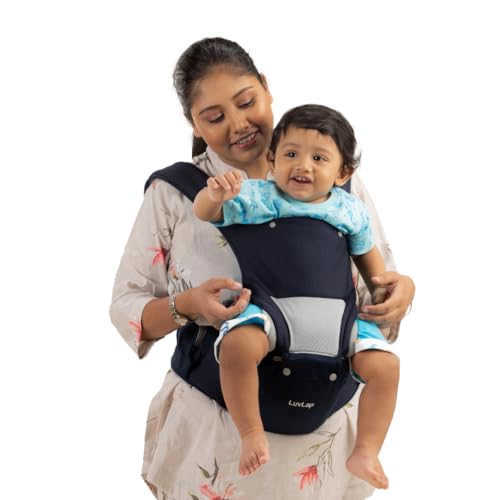
LuvLap Comfy 3-in-1
- Positions
- 6 carry modes
- Hip Seat
- Detachable
- Age Range
- 6-24 months
- Weight Limit
- 15 kg
- Material
- Breathable mesh
- Lumbar Support
- Wide padded belt
The LuvLap Comfy stands out with its innovative detachable hip seat design offering exceptional versatility. Use it as a standalone hip seat for quick carries or combine with the carrier top for full support. The ergonomic M-position ensures proper spine and hip development, while breathable mesh fabric keeps both parent and baby comfortable during extended use. With 6 carrying positions including front-facing in, front-facing out, back carry, hip carry, nursing position, and kangaroo carry, this carrier grows with your baby from 6 months to 2 years.
- + Versatile detachable design
- + excellent ergonomic support
- + breathable fabric
- + great value for money
- - Initial setup learning curve
- - bulkier than soft carriers
R for Rabbit Upsy Daisy
- Positions
- 8 carry modes
- Hip Seat
- Integrated
- Age Range
- 0-24 months
- Weight Limit
- 15 kg
- Brand
- R for Rabbit (Premium)
- Warranty
- 1 year manufacturer
R for Rabbit's Upsy Daisy offers unmatched versatility with 8 different carrying positions, making it the most adaptable carrier on the market. From newborn to toddler, this carrier supports every stage of your baby's development. The premium ergonomic design with proper M-position seating ensures healthy hip development, endorsed by orthopedic experts. R for Rabbit is a trusted premium brand in India known for superior quality and safety standards. The carrier features extra-wide shoulder straps and waist belt for optimal weight distribution, plus breathable fabrics for all-season comfort.
- + Maximum versatility
- + trusted premium brand
- + superior ergonomics
- + excellent build quality
- - Higher price point
- - learning curve for all positions
Infantso Premium
- Positions
- 6 adjustable
- Hip Seat
- Kangaroo style
- Age Range
- 4-24 months
- Weight Limit
- 15 kg
- Reviews
- 2,888+ ratings
- Material
- Premium padded
The Infantso Premium earned its 4.4-star rating from nearly 3,000 reviewers thanks to exceptional comfort and thoughtful design features. The kangaroo-style pouch with adjustable 6 carrying positions provides versatility for every situation. What sets this carrier apart is the extra-thick padding on shoulder straps and waist belt, making extended wear genuinely comfortable. The hip seat is wider than budget options, providing better support and ergonomic positioning. Available in multiple attractive colors, the premium fabric blend is both soft and durable, with reinforced stitching at stress points.
- + Highest rating
- + feature-rich
- + excellent padding
- + wide color selection
- - Slightly heavier
- - instructions could be clearer
Butt Baby Comic
- Origin
- Made in India
- Positions
- Multiple carry modes
- Approval
- Doctor approved
- Storage
- Built-in diaper bag
- Weight Limit
- 15 kg
- Design
- Ergonomic M-position
Butt Baby Comic stands out as a proudly Made in India brand that supports local manufacturing while maintaining international quality standards. The carrier features doctor-approved ergonomic design ensuring proper hip development and spinal support. What makes it particularly practical is the built-in mini diaper bag integrated into the hip seat - eliminating the need to carry a separate bag for short outings. The quality certification and attention to detail show that Made in India doesn't mean compromised quality. The carrier uses premium fabrics, reinforced stitching, and thoughtful features like adjustable straps and breathable panels.
- + Made in India
- + doctor-approved design
- + practical storage
- + quality build
- - Higher price than budget options
- - moderate brand recognition
Soulslings Imbu Buckle
- Type
- Ring Sling
- Material
- 100% Cotton
- Style
- Denim design
- Weight Limit
- 20 kg (highest)
- Weight
- Ultra-lightweight
- Climate
- Perfect for summer
The Soulslings Imbu represents a completely different babywearing philosophy - the traditional ring sling design. Made from 100% natural cotton in a stylish denim finish, this carrier is ultra-lightweight and ultra-breathable, making it perfect for India's hot summers. Unlike structured carriers, ring slings excel at quick up-and-down carries and nursing on the go. The fabric distributes baby's weight across your shoulder and hip, and the ring adjustment system allows infinite positioning. It's the lightest option on our list and packs down to almost nothing in your bag. The 20kg weight capacity is the highest, supporting older toddlers that have outgrown other carriers.
- + Ultra-lightweight
- + 100% natural cotton
- + perfect for hot weather
- + higher weight capacity
- - Learning curve for ring sling technique
- - fewer reviews
- - one-shoulder weight distribution
Baybee Neonest
- Positions
- 6 carry modes
- Material
- Full breathable mesh
- Age Range
- 0-36 months
- Weight Limit
- 15 kg
- Lumbar Support
- Wide cushioned belt
- Storage
- Multiple pockets
The Baybee Neonest is engineered specifically for India's hot climate with full breathable mesh panels throughout the carrier body. Unlike competitors that use mesh selectively, this carrier prioritizes maximum airflow to keep both parent and baby cool during extended use. The premium build quality shows in every detail - from the wide, cushioned waist seat that distributes weight perfectly to the reinforced stitching at every stress point. The 6 carrying positions cover every need from newborn to toddler, and the generous storage pockets (including insulated bottle pocket) make it perfect for long outings. The lumbar support system is among the best-rated in this segment, and owners consistently credit it with preventing back pain during extended babywearing.
- + Superior breathability
- + premium materials
- + excellent comfort
- + multiple storage pockets
- - Higher price
- - bulkier due to extra padding
Anmol Hybrid Wrap
- Type
- Hybrid Wrap
- Material
- 100% handwoven cotton
- Certification
- ASTM certified
- Weight Limit
- 18 kg
- Age Range
- 0-24 months
- Style
- Traditional wrapping
The Anmol Hybrid Wrap combines traditional babywearing wisdom with modern safety standards. Made from 100% handwoven cotton, this wrap offers the ultimate in natural comfort and breathability. The ASTM certification (American Society for Testing and Materials) ensures it meets rigorous international safety standards - rare for wrap-style carriers. The hybrid design provides structure where needed while maintaining the flexibility and custom fit of traditional wraps. The handwoven quality creates a unique diagonal stretch that provides support without being rigid. This is the choice for parents who want authentic traditional babywearing with certified safety assurance.
- + ASTM safety certified
- + handwoven quality
- + premium cotton
- + traditional wrapping experience
- - Learning curve for wrapping technique
- - higher price
- - longer setup time
Which baby carrier to buy
Here is who each pick is for, based on the comparison above.
LuvLap Comfy 3-in-1 · ₹1,628
Detachable hip seat, 6 positions
Check Price on Amazon →1st Step 5-in-1 Hip Seat · ₹1,182
EN 13209 certified, budget pick
Check Price on Amazon →LuvLap Royal Hip Seat · ₹1,569
4,600+ reviews, proven reliability
Check Price on Amazon →R for Rabbit Upsy Daisy · ₹1,996
8-in-1 positions, premium quality
Check Price on Amazon →Compare carriers against strollers and car seats, and see which travel gear is worth buying before baby arrives.
Compare baby travel gear →How to choose a baby carrier
-
Understanding Baby Carrier Types
Baby carriers come in three main types: Soft Structured Carriers (SSC) with padded straps and hip seat options (like LuvLap Comfy, R for Rabbit), Baby Wraps made from long fabric tied around the body (like Anmol Hybrid Wrap), and Ring Slings worn over one shoulder with adjustment rings (like Soulslings). SSCs are easiest to use and offer the best weight distribution, wraps provide custom fit and maximum versatility, and ring slings are perfect for quick carries and hot weather. -
Ergonomic M-Position Importance
The M-position (knees higher than bottom, legs spread to sides) is crucial for healthy hip development and preventing hip dysplasia. All our recommended carriers support proper M-positioning with wide seats that support baby from knee to knee. Avoid carriers with narrow crotch-only support that let baby legs dangle straight down. -
Age and Weight Guidelines
Newborns (0-4 months): Use baby wraps or SSC with infant insert for proper head support. Infants (4-12 months): Can use hip seat carriers, SSC, and ring slings with multiple positions. Toddlers (12-24 months): Hip seat carriers and back carry positions work best. Always check weight limits - most carriers support 15kg, ring slings often support up to 20kg.
Frequently asked questions
What age should I start using a baby carrier?
Which carrier is best for Indian summer weather?
How long can I carry my baby in a carrier?
What's the difference between front-facing in and front-facing out?
Do I really need a safety-certified carrier?
Can I breastfeed while babywearing?
Should I get a hip seat or traditional carrier?
How do I clean and maintain my baby carrier?
Will using a carrier hurt my back?
Which carrier is best for airplane travel?
You may also like
More guides and reviews to help you decide.
Compare 6 best baby mattresses in India from ₹2,200 to ₹7,829. Firm coir, latex and foam picks for newborn cots, with GOLS and Oeko-Tex certification checked.
Read more →The 10 best baby cribs and cots in India 2026 compared — Growgether APEX 4-in-1 (WWCD winner, EN 716 certified), CAREIT 6-in-1 bedside cot.
Read more →Find the best baby thermometer in India 2026. Compare Braun & more with research-based reviews, prices & pros and cons.
Read more →Find the best baby bottle sterilizer in India 2026. Compare Philips & more with research-based reviews, prices & pros and cons.
Read more →The 6 best baby monitors in India for 2026 — WiFi and DECT — compared on security, range, screen and battery.
Read more →Find the best baby swing in India 2026. Research-based reviews with detailed comparisons, prices, pros & cons to help you pick the right one.
Read more →