
PRODUCT REVIEW
Best Posture Correctors in India 2026
Compare the 10 best posture correctors in India for 2026 — Boldfit, TYNOR, Solimo, Wonder Care and more back braces from ₹282.
 By Naveen Bhavnani
Updated
By Naveen Bhavnani
Updated
Medical disclaimer
This content is for educational purposes only and is not a substitute for professional medical advice, diagnosis, or treatment. Always consult a qualified healthcare provider before starting any supplement or making health decisions. For pediatric concerns, consult your child's paediatrician.
As an Amazon Associate we earn from qualifying purchases. We could also earn a fee through some links when you click on them.

Posture corrector picks by support
Already covered the winner above — here are the picks for specific needs.

Mayor Free Size Posture Corrector (Double-Loop, Foam)
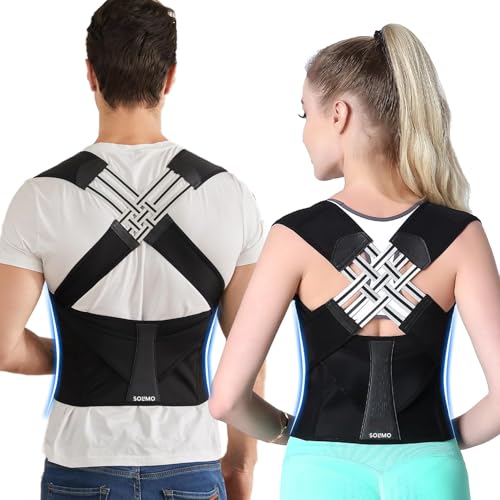
Amazon Brand – Solimo X-Cross Posture Corrector Belt (Universal Size)
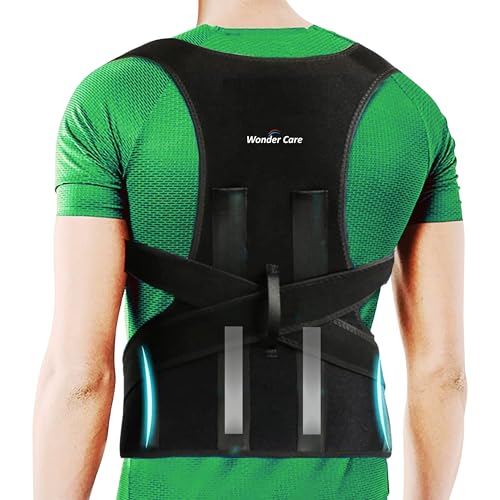
Wonder Care Posture Corrector with Metal Inserts (28"–48")
Posture correctors compared on fit
How the shortlist stacks up. Scroll sideways on mobile.
| WWCD Score | Product | Brace Type | Support | Size / Fit | Rating | Reviews | Price | Deal |
|---|---|---|---|---|---|---|---|---|
| 9.1/10 | Boldfit | Padded upper-back | Moderate | Sized XS–M | 4.0 | 305 | ₹449 | Check Price |
| 9.1/10 | Solimo X-Cross | X-cross clavicle | Gentle | One size (universal) | 4.5 | 34 | ₹399 | Check Price |
| 9.1/10 | Wonder Care | Metal-insert full back | Firm | Universal 28"–48" | 4.2 | 28 | ₹599 | Check Price |
| 9.1/10 | SYNOCARE | Lightweight full back | Gentle | One size (long range) | 4.7 | 14 | ₹494 | Check Price |
| 9.0/10 | TYNOR | Clinical fabric | Firm | Sized S–XL | 3.8 | 4,934 | ₹690 | Check Price |
| 8.9/10 | Mayor | Double-loop X-cross | Gentle | Free size | 3.9 | 92 | ₹282 | Check Price |
| 8.9/10 | TATA 1MG | Dual metal plates | Firm | Universal | 3.7 | 508 | ₹535 | Check Price |
| 8.8/10 | Sifoz | Padded upper-back | Moderate | Universal | 3.8 | 11,607 | ₹459 | Check Price |
| 8.8/10 | DOLTAS | X-cross clavicle | Gentle | Universal (runs large) | 3.9 | 2,081 | ₹399 | Check Price |
| 8.8/10 | PLETHEON | Padded clavicle | Gentle | One size 30–46" | 3.7 | 1,577 | ₹289 | Check Price |




A posture corrector is a training aid — not a 24/7 brace
Worn for short, consistent sessions a brace reminds your shoulders to pull back and eases mild slouch-related ache — but worn all day it can weaken the very muscles it's meant to train. Ignore any listing that promises a "permanent fix" or tells you to wear it 24/7; those are red flags.
Treat every belt below as a habit-builder: pair 20–30 minutes of daily wear with back-strengthening exercises, and build up gradually.
Posture corrector reviews: fit, comfort and build
Specs, the honest pros and cons, and who each one is for.
Boldfit Posture Corrector Belt for Men & Women (Adjustable Back Brace, Soft Pads)
The best-balanced posture brace for everyday Indian wear — comfortable, supportive and proven.
- Type
- Padded upper-back & shoulder brace
- Material
- Breathable fabric with soft shoulder pads
- Size
- Sized (XS–M shown); size options available
- Weight
- 300 g
- Colour
- Black
- Country of Origin
- China
- Best Sellers Rank
- #1 in Back Braces
A soft-padded brace that nails the hard part of this category — staying comfortable for long hours while still pulling your shoulders back. As the current #1 best-seller with fresh, largely positive reviews, it's the safest pick for most buyers. Just mind the XS–M sizing.
- + #1 best-seller in Back Braces with the broadest recent positive feedback
- + Soft padded shoulder straps — comfortable enough for hours under a shirt
- + Breathable fabric — doesn't feel sweaty in Indian weather
- + Strong velcro that holds grip well per reviewers
- + Genuinely helps reduce slouch and eases mild back pain
- + Steep discount off ₹1,199 MRP
- - Sized XS–M means larger builds need to check the size chart carefully
- - A few users report it loosens after bending or heavy movement
- - Not supportive enough for petite frames per some reviews
- - Country of origin is China (assembled/packed in India)
Amazon Brand – Solimo X-Cross Posture Corrector Belt (Universal Size)
The smartest value buy — Amazon-brand reliability, top rating, lowest price.
- Type
- X-cross figure-8 clavicle brace
- Material
- Fabric/elastic, breathable
- Size
- One size (adjustable, universal)
- Weight
- 500 g
- Colour
- Black
- Country of Origin
- India
- Best Sellers Rank
- #9 in Back Braces
A simple X-cross clavicle brace that gets the fundamentals right: comfortable, genuinely universal fit, and a clear posture improvement over time. With the field's best rating and Amazon-brand backing at just ₹399, it's the value pick to beat.
- + Highest Amazon rating in our field (4.5)
- + Amazon-brand reliability and easy returns
- + Comfortable — lightweight X-cross that fits almost anyone
- + Made in India
- + Visibly improves posture with daily use per reviewers
- + Excellent value at ₹399
- - Gentle clavicle pull — less firm than structured/metal braces
- - Only 34 ratings so far — newer listing — less long-term validation
- - One report of a stitching defect on the cross strap
- - At 500 g it's heavier than other X-cross belts
Wonder Care Posture Corrector with Metal Inserts (28"–48")
The structured choice when you want firm, corrective back support — not just a reminder.
- Type
- Full-back brace with rigid metal inserts
- Material
- Fabric with metal stays
- Size
- Universal, fits 28"–48" waist
- Weight
- 290 g
- Colour
- Black
- Country of Origin
- India
- Target
- Upper and lower back
The most supportive pick here: metal inserts give a firm, corrective hold that desk-bound reviewers love for long sittings, across a generous 28"–48" range. The trade-off is a bulkier feel and a still-thin review base, but for serious support at ₹599 it's hard to beat.
- + Rigid metal inserts deliver the firmest — most corrective support in the field
- + Wide 28"–48" fit covers most body types
- + Firm yet flexible — praised for long desk-work sessions
- + Breathable despite the structured build
- + Big markdown off ₹1,999 MRP
- - Firmer support is less gentle — not ideal if you want a barely-there feel
- - Only 28 ratings and many are several months old
- - Metal stays make it bulkier than X-cross belts
- - One buyer cited no-return frustration
SYNOCARE Posture Corrector Belt (Drytex, Full Back Support, Universal)
The most comfortable belt to actually keep wearing — featherlight and breathable.
- Type
- Lightweight full back & shoulder support
- Material
- Drytex breathable fabric
- Size
- One size, long waist range
- Weight
- 200 g
- Colour
- Black
- Country of Origin
- India
- Target
- Back & shoulder
If comfort is what makes you stick with a posture corrector, this is the one: the lightest belt here, with Drytex fabric that reviewers say doesn't hurt even after long hours. The catch is a tiny 14-rating base, so treat the stellar 4.7 as promising rather than proven.
- + Highest rating in the entire field (4.7)
- + Lightest belt here at 200 g — barely noticeable
- + Drytex fabric stays comfortable and breathable for long hours
- + Long waist range fits a wide span of body types
- + Reviewers report real shoulder-pain relief
- - Only 14 ratings — smallest review base of any pick — so reliability is least validated
- - Gentle support — not for those wanting firm correction
- - Lesser-known brand with limited track record
- - No clear MRP/discount shown
TYNOR Posture Corrector (Clinical, Grey)
The orthopedic authority — choose your size right and it delivers clinical-grade support.
- Type
- Clinical fabric back support
- Material
- Fabric
- Size
- Sized S/M/L/XL (clinical sizing)
- Weight
- 340 g
- Colour
- Grey
- Country of Origin
- India
- Best Sellers Rank
- #10 in Back Braces
The most clinically credible and durable brace here, from India's leading orthopedic brand. It works well when you get the size right — but its 3.8 rating reflects sizing friction and occasional fulfilment issues, so consult the size chart before buying.
- + India's most trusted orthopedic brand — clinically credible
- + Proper S/M/L/XL sizing for a precise fit
- + Durable — well-built; reviewers stress it's the "original" product
- + Effective — firm back support
- + Huge 4,900+ review base — most validated product here
- - Overall 3.8 rating — the lowest among our picks
- - Sizing must be chosen carefully; some find the back panel short
- - A few buyers received used/damaged units (fulfilment — not design)
- - Priciest pick at ₹690
Mayor Free Size Posture Corrector (Double-Loop, Foam)
Maximum comfort for minimum money — the underarm-friendly budget belt.
- Type
- Double-loop X-cross shoulder/back belt
- Material
- Foam-padded
- Size
- Free size
- Colour
- Black
- Country of Origin
- India
- Target
- Back & shoulder
The budget winner: at ₹282 its double-loop design dodges the underarm chafing that plagues cheaper belts, and reviewers find it comfortable for long hours. Just don't expect heavy-duty durability — the velcro stitching is its weak point.
- + Cheapest pick at ₹282
- + Double-loop design avoids the underarm chafing common in this category
- + Lightweight and easy to adjust
- + Comfortable for long work hours
- + Steep discount off ₹1,599 MRP
- - Velcro stitching can come loose early — durability is the weak point
- - Gentle support; a few say it doesn't strengthen the shoulders much
- - Foam padding feels basic
- - Free-size fit is approximate
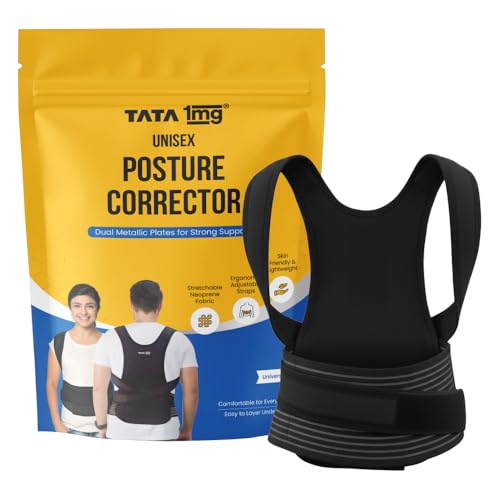
TATA 1MG Posture Corrector (Dual Metallic Plates)
Strong, spine-aligning support with a trusted health brand behind it.
- Type
- Full-back brace with dual metallic plates
- Material
- Fabric with metal plates
- Size
- Universal
- Weight
- 375 g
- Colour
- Black
- Country of Origin
- India
- Target
- Spine alignment
The dual metal plates make this one of the most supportive belts here, and reviewers report real relief within days — backed by the trust of the TATA 1MG name. The downside is bulk: it's the chunkiest pick, and straps run long for slimmer frames.
- + Backed by TATA 1MG — a trusted Indian health brand
- + Dual metallic plates give strong spine-alignment support
- + Reviewers report back-pain relief within days
- + Good for forward-tilt / hunched posture
- + Comfortable for 6–8 hour wear once fitted
- - Bulky — the rigid plates are the top complaint
- - Shoulder straps run long and can pull the skin
- - Loose fit for slimmer builds
- - 3.7 overall rating
Sifoz Free Size Posture Corrector (Neoprene, Universal)
The category best-seller — proven, affordable, and good enough for most desk users.
- Type
- Padded upper-back & shoulder belt
- Material
- Neoprene
- Size
- Universal
- Weight
- 280 g
- Colour
- Black
- Country of Origin
- India
- Best Sellers Rank
- #5 in Back Braces
The most-bought posture belt in our field by a wide margin, and it does the basics for desk-related back pain at a fair price. The catch is comfort: armpit chafing on long wear is the consistent gripe, so it suits shorter daily sessions best.
- + By far the most-reviewed belt here (11,600+ ratings) — proven mass appeal
- + #5 best-seller in Back Braces
- + Decent back support for desk-related pain
- + Neoprene padding — universal fit
- + Steep markdown off ₹1,999 MRP
- - Armpit chafing on long wear is the recurring complaint
- - 3.8 overall rating with visible quality variance
- - Comfort is hit-or-miss between units
- - Gives moderate — not firm — support
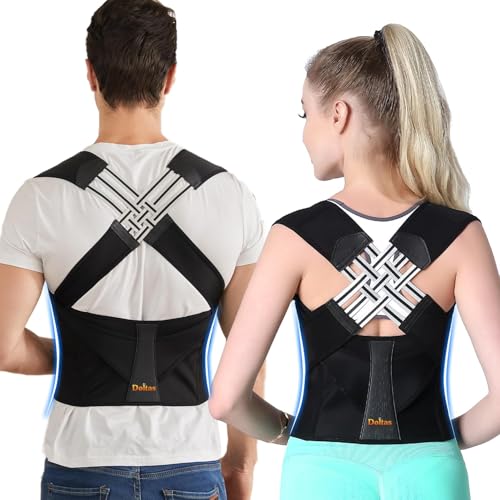
DOLTAS Neoprene X-Cross Posture Corrector (Universal)
A light, comfortable X-cross belt — if the universal size fits you.
- Type
- X-cross figure-8 clavicle brace
- Material
- Neoprene
- Size
- Universal
- Weight
- 240 g
- Colour
- Black
- Country of Origin
- India
- Target
- Back & clavicle
A lightweight, comfortable neoprene X-cross belt with a large, well-reviewed following at ₹399. The recurring problem is sizing: the "universal" fit runs big, so slimmer users and teens often find the straps too large. Great value if it fits, frustrating if it doesn't.
- + Lightest neoprene X-cross here at 240 g
- + Padded back section is comfortable
- + High review volume (2,000+) for a budget belt
- + Made in India
- + Affordable at ₹399
- - "Universal" size runs large — too big for slim builds and teens
- - Gentle support; bends with your posture rather than holding firm
- - Elastic durability questioned by some
- - Several size-driven returns in reviews
PLETHEON Posture Corrector Belt (Neoprene, 30–46")
The lowest-priced mainstream belt — basic posture help on a tight budget.
- Type
- Padded clavicle / upper-back brace
- Material
- Neoprene
- Size
- One size, fits 30–46" waist
- Colour
- Black
- Country of Origin
- India
- Target
- Upper back & clavicle
At ₹289 it's the cheapest mainstream belt with a real review base, and when new it's soft and grips well. The trade-off shows over time: it can shift when you move and the fit fades, so it's best as a low-commitment starter rather than a long-term brace.
- + Cheapest mainstream pick at ₹289
- + Soft neoprene — comfortable and easy to wear
- + Good velcro grip when new
- + 1,500+ reviews for a sub-₹300 belt
- + Big discount off ₹1,499 MRP
- - Tends to shift and lose grip when sitting or standing
- - Fit can fade after a few days of use
- - Only one size — buyers ask for more options
- - 3.7 overall rating with quality variance
How posture correctors actually work
Physical reminders. A corrector gives tactile feedback — it gently pulls your shoulders back when you slouch, so you feel the tension and automatically straighten up. This is most useful in the first 2–4 weeks while you are building posture awareness.
Muscle memory. With consistent short sessions your body learns the correct shoulder and spine position. The goal is to develop muscle memory so you hold good posture naturally — without the device — rather than relying on it forever.
Support versus training. These are training tools, not permanent supports. Wearing one all day creates dependency and lets your back muscles switch off. Use it intermittently (one to two hours) while strengthening your back with wall angels, rows and planks — that combination is what produces lasting change.
Which posture corrector to buy
Four picks cover the way most people shop for a posture corrector — the safe all-rounder, the cheapest comfortable option, the best value, and the firmest support.
Boldfit Posture Corrector · ₹449
Buy this if you want one comfortable, proven brace for everyday desk wear.
Check Price on Amazon →Mayor Double-Loop Corrector · ₹282
Buy this if you want maximum comfort for minimum money, with no underarm chafe.
Check Price on Amazon →Solimo X-Cross Corrector · ₹399
Buy this if you want a gentle, universal-fit belt with Amazon-brand reliability.
Check Price on Amazon →Wonder Care Metal-Insert Brace · ₹599
Buy this if you want real corrective hold rather than a soft reminder.
Check Price on Amazon →How to choose a posture corrector
-
Posture correctors are a training aid, not a cure
A brace works by gently reminding your shoulders to pull back — it does not permanently "fix" posture on its own. Reviews across every brand make this clear: the people who succeed wear it for short, consistent sessions (1–3 hours a day) while also strengthening their back, not all day expecting magic. Treat any belt as a habit-builder, not a medical correction. -
Know the three designs: X-cross, padded brace, and rigid/metal
X-cross (figure-8) belts like Solimo, DOLTAS and Mayor are light and gentle — they pull the clavicles back and suit mild slouching and all-day comfort. Padded upper-back braces like Boldfit, Sifoz and PLETHEON wrap the shoulders with cushioned straps for moderate support. Rigid designs with metal inserts/plates — Wonder Care and TATA 1MG — give the firmest, most corrective hold but are bulkier. Pick by how much support you actually want. -
Sizing is the #1 reason people are unhappy
The single biggest complaint in this entire category is fit. "Universal/free size" belts (DOLTAS, PLETHEON) often run large and leave slim users and teens with loose straps. Sized options (TYNOR S–XL, Boldfit XS–M) fit better but only if you check the size chart and measure your chest/waist first. Wonder Care's explicit 28"–48" range and SYNOCARE's long waist range are safer for larger or shared use. -
Comfort decides whether you keep wearing it
The best belt is the one you don't abandon after two days. Underarm chafing (a known issue on Sifoz and many cheap X-cross belts) and bulk (TATA 1MG) are the usual deal-breakers. Look for soft padded straps (Boldfit), lightweight breathable fabric (SYNOCARE at 200 g), or a double-loop design that avoids the armpits (Mayor). Breathability matters a lot in Indian heat. -
Check build quality — velcro and stitching fail first
On budget belts the velcro and stitching are what give out. Mayor and PLETHEON both draw complaints about velcro coming loose or losing grip over time. If you want longevity, an established brand (TYNOR, Boldfit) or a sturdier construction is worth the small premium. Hand-wash gently and air-dry to extend velcro life. -
Ignore MRP — judge on the real price and rating
Almost every belt here lists an inflated MRP (₹1,499–₹1,999) and sells for ₹280–₹690. Don't be swayed by the "discount". Judge on the actual price, the India rating, and the review themes. A ₹449 belt with a 4.0–4.5 rating and fresh positive reviews (Boldfit, Solimo) is a better buy than a ₹289 one with a 3.7 rating and grip complaints. -
How to use a posture corrector (and how long to wear it)
Never wear a posture corrector all day from the start — that can weaken the very muscles it is meant to train. A simple protocol works best. Week 1: wear it 20–30 minutes a day while sitting or working. Weeks 2–4: build up to 1–3 hours, split into shorter sessions. Month 2 onwards: use it intermittently when your posture slips, paired with back-strengthening exercises such as wall angels, shoulder-blade squeezes, rows and planks. Stop immediately if you feel breathlessness, numbness or tingling in the arms, sharp pain, or soreness lasting more than 48 hours, and never sleep in one. A 2019 study in the Scandinavian Journal of Pain found posture-correcting garments only momentarily alter posture — lasting change comes from building muscle strength, not the brace alone.
Frequently asked questions
What is the best posture corrector in India?
Do posture correctors actually work, or are they just temporary support?
How long should I wear a posture corrector each day?
Which posture corrector is best for WFH professionals working 8-10 hours daily?
Can posture correctors cause any side effects or harm?
Should I buy a budget ₹599 posture corrector or invest in ₹1,299 premium model?
What exercises should I do alongside using a posture corrector?
Which type is best — X-cross, padded, or metal-insert?
How do I choose the right size?
Will a posture corrector hurt my armpits?
Are expensive imported back braces worth it over these?
You may also like
More guides and reviews to help you decide.
Vergo Ease leads our 2026 analysis of 10 ergonomic office chairs under ₹15,000 in India — BIFMA + Class 4 gas lift. Wakefit Gravita is the ₹6,397 value pick.
Read more →Find the best heating pad in India 2026. Compare AGARO, Flamingo, Infi, TATA & more with research-based reviews, prices & pros and cons.
Read more →Best gaming chairs under ₹20,000 in India 2026 compared — Green Soul Ghost (WWCD winner), Dr Luxur Weavemonster, Monster Ultimate T.
Read more →Find the best gaming chair under 15000 in India 2026. Compare Green Soul, CELLBELL, Drogo with research-based reviews, prices, pros & cons.
Read more →The ISI mark is now mandatory on office chairs in India. What IS 17631 tests, the seat height India’s own standard sets, and which specs are decoration.
Read more →Best standing desk for beginners in India 2026. First-time buyer guide with 6 beginner-friendly picks from ₹10,888 to ₹26,990. Compare electric options & more.
Read more →