
How to Pre-Cool Your Home Before a Heatwave Hits
The cheapest cooling happens before the heat arrives. Most Indians wait until the heatwave hits — by then, the walls are already radiating stored heat and the AC is fighting a losing battle.
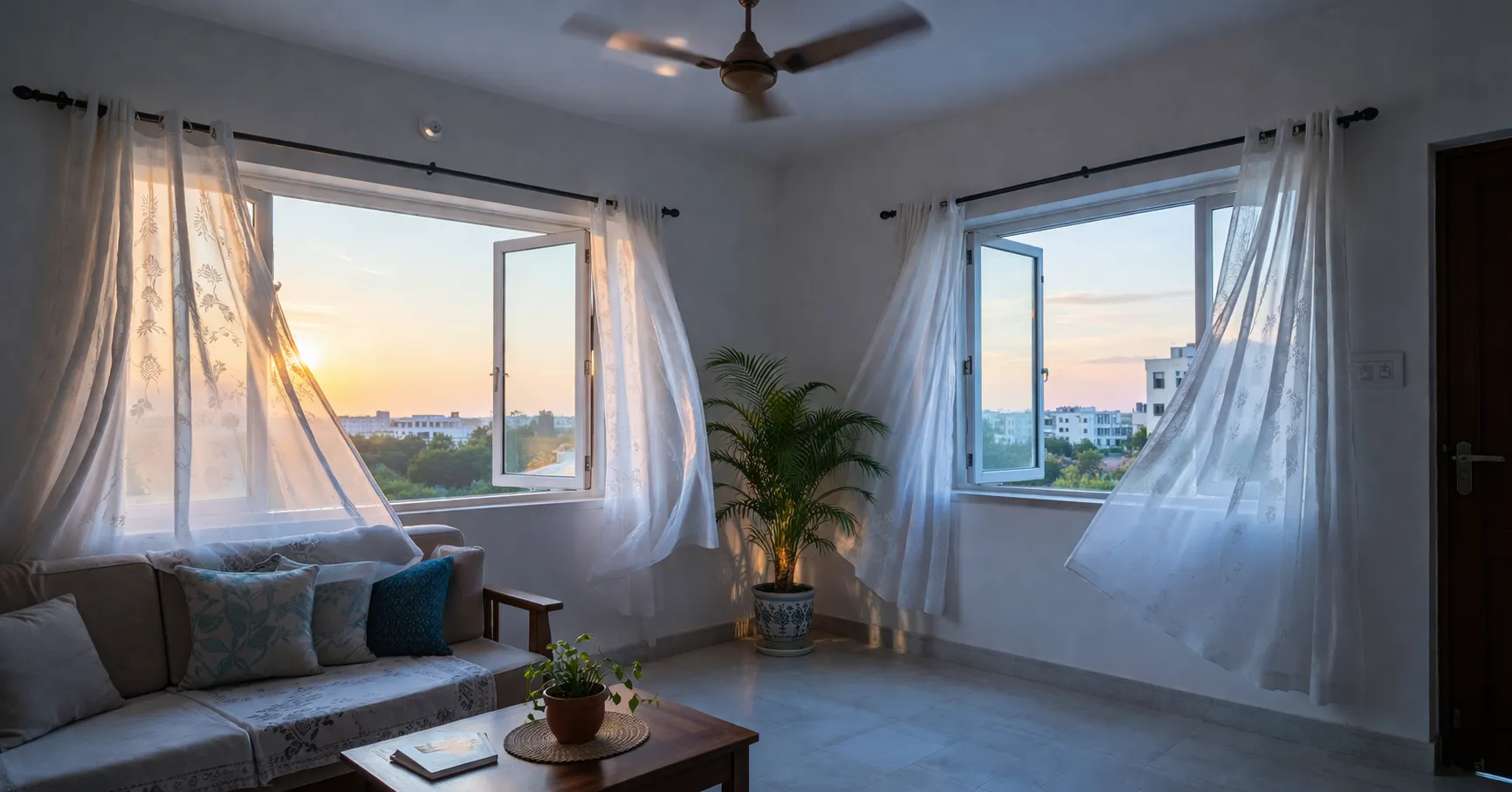
Key Takeaway
Pre-cooling your home 12–24 hours before a heatwave — using night ventilation, window blocking, and staged AC scheduling — costs 40% less than reactive cooling and keeps indoor temperatures 3–5°C lower at peak heat. The AC works with your home’s thermal mass, not against it.
The 3 PM Scramble
It is 3 PM on a May afternoon. You open the front door after work and the flat hits you like an open tandoor. The walls are warm to the touch. The ceiling fan moves hot air around like a convection oven. You grab the AC remote, slam it to 18°C, and wait.
Forty-five minutes later, the room is finally bearable. But here is what happened during those 45 minutes: the compressor ran at maximum power the entire time. It was not just cooling the air — it was fighting the heat stored in every wall, every floor tile, every piece of furniture. Concrete absorbs heat all day and radiates it inward for hours. That first hour of reactive cooling is the most expensive hour of electricity in your entire day.
Now imagine a different scenario. You come home at the same time. The flat is 28°C instead of 38°C. The AC reaches 24°C in 10 minutes. The compressor barely breaks a sweat. Your electricity bill for that day is 30–40% lower. The difference is not a better AC. It is pre-cooling — preparing your home before the heat arrives.
The Pre-Cool Advantage in Numbers
Night Ventilation Drop
5–6°C
cooler than non-ventilated homes
Cool Roof Savings
0
% less cooling energy needed
24°C vs 18°C
₹0
saved per month on AC bills
AC Share of Summer Bill
0
% of household electricity
Phase 1: Night Flush — Free Cooling While You Sleep
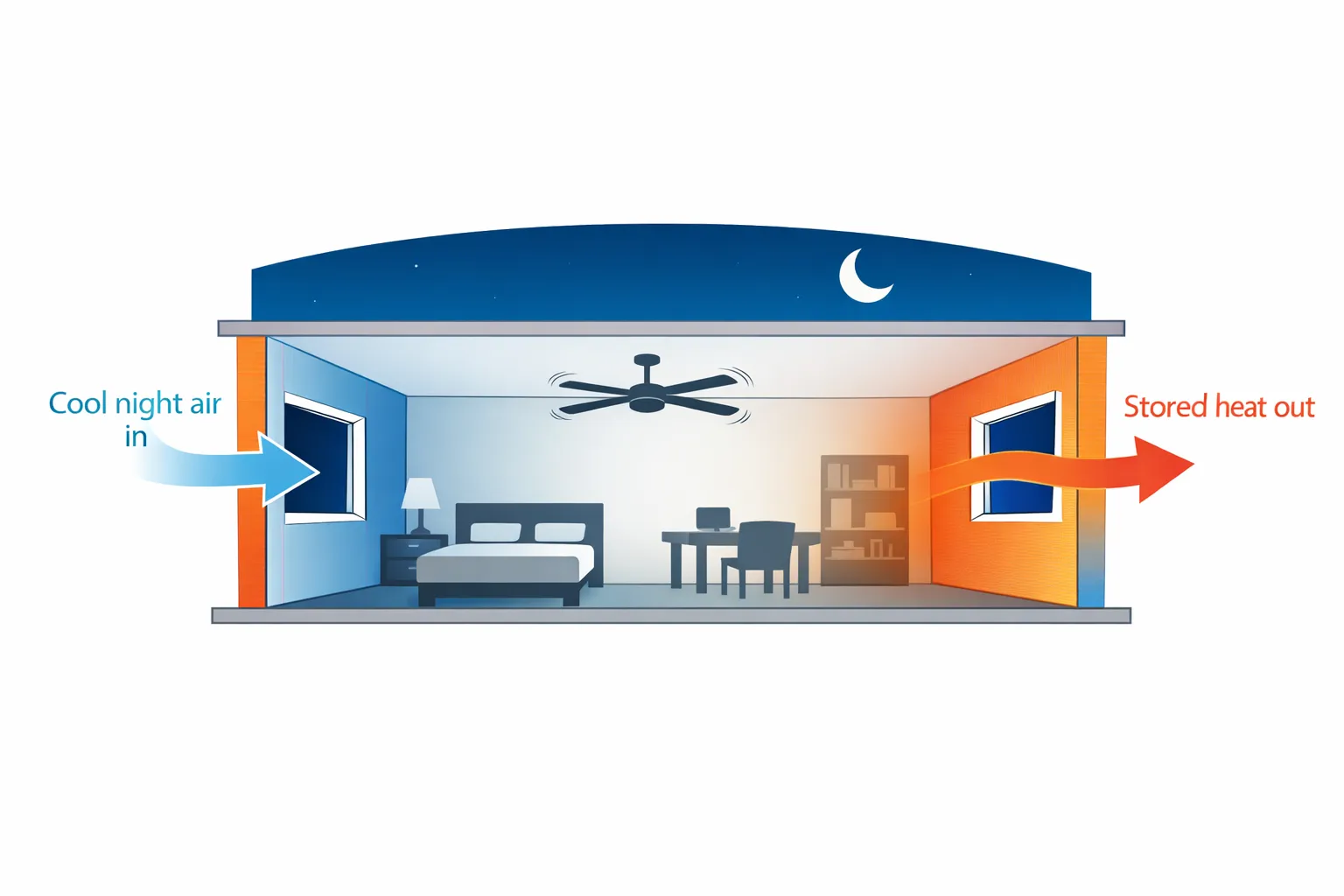
This is the most powerful pre-cooling strategy and it costs exactly zero rupees. Cross-ventilation between midnight and 9 AM is when outdoor temperatures drop 8–12°C below daytime peaks. Open windows on opposite sides of your home and you create a natural draught that pulls stored heat out of walls, floors, and furniture.
This is called thermal mass cooling. Your concrete walls and floors absorb heat all day like a battery. At night, when outdoor air is 22–26°C while your walls are still at 32–35°C, cross-ventilation drains that stored heat. Research on Indian buildings shows this can reduce indoor operative temperature by 5.3–6.4°C compared to keeping windows closed.
The critical rule: close everything by 9 AM. Windows, curtains, doors — all of it. Before the outdoor temperature starts climbing. The cooled thermal mass then acts as a heat sink during the day, absorbing incoming heat instead of radiating it. You are essentially charging a “cool battery” at night and spending it during the day.
Night Flush Timeline
Open windows on opposite walls. Turn ceiling fans to low speed to assist airflow.
Outdoor temp at its lowest. Maximum heat drainage from walls. This is peak cooling time.
Walls have lost 8+ hours of stored heat. Indoor temp now close to outdoor minimum.
Close everything. Seal the cool air in. Draw all curtains. This is the most important moment.
Works Best In
Cities with 8°C+ diurnal range: Delhi, Jaipur, Lucknow, Nagpur, Ahmedabad, Bhopal. Less effective in coastal cities like Mumbai and Chennai where nighttime temps stay above 28°C.
Phase 2: Block the Heat Before It Enters
Once you have flushed the heat at night, the daytime goal is to stop new heat from entering. The difference between a treated and untreated home is dramatic.
Unprotected Home
Roof: Dark concrete absorbs 90% of solar radiation. Ceiling temperature reaches 50–55°C by 2 PM.
Windows: Clear glass lets in 85% of solar heat. West-facing rooms become ovens by 4 PM.
Indoor temp: 38–42°C at peak. AC fights the incoming heat and the stored heat simultaneously.
AC load: Compressor runs at maximum for 45–60 minutes just to bring the room to 24°C.
₹2,800+/month
Estimated AC cost (1.5T, 8 hrs/day)
Pre-Cooled + Protected Home
Roof: Lime whitewash reflects 70–80% of radiation. Ceiling temp drops to 35–40°C. Cost: ₹200–300 per application.
Windows: Reflective film blocks 80% of solar heat. Heavy light-coloured curtains block another 33–45%.
Indoor temp: 28–32°C at peak. Night flush pre-cooled the thermal mass. Barriers slow new heat entry.
AC load: Compressor reaches 24°C in 10–15 minutes, then cycles intermittently to maintain.
₹1,600–1,900/month
30–40% less with same comfort level
Phase 3: Strategic AC Scheduling
Pre-cooling with AC means running it before the heat peaks, not after. The compressor uses far less energy maintaining a cool room than cooling a hot one. Here is the schedule that saves the most.
11 AM — Start the AC at 24°C (before peak heat)
The room is already 28–30°C from the night flush. The compressor reaches 24°C quickly and enters low-power mode. This is 3–4 hours before peak heat at 2–4 PM. BEE data confirms every 1°C thermostat change = 6% energy difference.
Ensure the room is sealed — windows, doors, curtain gaps
A single open window can increase AC load by 20–30%. Check the gap under the main door — a ₹100 door sweep from the hardware store seals it. Every air leak means the compressor works harder and longer.
2–4 PM — AC maintains (not cools) through peak heat
Because you started early, the compressor is now cycling on and off at low power instead of running full blast. This is where the 30–40% savings happen compared to the person who comes home at 3 PM and blasts 18°C.
6 PM — Raise thermostat to 26°C as outdoor temp drops
Outdoor temperature starts falling after 5 PM. Raising the thermostat by 2°C saves another 12% energy for the evening hours. The room feels the same because the thermal mass is already cool.
9 PM — AC off, windows open, night flush begins again
The cycle repeats. Every night you cool the walls. Every morning you seal them. The AC handles the gap in between with minimal effort. Smart AC apps from Daikin, Voltas, and LG let you schedule all of this automatically.
The Desi Cooling Arsenal
These are not “alternatives to AC.” They are force multipliers. Used alongside pre-cooling and strategic AC scheduling, they reduce the load on your compressor and shave hundreds off your monthly bill.
Khus (Vetiver) Curtains
Woven vetiver root curtains hung on windows and kept wet. Hot air passes through the damp roots and cools by 5–8°C through evaporation. The earthy aroma is a bonus. Cost: ₹65–200 per curtain. Lasts 2–3 seasons.
Best for: dry climates (below 50% humidity)
Terrace Watering at Sunset
Spray 2 buckets of water on a hot roof slab at sunset. Each litre absorbs ~2,400 kJ of heat as it evaporates, pulling stored heat out of the concrete. Noticeable temperature drop in the room directly below within 30 minutes.
Best for: top-floor flats
Lime Whitewash on Roof
A single coat of lime whitewash reflects 70–80% of solar radiation vs 10% for dark concrete. Reduces indoor temperature by 5–10°C. Benefit-cost ratio of 3:1. One bucket (₹200–300) covers a standard terrace.
Best for: independent houses, top floors
Reflective Window Film
One-way mirror film blocks up to 80% of solar heat through glass. Apply on west and south-facing windows first — they get the worst afternoon sun. Cost: ₹500–1,500 per window. Pays for itself in one summer of AC savings.
Best for: apartments with large windows
Wet Towel + Exhaust Fan
Hang a wet towel in front of an exhaust fan — a makeshift evaporative cooler for a single room. Works in dry climates where humidity stays below 50%. No cost beyond the electricity for the fan. Re-wet the towel every 30–40 minutes.
Best for: quick fix, dry regions
Indoor Plants Near Windows
Money plant, areca palm, and snake plant release moisture through transpiration, adding 2–3% humidity and a slight cooling effect. The bigger benefit is psychological — greenery reduces the perception of heat. Place near west-facing windows.
Best for: supplementary, all climates
Your 24-Hour Pre-Heatwave Checklist
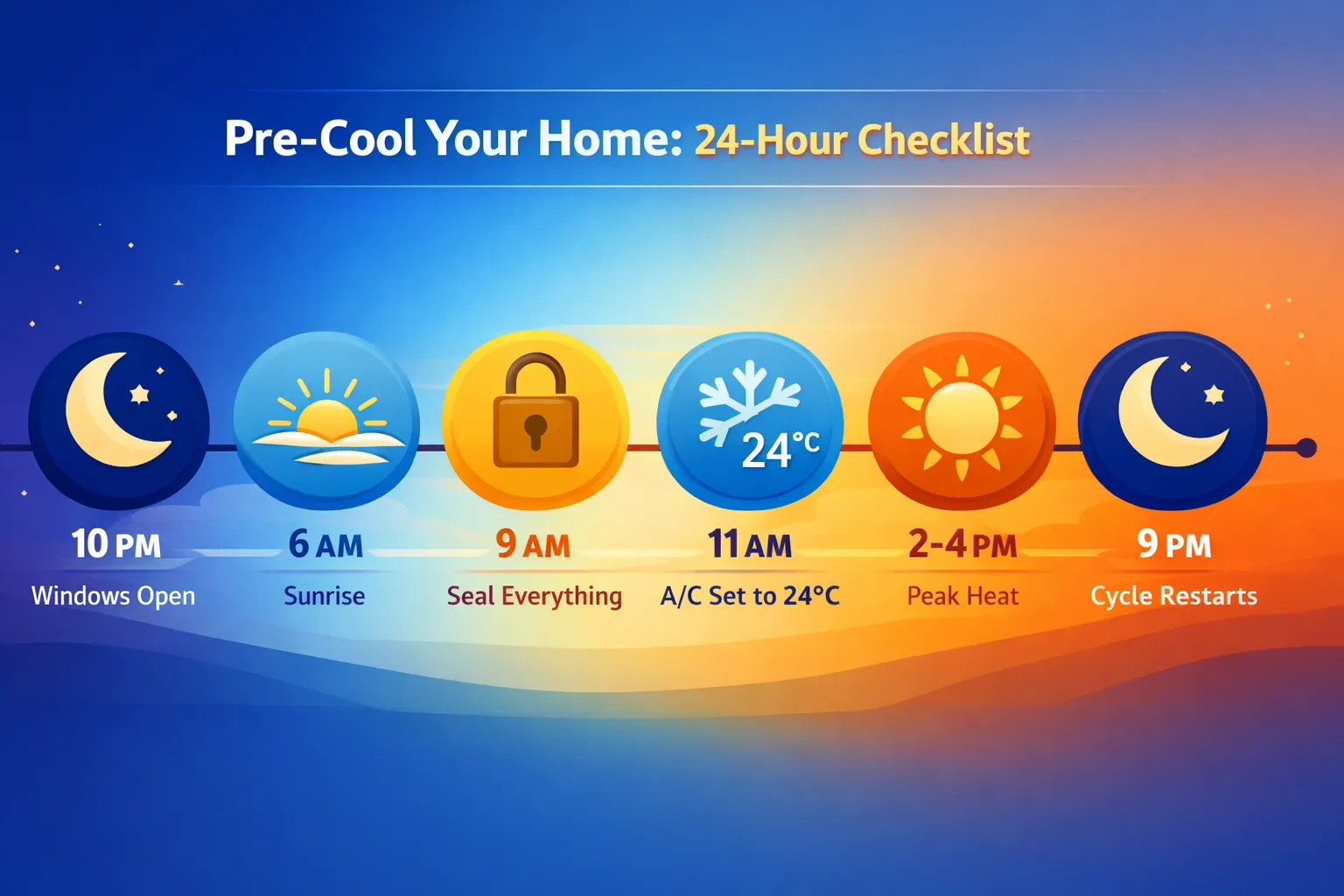
When the IMD issues a heatwave warning for your city, here is exactly what to do in the 24 hours before it hits. Print this. Stick it on the fridge. Every step compounds.
Evening before: Water the terrace
Hang khus curtains on west/south windows. Check window seals. Spray water on roof slab.
Night before: Open all windows for cross-ventilation
Windows on opposite sides. Ceiling fans on low. The walls will drain heat for 8+ hours.
Early morning: Windows still open
Thermal mass has been cooling for 8 hours. Indoor temp near overnight low.
9 AM sharp: Close everything
The most important moment. Windows, curtains, doors. Seal the cool air inside before outdoor temp climbs.
11 AM: Turn AC on at 24°C
Pre-cooled room. Compressor barely works for the first 2 hours. Low power, low cost.
2–4 PM: AC maintains through peak heat
You are 3–5°C cooler than the neighbour who turned on the AC at 3 PM. Compressor cycles intermittently.
9 PM: AC off, windows open, cycle restarts
Back to night flush. The walls begin cooling again. Repeat every day of the heatwave.
Quick Cost Comparison
Reactive Cooling (most people)
AC at 18°C from 3 PM. Compressor fights hot walls + hot air. Full power for 60+ min.
~₹2,800/month
1.5T 5-star, 8 hrs/day at ₹8/unit
Pre-Cool Strategy (this article)
Night flush + sealed home + AC at 24°C from 11 AM. Compressor maintains, not cools.
~₹1,700/month
Same AC, same comfort, 40% less electricity
Summer Savings (Apr–Jun)
₹3,300+
saved over 3 months of summer
When Passive Cooling Is Not Enough
If outdoor temperatures exceed 45°C, humidity is above 60%, or you have elderly or infant family members at home — do not rely on passive cooling alone. These are medical-risk conditions. Run the AC. The pre-cooling strategies in this article still save you money — you are adding AC on top of a pre-cooled base, not replacing it. The 2025 India heatwave saw temperatures hit 46.4°C in Rajasthan and caused hundreds of heat-related emergencies across North India.
Gear Up for Summer
Pre-cooling works best with the right equipment. These guides help you pick what fits your home and budget.
Stop Setting AC to 16°C
Why lower is not cooler — and what temperature actually saves money.
AC Buying Guide
Tonnage, star ratings, inverter vs fixed — everything you need to know.
Best 1.5 Ton 5-Star AC
Top picks for the most popular AC category in India.
Best BLDC Ceiling Fans
Energy-efficient fans that assist night ventilation at low power.
Air Cooler Buying Guide
When an air cooler makes more sense than an AC for your climate.
Desert Cooler Smell Fix
The 2-minute fix for that rotten cooler smell nobody talks about.
Tonight, leave the windows open. Tomorrow at 9 AM, close everything.
That is where pre-cooling starts. The AC handles the rest — at half the effort and half the cost.