
Best AC in India 2026
We reviewed 80+ split ACs across Daikin, LG, Panasonic, Samsung, Blue Star, Voltas, Carrier and Godrej. Our picks by tonnage, star rating and room size - plus the sizing, efficiency and coil answers you need before buying.
As an Amazon Associate we earn from qualifying purchases. We could also earn a fee through some links when you click on them.

The Best AC for Every Room
One standout pick per segment - check the live price, or open the in-depth category review for more options.


Which AC Fits Your Room?
Find your room in the first column - it tells you the right tonnage and type before you ever look at brands, then points you to our pick and the full ranking for that segment.
| YOUR SITUATION | GET THIS | OUR PICK | PRICE | FULL RANKING |
|---|---|---|---|---|
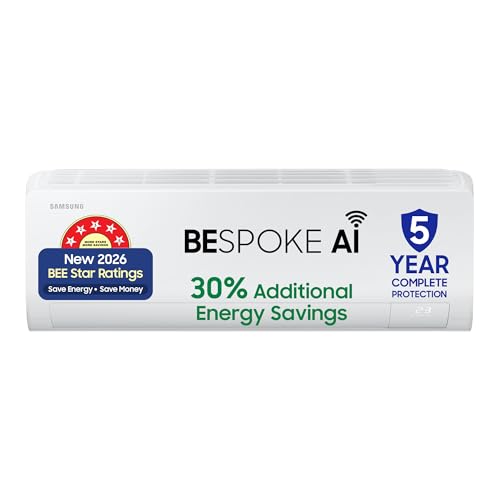
| Bedroom or study up to 120 sq ft | 1 Ton split | Samsung 1 Ton 5★ Bespoke AI | ₹38,430 | Check detailed reviews → |
| Bedroom or living room, 120-180 sq ft, heavy use | 1.5 Ton · 5★ | IFB AI 8-in-1 (CI195SS32SGM3) | ₹42,490 | Check detailed reviews → |
| Same room, but AC runs under 4 hours a day | 1.5 Ton · 3★ | IFB AI 8-in-1 (CI183SS22SGM3) | ₹35,900 | Check detailed reviews → |
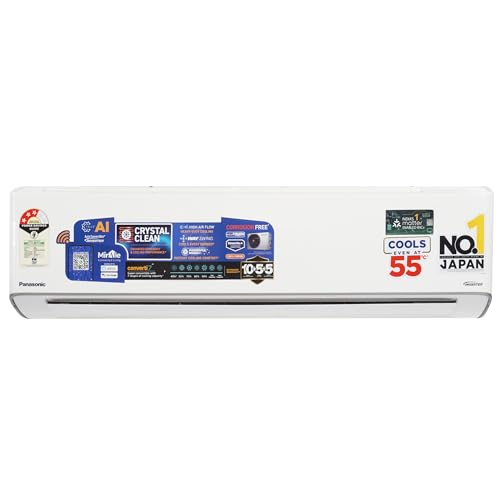
| Large living room or hall, 180-250 sq ft | 2 Ton split | Panasonic 2 Ton 5★ Wi-Fi | ₹44,990 | Check detailed reviews → |
| Hot summers AND cold winters (north India) | Hot & Cold | Panasonic 1.5 Ton Hot & Cold | ₹45,490 | Check detailed reviews → |
| Rental home or single-window room | Window AC | Carrier ESTRA Fxi 1.5 Ton | ₹32,295 | Check detailed reviews → |
1 Ton AC Reviews
For bedrooms and small rooms up to 120 sq ft.
1.5 Ton AC Reviews
India's most popular segment - for rooms of 120-180 sq ft.
India's most popular AC segment - our full ranking.
Read review → 1.5 TON · 4 STARNear-5-star efficiency at a friendlier price.
Read review → 1.5 TON · 3 STARThe value sweet spot for under-4-hours-a-day use.
Read review → 1.5 TON · HOT & COLDCooling plus winter heating in one machine.
Read review →2 Ton & Larger AC Reviews
For halls, large living rooms and commercial spaces.
Efficient cooling for halls and large living rooms.
Read review → 2 TON · 4 STARBig-room cooling with balanced running costs.
Read review → 2 TON · 3 STARThe most affordable way to cool a large room.
Read review → 2.5 TONExtra-large spaces and shops, 250-300 sq ft.
Read review →Window ACs & Accessories
Rental-friendly options and the stabilizer question, settled.
Split, Window or Portable: Which Type?
The type is your first decision - it shapes cooling, noise, install cost and looks. (Portable ACs exist but are a last resort: the weakest cooling at the highest running cost.)
What Tonnage (Size) Do You Need?
A "ton" measures cooling power, not weight. Too small and the AC runs flat-out and never cools; too big and it short-cycles and wastes money. Match tonnage to floor area first, then adjust up for heat load.
| ROOM SIZE | TONNAGE | TYPICAL USE |
|---|---|---|
| Up to 120 sq ft | 1 Ton | Bedrooms, study rooms, small offices |
| 120-180 sq ft | 1.5 Ton | Most popular - bedrooms and living rooms |
| 180-240 sq ft | 2 Ton | Large living rooms, halls, offices |
| 250-300 sq ft | 2.5 Ton | Extra-large spaces, shops |
Add +0.5 ton if your room has any of these:
- West or south-facing with 4+ hours of direct sun
- Top-floor flat or a room under the roof
- High ceiling (above 10 feet)
- More than 3 people in the room regularly
Stuck between two sizes? Go bigger - an undersized AC never saves power.
Star Rating & ISEER: What the Label Really Means
The BEE label decides your electricity bill for the next 8-12 years - but the star count alone is misleading. BEE raised the ISEER thresholds by 10-14% in January 2026, so a 2025 "5-star" is relabelled 4-star under 2026 norms. Compare the printed ISEER number, not stars across label years.
| STAR RATING | OLD (2022) NORMS | 2026 NORMS |
|---|---|---|
| 5 Star | ISEER ≥ 5.0 | ISEER ≥ 5.6 |
| 4 Star | ISEER 4.5-4.99 | ISEER 5.0-5.59 |
| 3 Star | ISEER 4.0-4.49 | ISEER ~3.9-4.9 |
A 2026 3-star (ISEER ~4.5) can match a 2024 5-star (ISEER 5.0) in real efficiency. Over its life, a genuine 5-star typically saves ₹1,200-2,000 a year versus a 3-star - around ₹12,000-18,000 across 8-12 years. Already own a 2025 5-star? Nothing changes - same cooling, same bill; only the label standard moved.
Copper vs Aluminium Condenser
The condenser is the outdoor coil that dumps heat. Its material decides how well your AC cools, how long it lasts, and what a leak costs to fix.
| FACTOR | COPPER | ALUMINIUM |
|---|---|---|
| Heat transfer | ~60% better; cools faster | Lower; larger coil needed |
| Lifespan | 15-20 yrs (10-12 coastal) | 7-10 yrs (4-6 coastal) |
| Leak repair | Brazed for ₹1,500-3,000 | ₹5,000-8,000, often full replace |
| Price | ₹8,000-15,000 more | Cheaper; common under ₹30,000 |
Verdict: choose copper if you can, especially within 20-30 km of the coast or if you keep ACs for a decade-plus. On a budget inland, a pre-coated (blue/gold fin) aluminium coil is acceptable - just clean it regularly.
Refrigerant: R32 vs R290 vs R410A
The refrigerant is the gas that actually does the cooling - it affects efficiency, serviceability and environmental impact. For a new AC in India in 2026, R32 is the safe default.
| REFRIGERANT | PROFILE | WATCH OUT |
|---|---|---|
| R32 - buy this | The modern India standard: efficient, serviceable anywhere, GWP ~675 (vs R410A ~2,088) | Mildly flammable (A2L); widest service availability |
| R290 - greenest | Ultra-low impact (GWP ~3) but highly flammable, so it appears only in a few factory-sealed models | Limited models and service network |
| R410A / R22 - avoid | Older gases being phased out; high environmental impact and rising service costs | Skip these on any new purchase |
Best AC Brands in India: Quick Take
Every major brand has a lane. Match the brand's strength to what you care about most - build, efficiency, smart features or service reach.
| BRAND | BEST FOR | PRICE RANGE (1.5T) |
|---|---|---|
| IFB | Inbuilt Wi-Fi + AI, 8-in-1 flexi modes, long warranty | ₹36K-43K |
| Daikin | Build quality, quiet operation, durability | ₹33K-55K |
| LG | Smart features, AI cooling, largest service network | ₹34K-52K |
| Panasonic | Highest ISEER efficiency, Wi-Fi ecosystem | ₹35K-47K |
| Blue Star | Extreme heat (55°C), commercial-grade cooling | ₹35K-54K |
| Voltas | Value for money, widest service in small towns | ₹29K-45K |
| Samsung | WindFree cooling, smart-home integration | ₹36K-55K |
| Godrej | Lowest prices, 5-year warranty | ₹28K-40K |
How to Choose an AC in India
Once tonnage and type are settled, these six decisions separate a great AC purchase from an expensive mistake.
Run the AC 4+ hours a day and an inverter cuts bills 30-40% - roughly ₹4,000-6,500 a year on a 1.5 ton - paying back its ₹3,000-5,000 premium in 1-3 seasons. It also holds temperature within ±0.5°C and runs quieter. Non-inverter only makes sense for very light, occasional use.
Compare the ISEER number, not the star count. Buy 3-star if you use the AC under 4 hours daily or your power costs under ₹6/unit; buy 5-star for 6+ hours daily use or ₹7+/unit tariffs - it saves ₹4,000-6,000 a year and pays back in 2-3 years.
Must-have: inverter compressor, copper coil with anti-corrosion coating, dry/dehumidify mode, below-40 dB noise for bedrooms, sleep mode. Nice-to-have: convertible tonnage, self-clean, Wi-Fi. Skip paying extra for ionisers and "vitamin C" filters.
Never DIY a split AC - it needs vacuuming, leak testing and gas handling. Standard install is ₹1,500-3,000 (window: ₹1,000-2,000), extra copper piping ₹400-600/ft. Insist on the outdoor unit in open air with a dedicated, earthed power line.
Clean filters every 2-3 weeks in summer - clogged filters raise power use by up to 20%. Add one professional service a year before peak season, cover the outdoor unit off-season, and set 24-26°C: every degree below 24°C adds 6-8% to consumption.
October-January offers 20-35% off summer prices; Republic Day and Diwali sales are strong too. Avoid April-May peaks. New models with updated BEE labels launch February-March. On old stock, check the printed ISEER - a 2025 "5-star" is only 3-4 star under 2026 norms.