
PRODUCT REVIEW
Best 1.5 Ton 4 Star Inverter Split AC in India 2026
Best 1.5 ton 4 star inverter split AC India 2026: Samsung WindFree, Panasonic Matter, Haier HEXA, LG DUAL, Daikin and Blue Star compared on ISEER, noise.
 By Naveen Bhavnani
Updated
By Naveen Bhavnani
Updated
As an Amazon Associate we earn from qualifying purchases. We could also earn a fee through some links when you click on them.

4 star AC picks by price and ISEER
Already covered the winner above — here are the picks for specific needs.

Panasonic 1.5 Ton 4 Star Premium Wi-Fi Inverter Smart Split AC (CS/CU-NU18BKY4WX)
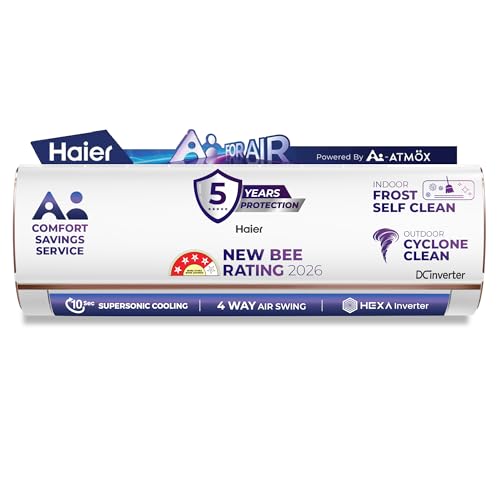
Haier 1.5 Ton 4 Star Wi-Fi HEXA Inverter Smart Split AC (HSA18KU-RAI4NB-I)

Haier 1.5 Ton 4 Star AI Climate Control Smart Split AC (HSU18K-PYAIR4BN-INV)
4 star ACs on cost and noise
How the shortlist stacks up. Scroll sideways on mobile.
| WWCD Score | Product | ISEER | Annual Energy | Noise | Convertible | Compressor | Rating | Price | Deal |
|---|---|---|---|---|---|---|---|---|---|
| 9.5/10 | Samsung WindFree (2026) | 5.15 | 751.24 kWh/year | 24 dB | 5-Step | 10 yr | 4.1★ (10) | ₹42,490 | Check Price |
| 9.4/10 | Panasonic Premium Wi-Fi (2026) | 5.2 | 759.55 kWh/year | 34 dB | 8-in-1 | 10 yr | 3.4★ (17) | ₹43,989 | Check Price |
| 9.4/10 | Haier HEXA Inverter (2026) | 5.05 | 735.94 kWh/year | 47 dB | 7-in-1 | 12 yr | 3.8★ (13) | ₹39,990 | Check Price |
| 9.4/10 | LG DUAL Inverter (2026) | 5.15 | 752.17 kWh/year | 31 dB | 6-in-1 | 10 yr | 5★ (2) | ₹44,490 | Check Price |
| 9.0/10 | Daikin FTKP50XV (2026) | 5.15 | 751.22 kWh/year | 32 dB | None (fixed) | 10 yr | 3.3★ (67) | ₹39,490 | Check Price |
| 8.9/10 | Haier AI Climate (2025) | 4.45 | ~1555 kWh/year (per listing) | 42 dB | 7-in-1 | 12 yr | 3.9★ (414) | ₹35,490 | Check Price |
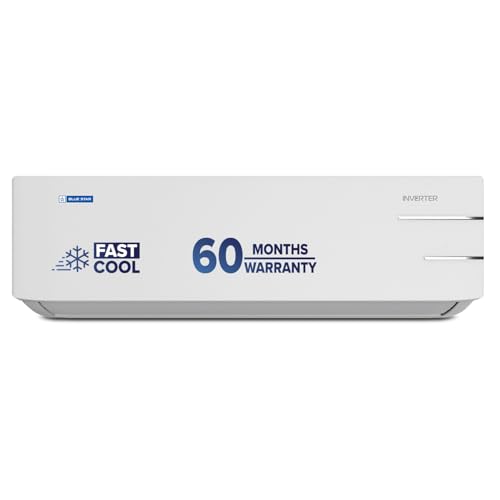
| 8.5/10 | Blue Star 5-in-1 (2023) | 4.6 | 850.74 kWh/year | 37.2 dB | 5-in-1 | 10 yr | 3.6★ (49) | ₹37,690 | Check Price |


Understanding the 2026 BEE 4-Star Rating
Since January 1, 2026 the Bureau of Energy Efficiency (BEE) has raised the efficiency bar for star ratings. A 2026 4-star AC (ISEER ~5.0–5.2) is now roughly as efficient as a 2025 5-star — so it delivers genuinely low running costs while costing several thousand rupees less than the newest 5-star models.
All seven ACs reviewed here carry a true 2026 4-star rating, unlike older 2023–2025 models that were re-rated a star lower under the new norms. But the ISEER still varies from 5.2 down to 4.45, and that gap is real money: the Panasonic (5.2), Samsung, LG and Daikin (5.15) draw far less power than the older-platform Haier AI Climate (4.45). Understand ISEER & star ratings to compare models yourself.
Every 4 star 1.5 ton AC reviewed
Specs, the honest pros and cons, and who each one is for.
Samsung 1.5 Ton 4 Star Bespoke AI WindFree Inverter Smart Split AC (AR60H19D1AWNNA)
Draught-free WindFree cooling and the best owner rating in its class.
- Model Year
- 2026
- 2026 Rating
- 4-Star
- Capacity
- 1.5 Ton
- ISEER
- 5.15
- Annual kWh
- 751.24 kWh
- Noise (Indoor)
- 24 dB
- Cooling Capacity
- 5.00 kW
- Refrigerant
- R-32
- Convertible
- 5-Step
- Wi-Fi
- SmartThings + Voice
- Condenser
- 100% Copper
- Compressor
- 10 Years
The most well-rounded 1.5-ton 4-star AC right now — quiet WindFree cooling, strong efficiency and the highest owner rating, at a genuinely good 51%-off price. WindFree disperses cool air through thousands of micro-holes so the room stays cool without a harsh draught, and at 24 dB it is among the quietest units in class. The only caveats are a thin review base and occasional Amazon-fulfilment niggles such as a missing copper-pipe kit.
- + WindFree mode cools without a direct cold draught — ideal for bedrooms
- + Highest owner rating in the 1.5-ton 4-star field (4.1★)
- + Extremely quiet at 24 dB — among the lowest noise ratings in class
- + Strong efficiency for a 4-star — ISEER 5.15 and ~751 kWh/year
- + Wi-Fi and voice control via SmartThings with 5-step convertible cooling
- + Huge 51% discount off MRP — excellent value at this spec level
- - Low India review count (10 ratings) — newer 2026 listing
- - At least one buyer reported a missing copper-pipe kit on delivery
- - Premium price versus cheaper 4-star options
- - Comprehensive product warranty is only 1 year (compressor 10 years)
Panasonic 1.5 Ton 4 Star Premium Wi-Fi Inverter Smart Split AC (CS/CU-NU18BKY4WX)
The most efficient, most feature-loaded 4-star — if you can navigate the install.
- Model Year
- 2026
- 2026 Rating
- 4-Star
- Capacity
- 1.5 Ton
- ISEER
- 5.20 (highest)
- Annual kWh
- 759.55 kWh
- Noise (Indoor)
- 34 dB
- Refrigerant
- R-32
- Convertible
- 8-in-1
- Wi-Fi
- Matter + MirAie
- Filter
- PM 0.1
- Condenser
- 100% Copper
- Compressor
- 10 Years
On paper the strongest AC here: the highest ISEER (5.2), the best air-quality tech and excellent cooling that owners praise — reviewers report a 170 sq-ft room cooling in about five minutes. It is India's first Matter-enabled AC, so it pairs natively with Apple, Google, Amazon and Samsung smart homes, and the PM 0.1 filter and DustBuster self-clean keep both the air and the coils clean. It loses ground only on after-sales — installation overcharging and a few defective units pull the rating down — and on a thinner discount.
- + Best energy efficiency in the field — ISEER 5.2 and ~760 kWh/year
- + Excellent fast cooling (reviewers cool a ~170 sq-ft room in 5 minutes)
- + Most advanced features — Matter
- + AI
- + DustBuster self-clean and PM 0.1 filter
- + 8-in-1 convertible cooling — most flexible capacity control in class
- + 100% copper with a 10-year compressor warranty
- + Quiet operation at 34 dB
- - Owner rating only 3.4★ — dragged by installation and service complaints
- - Recurring reports of authorised installers overcharging vs the rate card
- - Most expensive after MRP discount (only 26% off)
- - Low India review count (17 ratings) — reliability less validated
- - Some buyers received defective units on delivery
Haier 1.5 Ton 4 Star Wi-Fi HEXA Inverter Smart Split AC (HSA18KU-RAI4NB-I)
Longest warranty and lowest running cost — the value all-rounder.
- Model Year
- 2026
- 2026 Rating
- 4-Star
- Capacity
- 1.5 Ton
- ISEER
- 5.05
- Annual kWh
- 735.94 kWh
- Noise (Indoor)
- 47 dB
- Cooling Capacity
- 5.5 kW
- Refrigerant
- R-32
- Convertible
- 7-in-1
- High Ambient
- Up to 60°C
- Condenser
- 100% Copper
- Compressor
- 12 Years
The best-value pick: it pairs the longest warranty in the class (5-year comprehensive plus a 12-year compressor) with the lowest annual energy use of the new models and quick, heavy-duty cooling rated to 60°C ambient — all at a keen ₹39,990. The HEXA Inverter and 7-in-1 convertible let you dial capacity from 30% up to 110%, and AI frost self-clean keeps the indoor coil fresh. Reviews are thin but positive; the only real downside is a higher rated noise level.
- + Longest warranty in class — 5-year comprehensive plus 12-year compressor
- + Lowest annual energy use of the 2026 models (~736 kWh/year at ISEER 5.05)
- + Quick heavy-duty cooling rated to work at 60°C ambient
- + 7-in-1 convertible cooling with AI mode and frost self-clean
- + Strong value at ₹39990 (46% off MRP)
- + Repeat Haier buyers report reliable cooling and good service
- - Low India review count (13 ratings) — newer listing
- - Loudest rated noise level in the field at 47 dB
- - One buyer reported a damaged unit on arrival
- - Installation cost transparency flagged by a reviewer
LG 1.5 Ton 4 Star DUAL Inverter Split AC (AS-Q19JNYE)
The proven DUAL Inverter platform, in a premium 4-star package.
- Model Year
- 2026
- 2026 Rating
- 4-Star
- Capacity
- 1.5 Ton
- ISEER
- 5.15
- Annual kWh
- 752.17 kWh
- Noise (Indoor)
- 31 dB
- Refrigerant
- R-32
- Convertible
- 6-in-1 AI
- Coast Protection
- Ocean Black
- Filter
- HD + Anti-Virus
- Condenser
- 100% Copper
- Compressor
- 10 Years
LG's DUAL Inverter reliability and a clean installation experience make this a safe premium choice, with efficiency on par with the best here (ISEER 5.15). VIRAAT mode temporarily boosts cooling for peak-summer afternoons, the HD anti-virus filter handles air quality, and Ocean Black Protection guards the copper coil against coastal corrosion. It is held back by the highest price in the group and an almost non-existent review base, so treat it as a brand-trust pick rather than a crowd-validated one.
- + Proven LG DUAL Inverter platform with a strong durability reputation
- + Efficient for a 4-star — ISEER 5.15 and ~752 kWh/year
- + VIRAAT mode for faster high-power cooling
- + Quiet at 31 dB with 6-in-1 AI convertible cooling
- + HD filter with anti-virus protection
- + Reviewer reports clean LG authorised installation with no extra charges
- - Very low India review count (only 2 ratings) — minimally validated
- - Highest price in the field (₹44490)
- - Comprehensive product warranty only 1 year (compressor 10 years)
- - Feature set is solid but not as advanced as Panasonic or Samsung
Daikin 1.5 Ton 4 Star Inverter Split AC (FTKP50XV)
Daikin efficiency and build — undermined by delivery and service complaints.
- Model Year
- 2026
- 2026 Rating
- 4-Star
- Capacity
- 1.5 Ton
- ISEER
- 5.15
- Annual kWh
- 751.22 kWh
- Noise (Indoor)
- 32 dB
- Cooling Capacity
- 5.00 kW
- Refrigerant
- R-32
- Convertible
- None (fixed)
- Filter
- PM 2.5
- Condenser
- 100% Copper
- Compressor
- 10 Years
A technically efficient Daikin with the brand's usual build strengths and "Stabilizer Inside" to ride out voltage swings, but the listing carries a worrying pattern of defective units, a broken fan motor on arrival and poor installation/service response — reflected in the 3.3★ rating across its 67 reviews. It also has no convertible modes and only a basic PM 2.5 filter. Pick it for Daikin reliability only if you are prepared to push back hard on delivery condition and installation.
- + Strong efficiency — ISEER 5.15 and ~751 kWh/year
- + Daikin's well-regarded cooling and build quality when the unit is sound
- + Stabilizer Inside handles voltage fluctuation without an external stabiliser
- + 10-year compressor warranty with 100% copper and multi-layer fire safety
- + Quiet at 32 dB
- + Largest India review base of the 2026 models (67 ratings)
- - Low owner rating (3.3★) — a cluster of defective/refurbished units and a broken fan motor on arrival
- - No convertible cooling modes — fixed 1.5-ton capacity only
- - Basic feature set (PM 2.5 filter only — no Wi-Fi)
- - Repeated complaints about installation quality and slow service response
- - Some buyers report slow or weak cooling
Haier 1.5 Ton 4 Star AI Climate Control Smart Split AC (HSU18K-PYAIR4BN-INV)
The budget, crowd-validated pick — just watch the running cost.
- Model Year
- 2025
- 2026 Rating
- 4-Star
- Capacity
- 1.5 Ton
- ISEER
- 4.45
- Cooling Capacity
- 5.25 kW
- Noise (Indoor)
- 42 dB
- Refrigerant
- R-32
- Convertible
- 7-in-1
- High Ambient
- Up to 60°C
- Wi-Fi
- Yes
- Condenser
- 100% Copper
- Compressor
- 12 Years
The value-for-upfront-price champion: it is the cheapest here at ₹35,490, has by far the most reviews (414 at 3.9★) and pushes a powerful 5,260 W of cooling that owners praise for quick pull-down even in extreme heat. The 7-in-1 convertible, AI climate control and Wi-Fi are generous for the money, and the 12-year compressor warranty is the longest in class. The trade-off is efficiency — its ISEER 4.45 is the lowest here and several owners flag higher electricity bills, so it suits lighter usage or buyers prioritising sticker price over running cost.
- + Cheapest 1.5-ton 4-star here at ₹35490 (52% off MRP)
- + By far the most validated — 414 India ratings at 3.9★
- + Powerful 5260 W cooling with quick pull-down praised by reviewers
- + Longest warranty — 5-year comprehensive plus 12-year compressor
- + 7-in-1 convertible with AI climate control and Wi-Fi
- + Big Haier service network
- - Weakest efficiency in the field (ISEER 4.45) — several owners report high electricity bills
- - Higher rated noise (42 dB) than the premium picks
- - Some reports of early failures and cooling problems
- - Patchy customer-service experiences in some regions
Blue Star 1.5 Ton 4 Star Inverter Split AC (ID418YNU)
A budget Blue Star — but the reliability and service record give pause.
- Model Year
- 2023
- 2026 Rating
- 4-Star
- Capacity
- 1.5 Ton
- ISEER
- 4.60
- Annual kWh
- 850.74 kWh
- Noise (Indoor)
- 37.2 dB
- Refrigerant
- R-32
- Convertible
- 5-in-1
- Special
- Turbo Cool
- Condenser
- 100% Copper
- Product Warranty
- 5 Years
- Compressor
- 10 Years
An aging, basic 4-star whose review record is dominated by reliability and service complaints — failures within a year, water leakage and poor installation response. It still has Blue Star's wide service network, a 5-in-1 convertible with Turbo Cool and a 5-year product warranty, but even at a keen price the efficiency is below the new-tier average (ISEER 4.6), so it ranks last. Consider it only if Blue Star's local service is strong in your area.
- + Blue Star is an India cooling specialist with a wide service network
- + Turbo Cool mode for quick temperature pull-down
- + 5-in-1 convertible cooling
- + 10-year compressor warranty
- + Keen price (₹37690 — 46% off MRP)
- - Worst reliability signal here — reviewers report failures within a year and water leakage
- - Mostly older reviews (2024) with recurring defective-unit and bad-installation complaints
- - Below-par efficiency for a 2026 4-star (ISEER 4.6 — ~851 kWh/year)
- - Least feature-rich — no Wi-Fi and no air-quality filter
- - Several slow-cooling complaints
Which 1.5 ton 4 star AC to buy
Here is who each pick is for, based on the comparison above.
Samsung 1.5 Ton 4 Star Bespoke AI WindFree (AR60H19D1AWNNA) · ₹42,490
Quiet 24 dB WindFree cooling, best owner rating (4.1★) and strong ISEER 5.15 efficiency
Check Price on Amazon →Panasonic 1.5 Ton 4 Star Premium Wi-Fi (CS/CU-NU18BKY4WX) · ₹43,989
Highest ISEER 5.2 with Matter, PM 0.1 filter and 8-in-1 cooling — best for low bills and features
Check Price on Amazon →Haier 1.5 Ton 4 Star Wi-Fi HEXA Inverter (HSA18KU-RAI4NB-I) · ₹39,990
Longest warranty (5yr + 12yr compressor) and the lowest running cost of the new models
Check Price on Amazon →Haier 1.5 Ton 4 Star AI Climate Control (HSU18K-PYAIR4BN-INV) · ₹35,490
Cheapest and most validated (414 ratings) with powerful cooling — just watch the higher running cost
Check Price on Amazon →Our AC roundup links the 1.5 ton rankings at every star rating and shows how the revised BEE ISEER bands map to each star.
Compare every star rating →How to choose a 1.5 ton 4 star AC
-
Why a 4-star inverter AC in 2026?
Under the 2026 BEE re-rating the efficiency bar moved up sharply — a 2026 4-star AC is roughly as efficient as a 2025 5-star. So a 4-star unit today (ISEER ~5.0–5.2) gives you genuinely low running costs while costing several thousand rupees less than the newest 5-star models. It is the sweet spot for moderate-to-regular use (4–8 hours/day) in most Indian homes. -
Quick decision guide: which 4-star AC to choose
Choose the Samsung WindFree if you want the quietest bedroom cooling and the best owner rating. Choose the Panasonic if you want the highest efficiency (ISEER 5.2) and the most features — Matter, PM 0.1 filter and 8-in-1 convertible. Choose the Haier HEXA for the longest warranty and the lowest running cost of the new models. Choose the Haier AI Climate if you want the cheapest, most-reviewed option and run the AC lightly. Choose the LG for proven DUAL Inverter reliability and coastal Ocean Black protection, and the Daikin for Daikin build and Stabilizer Inside — both only if you can manage installation and service carefully. -
Read the ISEER, not just the star
The star label is a band; the ISEER is the exact efficiency number. Among these 4-star units ISEER ranges from 4.45 to 5.2 — that gap is real money. The Panasonic (5.2), Samsung, LG and Daikin (5.15) draw far less power than the older-platform Haier AI Climate (4.45). Always cross-check the listed annual energy consumption (kWh/year): lower is cheaper to run. -
1.5 ton is for ~120–180 sq ft
A 1.5-ton (≈5 kW) AC is sized for a typical 120–180 sq-ft bedroom or small living room. For larger or sun-facing rooms, or top-floor flats, size up to 2 ton. "Convertible" modes (5-in-1 up to 8-in-1) let you dial capacity down to save power in mild weather or boost it on peak-summer days. -
Copper coil and warranty are non-negotiable
All the recommended models use 100% copper condensers — easier to repair and more durable than aluminium. On warranty, look beyond the headline 10-year compressor cover (standard here) to the comprehensive product warranty: both Haier models lead with 5 years comprehensive plus 12 years on the compressor, while most others give 1 year comprehensive (Blue Star offers 5 years on the product). -
The installation is as important as the AC
Across every brand in this list, the most common complaints are not about the AC but about installation — overcharging for extra copper pipe, careless fitting and slow service response. Book installation through the brand's authorised channel, agree on per-metre copper and material charges in writing before work starts, and inspect the box for the full copper-pipe kit on delivery (missing kits are a recurring issue). -
Noise and special modes
For bedrooms, low noise matters: the Samsung WindFree (24 dB), LG (31 dB), Daikin (32 dB) and Panasonic (34 dB) are the quietest here, while the powerful Haier units are louder (42–47 dB). WindFree (Samsung) cools through thousands of micro-holes to avoid a cold draught; Turbo/VIRAAT modes (Blue Star/LG) prioritise fast pull-down. Wi-Fi and voice control are now common on premium 4-star units if app scheduling matters to you.
Frequently asked questions
What is the electricity bill for a 1.5 ton 4 star AC per month in India?
How many square feet can a 1.5 ton AC cool effectively?
Which of these 4-star ACs are rated under the 2026 BEE norms?
What is Matter and why should I care about it?
Should I buy 4-star or upgrade to 5-star for a 1.5 ton AC?
What is ISEER and how does it affect electricity consumption?
Is 1.5 ton 4 star better than 1.5 ton 3 star in North India summers?
What MCB size and wire thickness is needed for a 1.5 ton inverter AC?
What is WindFree cooling on the Samsung?
Which of these ACs has the longest warranty?
Why are some owner ratings only around 3.3–3.6?
Do I need a voltage stabiliser for a 1.5 ton inverter AC?
What does "convertible" (5-in-1, 7-in-1, 8-in-1) mean?
You may also like
More guides and reviews to help you decide.
Best 1.5 ton 3 star inverter split ACs from ₹34,490. Compare IFB, Daikin, Panasonic & more.
Read more →11 best 1.5 ton 5 star inverter split ACs in India 2026 compared — IFB (WWCD winner, 644 kWh/yr), Midea value pick, Cruise budget, Carrier, Hitachi.
Read more →Looking for year-round climate control? Compare 4 best 1.5 ton 3 star hot and cold inverter Inverter Split ACs from Daikin, Panasonic, LG & more.
Read more →Best 1 ton 3 star inverter split ACs from ₹27,490. Compare Samsung, IFB, Blue Star, Hitachi, O General & Cruise on 2026 BEE ISEER, kWh, noise, warranty & price.
Read more →Best 2 ton 3 star inverter split ACs in India 2026 compared — Daikin, IFB, Samsung, Blue Star & Carrier on 2026 BEE ISEER.
Read more →Best 1 ton 5 star inverter split ACs in India 2026 — Samsung (WWCD winner), Blue Star, Daikin, LG, O General & more compared on 2026 BEE ISEER, running cost.
Read more →