
PRODUCT REVIEW
Best 1.5 Ton 3 Star Inverter Split AC in India 2026
Best 1.5 ton 3 star inverter split ACs from ₹34,490. Compare IFB, Daikin, Panasonic & more.
 By Naveen Bhavnani
Updated
By Naveen Bhavnani
Updated
As an Amazon Associate we earn from qualifying purchases. We could also earn a fee through some links when you click on them.

A note on Daikin
Daikin has long been one of the most trusted names in Indian ACs, and we still rate its cooling refinement and reliability pedigree among the best here — it is our runner-up. Recent reviews, however, note that some units are arriving damaged in transit, and buyers report that Daikin's after-sales service can be slow to resolve such issues. We have factored this recent-reliability signal into the ranking — the Daikin is still an excellent, quiet machine, but inspect the unit carefully on delivery and confirm local service before you buy.
1.5 ton 3 star AC picks by need
Already covered the winner above — here are the picks for specific needs.
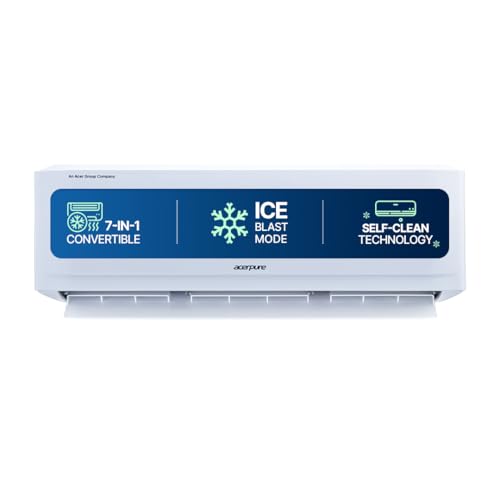
Acerpure Chill Neo 1.5 Ton 3 Star 7-in-1 Convertible Inverter Split AC (AC5IPG61.5TN3W48W)

Panasonic 1.5 Ton 3 Star Premium Wi-Fi Inverter Smart Split AC (CS/CU-SU18BKY3W)

Hitachi 1.5 Ton 3 Star Inverter Split AC (Smart View Display, 24m Air Throw, RAS.D318PCD2BS1)
1.5 ton ACs on ISEER, kWh, noise
How the shortlist stacks up. Scroll sideways on mobile.
| WWCD Score | Product | ISEER | Annual kWh | Noise dB | Convertible | Wi-Fi | Warranty | Recent Neg % | Rating | Price | Deal |
|---|---|---|---|---|---|---|---|---|---|---|---|
| 8.9/10 | IFB 8-in-1 (Best Overall) | 4.35 | 855 | 35 | 8-in-1 | Yes | 10yr (5yr PCB) | 10% | 4.4★ (92) | ₹35,900 | Check Price |
| 8.8/10 | Daikin FTKL50XV16 (Runner-Up) | 4.4 | 880 | 32 | 3D / Dew Clean | No | 10yr (1yr prod) | 29% (n=7) | 4.1★ (19) | ₹37,490 | Check Price |
| 8.7/10 | Panasonic MirAIe (Best Air Quality) | 4.5 | 878 | 35 | 8-in-1 | Yes (Matter) | 10yr (5yr PCB) | 10% | 3.8★ (618) | ₹38,990 | Check Price |
| 8.5/10 | Hitachi Smart View (Best Reliability) | 4.3 | 864 | 34 | 4-way / Ice Clean | No | 1yr (opt 5yr) | 0% | 4.1★ (396) | ₹36,500 | Check Price |
| 8.5/10 | Samsung WindFree (Quietest) | 4.43 | 830 | 26 | WindFree / AI | Yes (SmartThings) | 5yr comp + 10yr | 30% | 4.2★ (74) | ₹39,990 | Check Price |
| 8.1/10 | Blue Star DigiQ (Highest Rated) | 4.38 | 918 | 45 | 5-in-1 | No | 10yr (1yr prod) | 10% | 4.6★ (110) | ₹36,490 | Check Price |
| 8.0/10 | Acerpure Chill Neo (Best Value) | 4.37 | 851 | 44 | 7-in-1 | No | 10yr (5yr PCB) | 10% | 4.2★ (109) | ₹35,290 | Check Price |
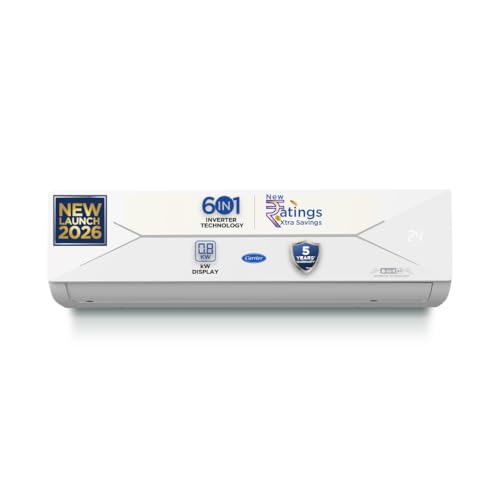
| 7.3/10 | Carrier ESTER EDGE | 4.35 | 854 | 37 | 6-in-1 | No | 10yr (1yr prod) | 40% | 4.0★ (56) | ₹34,490 | Check Price |


Buying during the 2026 BEE switchover — two things to check
The AC market is mid-transition to the 2026 BEE 'New Star Rated' labels, so several high-volume best-sellers are currently unavailable or below our quality bar — LG (3.6★ across 1,369 ratings), Lloyd (3.5★), Cruise (3.6★) and a brand-new zero-review Voltas SKU all failed our recent-reliability check. Every model below is one you can actually buy on Amazon.in today.
Watch the exact SKU before you order. Several of these ACs share a model name with a separate Wi-Fi variant — the Daikin, Hitachi, Blue Star, Acerpure and Carrier units reviewed here do not have Wi-Fi. If smart control matters, pick the IFB, Panasonic or Samsung.
Compare like-for-like: ignore label-to-label star comparisons across years and check each unit's ISEER and annual kWh instead. Understand ISEER & star ratings to judge the models yourself.
1.5 ton 3 star AC reviews: ISEER, noise and service
Specs, the honest pros and cons, and who each one is for.
IFB 1.5 Ton 3 Star AI Powered 8-in-1 Flexi Inverter Split AC (CI183SS22SGM3)
The best all-rounder — quiet, feature-packed and the strongest warranty here
- Model Year
- 2026
- 2026 Rating
- 3-Star New
- Capacity
- 1.5 Ton (up to 150 sq ft)
- ISEER
- 4.35
- Annual Units
- ~855 kWh
- Noise
- 35 dB
- Smart
- WiFi + AI
- Convertible
- 8-in-1 Flexi
- Warranty
- 1Y + 5Y PCB + 10Y Comp
Our best overall 1.5-ton 3-star and the most balanced pick in the field: at or near the top on every criterion with no weak spot — quiet 35 dB running, an 8-in-1 convertible with inbuilt Wi-Fi and AI, a category-best 5-year PCB warranty (on top of a 10-year compressor) and a clean 4.4 star recent record. It delivers Daikin-like refinement but adds Wi-Fi, AI and a longer warranty; the only real trade-offs are a modest 92-review base and IFB's thinner AC service network.
- + Best-balanced pick with no real weakness
- + Inbuilt Wi-Fi plus AI and 8-in-1 flexi modes
- + Category-best warranty with 5-year PCB on top of 10-year compressor
- + Genuinely quiet at 35 dB with no noisy complaints
- + Clean recent India reviews at 4.4 star
- + 100% copper coil
- - Modest review base of 92 India ratings
- - IFB is an appliance-generalist with a thinner AC service network
- - One unit arrived with shipping damage
- - No standout high-ambient cooling claim versus Panasonic
Daikin 1.5 Ton 3 Star Inverter Split AC (FTKL50XV16)
Daikin's quiet, refined cooling and reliability pedigree in a current 3-star
- Model Year
- 2026
- 2026 Rating
- 3-Star New
- Capacity
- 1.5 Ton (up to 150 sq ft)
- ISEER
- 4.4
- Annual Units
- ~880 kWh
- Noise
- 32 dB
- Self-Clean
- Dew Clean
- Filter
- PM2.5
- Warranty
- 1Y + 5Y PCB + 10Y Comp
Our runner-up and the pick if quiet running and brand pedigree matter most: the quietest cabinet here at 32 dB, with Daikin's respected cooling engineering and the strongest reliability reputation in the category. Just note the Amazon evidence is thin — only 19 India ratings, with a couple of shipping-damaged units recently — and the product warranty is only a year, so this is a reputation-led choice rather than an Amazon-proven one. If you'd rather have Wi-Fi and a bigger review base, the IFB winner is the closer all-rounder.
- + Quietest cabinet here at 32 dB
- + Daikin's category-leading reliability and cooling reputation
- + Dew Clean self-maintenance plus Hepta Sense and Triple Display
- + Near-best efficiency at ISEER 4.4
- + 100% copper coil with DNNS anti-corrosion coating
- + Strong demand for a premium unit
- - Reliability is reputation-led not Amazon-proven with only 19 India ratings
- - Two recent units arrived dead-on-arrival from shipping
- - Short 1-year product warranty
- - No Wi-Fi or smart control on this trim
- - Premium price for a 3-star
Panasonic 1.5 Ton 3 Star Premium Wi-Fi Inverter Smart Split AC (CS/CU-SU18BKY3W)
The tech flagship — PM0.1 air purification and Matter smart control
- Model Year
- 2026
- 2026 Rating
- 3-Star New
- Capacity
- 1.5 Ton (120-170 sq ft)
- ISEER
- 4.5
- Annual Units
- ~878 kWh
- Noise
- 35 dB
- Smart
- Matter + MirAIe
- Filter
- PM0.1
- Warranty
- 1Y + 5Y PCB + 10Y Comp
The most feature-rich and efficient AC on the list — PM0.1 filtration, Matter/MirAIe control and ISEER 4.5 — and its recent India reviews are clean. The catch is a 3.8 star lifetime rating (a persistent ~1-in-5 unhappy minority) and a thinner service network, so it's the pick for a tech-first buyer rather than someone prioritising a proven service record.
- + Most advanced features here with PM0.1 filtration and Matter/MirAIe control
- + Best energy efficiency in the set at ISEER 4.5
- + Rated for 55°C ambient with strong airflow
- + Recent verified India reviews are clean at 10 percent negative
- + Very high demand at 1000-plus per month
- - Lowest headline rating of the picks at 3.8 star
- - Priciest pick at ₹38,990
- - Panasonic AC after-sales network is thinner than the specialists
- - A few reviewers report Wi-Fi/MirAIe glitches
- - One recent no-cooling unit with slow service
Hitachi 1.5 Ton 3 Star Inverter Split AC (Smart View Display, 24m Air Throw, RAS.D318PCD2BS1)
The safe, proven choice — the cleanest recent record and the longest air throw here
- Model Year
- 2026
- 2026 Rating
- 3-Star New
- Capacity
- 1.5 Ton (up to 150 sq ft)
- ISEER
- 4.3
- Annual Units
- ~864 kWh
- Noise
- 34 dB
- Air Throw
- 24 m
- Convertible
- 4-Way / Ice Clean
- Warranty
- 1Y std (opt 5Y)
If a proven track record matters most, this is the pick: it has the cleanest recent review record of the set (zero negatives on the largest base) and a class-leading 24 m air throw for big rooms. You trade away efficiency — it has the lowest ISEER here and a verified high-bill complaint — plus Wi-Fi and premium filtration.
- + Cleanest reliability record here with zero recent negatives on 396 ratings
- + Best air throw at 24 m for large or long rooms
- + Established AC-specialist brand with good install feedback
- + Quiet at 34 dB with 4-way swing
- + High demand at 500-plus per month
- - Lowest efficiency of the picks at ISEER 4.3 with one high-bill complaint
- - Standard warranty is only 1 year with 5 years a paid add-on
- - No Wi-Fi and only a basic dust filter
- - Can feel slightly underpowered on extreme-hot days
Samsung 1.5 Ton 3 Star Bespoke AI WindFree Inverter Split AC (AR60H18D1LWNNA)
The quietest, draft-free pick — WindFree comfort with a 5-year product warranty
- Model Year
- 2025
- 2026 Rating
- 3-Star New
- Capacity
- 1.5 Ton (150-180 sq ft)
- ISEER
- 4.43
- Annual Units
- ~830 kWh
- Noise
- 26 dB
- Smart
- WiFi + Voice
- Comfort
- WindFree
- Warranty
- 5Y Comp + 10Y Compressor
The most comfortable AC on the list: the lowest 26 dB noise plus WindFree draft-free cooling make it the standout bedroom choice, backed by strong efficiency and a class-leading 5-year comprehensive warranty. It's pulled to mid-pack by a 30% recent-negative rate (an early unit failure plus Samsung service-centre complaints) and the highest price here.
- + Quietest AC here at 26 dB with WindFree draft-free cooling
- + Best comprehensive warranty in the set with 5-year full product plus 10-year compressor
- + Strong efficiency at ISEER 4.43 and 830 kWh/year
- + Full Samsung smart ecosystem with Wi-Fi and voice control
- + Recent buyers praise the quiet effective cooling
- - Three in ten recent reviews are 1-2 star driven by an early unit failure and service complaints
- - Priciest pick at ₹39,990
- - Only an anti-bacterial filter with no PM2.5 or PM0.1
- - Lower sales volume than the mainstream sellers
- - A 2025-generation design
Blue Star 1.5 Ton 3 Star 5-in-1 Convertible Inverter Split AC (DigiQ Hepta, IA318ZXU)
The highest-rated pick from a true AC specialist — if you can live with the noise
- Model Year
- 2026
- 2026 Rating
- 3-Star New
- Capacity
- 1.5 Ton (151-180 sq ft)
- ISEER
- 4.38
- Annual Units
- ~918 kWh
- Noise
- 45 dB
- Convertible
- 5-in-1
- Sensor
- DigiQ Hepta
- Warranty
- 1Y + 10Y Comp
The highest-rated AC here (4.6 star) from India's best-known AC specialist, with a clean recent record and strong service backing. Two things keep it mid-pack against the leaders: it's the loudest pick (45 dB) and the least efficient (918 kWh/year), so it suits a living room more than a quiet bedroom.
- + Highest customer rating of any pick at 4.6 star
- + Dedicated AC specialist with one of India's deepest service networks
- + Blue Fins anti-corrosion coating plus 100% copper
- + DigiQ Hepta sensing and Turbo Cool for adaptive cooling
- + Consistently smooth-installation feedback
- - Loudest pick at 45 dB which hurts bedroom use
- - Highest running cost of the picks at 918 kWh/year
- - No Wi-Fi and no premium filter
- - Only a 1-year product warranty
- - Some buyers report higher install charges and one missing copper pipe
Acerpure Chill Neo 1.5 Ton 3 Star 7-in-1 Convertible Inverter Split AC (AC5IPG61.5TN3W48W)
The value pick — the cheapest reliable, efficient option, if noise is fine
- Model Year
- 2026
- 2026 Rating
- 3-Star New
- Capacity
- 1.5 Ton (150-180 sq ft)
- ISEER
- 4.37
- Annual Units
- ~851 kWh
- Noise
- 44 dB
- Convertible
- 7-in-1 + Ice Blast
- High Ambient
- 58°C
- Warranty
- 1Y + 5Y PCB + 10Y Comp
The best value among the clean picks: the lowest price and lowest running cost, a 5-year PCB warranty and a solid 4.2 star recent record praising fast cooling. The compromises are noise (44 dB, with 'noisy' mentions) and Acerpure's smaller, newer service network — fine for a hall on a budget, less so for a quiet bedroom.
- + Cheapest of the clean well-rated picks at ₹35,290
- + Most efficient by annual consumption at 851 kWh
- + 5-year PCB warranty on top of 10-year compressor
- + Clean recent reviews praising fast cooling and value
- + 7-in-1 convertible with Ice Blast
- - Loud at 44 dB with noisy mentions so not ideal for bedrooms
- - Acerpure is a newer brand with a smaller service network
- - No Wi-Fi and only a basic dust filter
- - Some buyers report install delays and extra charges
- - One recent unit shipped missing a copper pipe
Carrier 1.5 Ton 3 Star Flexicool ESTER EDGE Gxi Inverter Split AC (CAI18EE3R36F1)
A cheap, well-specced 2026 model undercut by recent fulfilment and service complaints
- Model Year
- 2026
- 2026 Rating
- 3-Star New
- Capacity
- 1.5 Ton (111-150 sq ft)
- ISEER
- 4.35
- Annual Units
- ~854 kWh
- Noise
- 37 dB
- Convertible
- 6-in-1 Flexicool
- Filter
- PM2.5
- Warranty
- 1Y + 5Y PCB + 10Y Comp (+opt 4Y)
On paper an attractive, keenly-priced 2026 model with a Smart Energy Display and PM2.5 filter — but its recent verified India reviews are a warning: 4 in 10 are 1-2 star, driven by units shipped without the copper connecting coil and by poor Carrier service. Included for transparency and its specs, but ranked last and flagged; buy only if you're prepared to chase Carrier support.
- + Explicit 2026 model with a Smart Energy Display to track running cost
- + Lowest price of the selected picks at ₹34,490
- + 6-in-1 convertible with PM2.5 filter and 100% copper
- + Reasonable 37 dB noise with positive cooling mentions
- + High demand at 700-plus per month
- - Four in ten recent verified India reviews are 1-2 star
- - Repeated reports of units arriving without the copper connecting coil
- - Multiple worst-Carrier-service and incomplete-shipment complaints
- - Only a 1-year product warranty with a paid 4-year extension
- - No Wi-Fi or smart control
Which 1.5 ton 3 star AC to buy
Every pick here is a currently-purchasable 2026 BEE 3-star with a 100% copper coil — here is who each one is for.
IFB AI Powered 8-in-1 (CI183SS22SGM3) · ₹35,900
Buy for the most balanced 3-star — quiet, inbuilt Wi-Fi + AI, 8-in-1 flexibility and the best warranty here.
Check Price on Amazon →Acerpure Chill Neo (AC5IPG61.5TN3W48W) · ₹35,290
Buy for the cheapest efficient hard-cooling 3-star — if Acerpure services your city.
Check Price on Amazon →Panasonic MirAIe (CS/CU-SU18BKY3W) · ₹38,990
Buy for PM0.1 air purification, Matter smart control and the best efficiency here.
Check Price on Amazon →Hitachi Smart View (RAS.D318PCD2BS1) · ₹36,500
Buy if a proven track record and a long air throw for big rooms matter most.
Check Price on Amazon →See which tonnage your floor area needs, from bedrooms to large halls, then open the ranking for that size.
Match tonnage to your room size →How to choose a 1.5 ton 3 star AC
-
Is a 3-star inverter AC the right choice for you?
A 3-star inverter AC is the value sweet spot: it costs ₹3,000-8,000 less upfront than a 5-star equivalent but uses more power (roughly 850-920 kWh/year here vs ~700 kWh for a good 5-star). If your AC runs only 3-5 months a year or a few hours a day, the lower purchase price usually wins. If you run it heavily (bedroom, 8+ hours daily, long summers), a 5-star pays back its premium in 2-3 seasons. If that sounds like you, see our best 1.5 ton 5 star inverter ACs. All the models here are inverter units, so they modulate compressor speed and are far more efficient than old fixed-speed 3-star ACs. -
Match tonnage to room size
1.5 ton suits roughly 120-180 sq ft — a standard master bedroom or small living room. For rooms under 120 sq ft, a 1 ton is enough and cheaper to run; for halls above 180 sq ft, west-facing rooms, top floors or kitchens, step up to 2 ton so the compressor isn't running flat-out. An undersized AC never quite cools and runs continuously, wiping out the efficiency you paid for. -
Read the ISEER, not just the star
Within the 2026 3-star band, ISEER still varies — from about 4.3 (Hitachi Smart View) to 4.5 (Panasonic). A higher ISEER and a lower 'annual energy consumption (kWh/year)' figure mean lower running cost for the same star rating. In this list annual consumption ranges from ~830 kWh (Samsung) to ~918 kWh (Blue Star) — a ~90 kWh/year gap that is real money over the life of the unit. The kWh/year number printed on the BEE label (and in our specs) is the single best running-cost comparison. -
What the 2026 BEE 'New Star Rated' change means
From 1 January 2026 the BEE made its ISEER scale stricter, so the whole star ladder shifted down a rung — a today's 3-star roughly matches the efficiency an old 4-star delivered, and many high-efficiency 2024-25 models were re-labelled or pulled while brands re-certify. That's why some category best-sellers now show as 'currently unavailable' and why you'll see 'New Star Rated' on the boxes. Don't compare a 2025-rated star against a 2026-rated star directly; compare the ISEER and kWh/year numbers instead, which are measured the same way regardless of the label. -
Noise matters more than the spec sheet suggests
Indoor-unit noise ranges widely even within this list — from 26 dB (Samsung WindFree) and 32 dB (Daikin) to 44-45 dB (Acerpure, Blue Star). For a bedroom, aim for 35 dB or lower; the difference between 32 dB and 45 dB is the difference between 'library quiet' and 'audible hum you notice at night'. Cross-check the rated dB against reviews — some units rated mid-range are still described as 'noisy' by owners. Comfort features like Samsung's WindFree, 4-way swing and dedicated silent/sleep modes also reduce the harsh direct draft. -
100% copper coils and anti-corrosion coatings
Insist on 100% copper condenser coils (every pick here has them) — copper cools better, is easier and cheaper to repair than aluminium, and lasts longer. If you're near the coast or in a high-pollution city, an anti-corrosion fin coating (Blue Star's Blue Fins, Hitachi's Nano Tech Ultra, Daikin's DNNS) meaningfully extends outdoor-unit life. 'Body material' refers to the outer cabinet, not the coil — don't over-weight plastic vs metal cabinets for durability. -
After-sales service decides your 5-year experience
The clearest pattern in the reviews is that the AC's reliability is only half the story — the brand's installation and service network is the other half. Carrier drew the most recent service complaints (missing copper coils on arrival, unresponsive support), while Blue Star, Hitachi and IFB owners more often praised smooth installs. Dedicated AC specialists (Blue Star, Hitachi, Daikin) tend to have deeper service networks than appliance-generalists. Before buying, check that your city has the brand's authorised service presence — a cheaper AC with no nearby service can cost more in downtime during peak summer. -
Watch the convertible-mode and capacity fine print
Most of these are sold as '5-in-1' to '8-in-1' convertible, meaning you can cap the compressor at 40-60% for lower bills in mild weather, or push 110-115% for faster cooling in extreme heat. IFB's 8-in-1 offers the most steps here, with Acerpure's 7-in-1 and Carrier's 6-in-1 close behind. Separately, check rated capacity and room fit — a 1.5 ton suits a standard 130-150 sq ft bedroom, but size up for larger or sun-facing rooms so the compressor isn't running flat out. -
Read the RECENT reviews, not just the star average
The single most useful check before buying any AC is the most-recent verified reviews sorted by date — not the headline star rating. In this research, several high-volume models with respectable lifetime ratings (Lloyd 3.5, LG 3.6, Cruise 3.6, Carrier 4.0) showed 40-60% of their most-recent verified buyers leaving 1-2 star reviews for defects, no-cooling failures, missing copper coils and poor service. A flattering lifetime average can hide a product that is failing right now. Also check that reviews are from India — foreign reviews describe different stock and warranty. -
Budget for installation and the copper pipe - and use brand service
The AC price rarely includes full installation. Expect ₹1,500-2,500 for standard installation, and extra copper piping is charged per metre (₹400-800/m) beyond the ~3m usually bundled — long indoor-to-outdoor runs add up fast. A recurring complaint across brands here is installers demanding charges beyond the standard rate, and some units even arriving without the bundled copper coil. Always book installation through the brand's official service (via your Amazon invoice) to keep the warranty valid, and inspect the box for the copper coil before the technician leaves.
Frequently asked questions
How many units of electricity does a 1.5 ton 3 star AC consume per hour in 2026?
What is a true 3-star AC under 2026 BEE norms?
Which 1.5 ton 3 star AC is the WWCD winner for 2026?
Is convertible mode really useful or just marketing?
How much does it cost to run a 1.5 ton 3-star AC per month in 2026?
Do I need a stabilizer for these inverter ACs?
Which 1.5 ton 3 star AC is best for a bedroom in 2026?
What is the average lifespan of a 1.5 ton split AC in India?
Do I need the WiFi/smart models?
Is a 1.5 ton 3-star inverter AC enough for my room?
Which of these is the most energy efficient?
Why are so many popular models 'currently unavailable'?
Are the low-review 2026 models safe to buy?
What's not included in the price, and what should I budget extra?
Does a 3-star inverter AC cool well in extreme Indian heat?
Are R-32 refrigerant ACs safe and good?
Sources & References
- Standards & Labelling Programme — Room Air Conditioner Star Labels Bureau of Energy Efficiency (BEE), Government of India · 2026 Official BEE star-rating labels for room air conditioners, including the 2026 "New Star Rated" ISEER thresholds referenced throughout this review.
- Room Air Conditioner Labelling Regulations & ISEER Methodology Bureau of Energy Efficiency (BEE), Ministry of Power, Government of India The BEE regulation defining how split and room ACs are rated, including the Indian Seasonal Energy Efficiency Ratio (ISEER) used to set the star bands.
- BEE Star Rating Programme — Standards & Labelling Bureau of Energy Efficiency (BEE), Ministry of Power, Government of India · 2026 Overview of the mandatory star-labelling scheme that governs the 1–5 star ratings shown on every AC in this comparison.
You may also like
More guides and reviews to help you decide.
11 best 1.5 ton 5 star inverter split ACs in India 2026 compared — IFB (WWCD winner, 644 kWh/yr), Midea value pick, Cruise budget, Carrier, Hitachi.
Read more →Best 1.5 ton 4 star inverter split AC India 2026: Samsung WindFree, Panasonic Matter, Haier HEXA, LG DUAL, Daikin and Blue Star compared on ISEER, noise.
Read more →Looking for year-round climate control? Compare 4 best 1.5 ton 3 star hot and cold inverter Inverter Split ACs from Daikin, Panasonic, LG & more.
Read more →Best 2 ton 3 star inverter split ACs in India 2026 compared — Daikin, IFB, Samsung, Blue Star & Carrier on 2026 BEE ISEER.
Read more →Best 1 ton 3 star inverter split ACs from ₹27,490. Compare Samsung, IFB, Blue Star, Hitachi, O General & Cruise on 2026 BEE ISEER, kWh, noise, warranty & price.
Read more →Best 1 ton 5 star inverter split ACs in India 2026 — Samsung (WWCD winner), Blue Star, Daikin, LG, O General & more compared on 2026 BEE ISEER, running cost.
Read more →