
PRODUCT REVIEW
Best Window ACs from 0.8 to 1.5 Ton in India 2026
The best window ACs in India for 2026 — compare Carrier, Voltas, Panasonic & more. Picks for every budget.
 By Naveen Bhavnani
Updated
By Naveen Bhavnani
Updated
As an Amazon Associate we earn from qualifying purchases. We could also earn a fee through some links when you click on them.

Window AC picks by room size
Already covered the winner above — here are the picks for specific needs.

Voltas 1.5 Ton 3 Star Inverter Window AC (183V Vertis Pearl)

Panasonic 1.5 Ton 5 Star Inverter Window AC (CW-XU185CGT, 8-in-1)

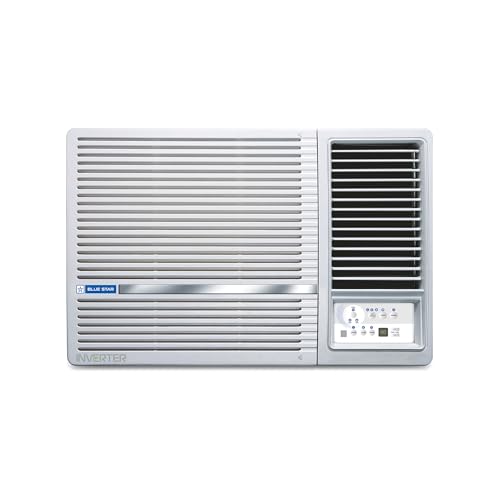
Blue Star 0.8 Ton 3 Star Fixed Speed Window AC (WFD309L)
Window ACs compared on ISEER
How the shortlist stacks up. Scroll sideways on mobile.
| WWCD Score | Product | Tonnage | BEE Star | ISEER | Compressor | Ambient | Compressor Warranty | Price | Deal |
|---|---|---|---|---|---|---|---|---|---|
| 9.2/10 | Carrier 1.5T 5★ Inverter (ESTRA Fxi) | 1.5 Ton | 5 | 3.55 | Inverter Rotary | 52°C | 10 yr | ₹32,295 | Check Price |
| 9.2/10 | Voltas 1.5T 3★ Inverter (183V) | 1.5 Ton | 3 | 3.15 | Inverter Rotary | 50°C | 10 yr | ₹27,500 | Check Price |
| 9.2/10 | Panasonic 1.5T 5★ Inverter (CW-XU185CGT) | 1.5 Ton | 5 (2026) | 3.86 | Inverter Rotary | 50°C | 5 yr | ₹39,900 | Check Price |
| 9.1/10 | Blue Star 1.5T 5★ Inverter (5-in-1) | 1.5 Ton | 5 | 3.55 | Inverter Rotary | Not specified | 10 yr | ₹30,932 | Check Price |
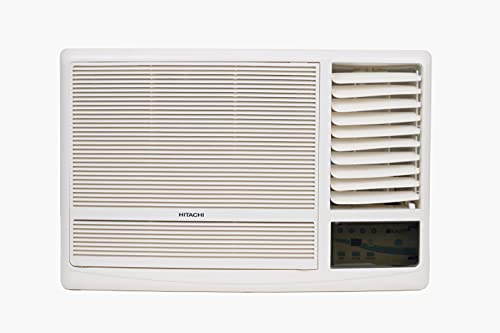
| 9.1/10 | Hitachi 1.5T 5★ Inverter (RAW518HHEO) | 1.5 Ton | 5 | 3.55 | Inverter Twin Rotary | 43°C | 10 yr (5 yr full) | ₹34,110 | Check Price |
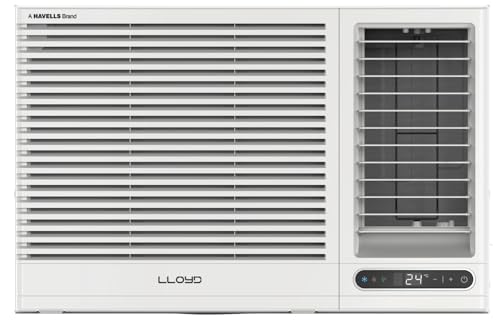
| 9.0/10 | Lloyd 1.5T 5★ Fixed Speed | 1.5 Ton | 5 | 3.60 | Fixed Speed Rotary | 48°C | 10 yr | ₹27,966 | Check Price |
| 9.0/10 | Hitachi 1.5T 3★ Inverter (RAW318HIEO) | 1.5 Ton | 3 | 3.30 | Inverter Rotary | 48°C | 10 yr | ₹29,237 | Check Price |
| 8.9/10 | Carrier 1.5T 3★ Fixed (Estrella Dx) | 1.5 Ton | 3 | ~3.15 | Fixed Speed Rotary | Not specified | 5 yr | ₹27,817 | Check Price |
| 8.9/10 | Hitachi 1.5T 3★ (KAZE PLUS) | 1.5 Ton | 3 | 3.20 | Fixed Speed Twin Rotary | Not specified | 5 yr | ₹28,771 | Check Price |
| 8.8/10 | Blue Star 0.8T 3★ Fixed | 0.8 Ton | 3 | 3.15 | Fixed Speed Rotary | Not specified | 80 mo | ₹19,737 | Check Price |



BEE star rating changes for 2026
The Bureau of Energy Efficiency (BEE) revised its star-rating thresholds effective 1st January 2026. Air conditioners manufactured before 2026 may now carry a lower star count under the new benchmarks — a 5-star AC from 2023-2025 may now be rated 4-star. The units themselves have not changed: they deliver the same cooling and consume the same electricity. Only the label changed.
What matters is the ISEER value, not the star count. In window ACs, ISEER ≥3.5 is excellent, 3.2-3.5 is mid-pack, and below 3.0 is dated. We note the BEE star and ISEER for every model so you can compare like-for-like. Understand ISEER and star ratings to make your own call.
Window AC reviews: ISEER, compressor and warranty
Specs, the honest pros and cons, and who each one is for.
Carrier 1.5 Ton 5 Star Inverter Window AC (ESTRA Fxi)
Powerful, efficient and competitively priced — the most well-rounded 5-star inverter window AC available right now
- Tonnage
- 1.5 Ton
- BEE Star (2025)
- 5 Star · ISEER 3.55
- Cooling Capacity
- 5070 W
- Ambient Rating
- 52°C
- Compressor
- Inverter Rotary
- Condenser
- 100% Copper · Blue Coat
- Refrigerant
- R32
- Warranty
- 1 yr / 10 yr compressor
Carrier's ESTRA Fxi blends top-tier cooling muscle (52°C ambient, 5070W) with 5-star BEE efficiency and a 10-year compressor warranty at a sub-₹33k street price. It's noisier than the marketing implies, and Carrier's install service is uneven, but the cooling-per-rupee story is the strongest in the current window AC field.
- + Best-in-class 5070W cooling rated for 52°C ambient
- + 5-star BEE 2025 with ISEER 3.55 for the lowest running-cost tier
- + 100% copper condenser with anti-corrosion blue coating
- + 10-year compressor warranty
- + aggressive sub-₹33k price for a 5-star inverter
- - Several India reviews report loud Turbo-mode noise
- - Carrier transit and install experience is hit-or-miss
- - no published indoor dB rating on the spec sheet
Voltas 1.5 Ton 3 Star Inverter Window AC (183V Vertis Pearl)
The inverter window AC that doesn't ask you to overpay for a 5-star label
- Tonnage
- 1.5 Ton
- BEE Star
- 3 Star · ISEER 3.15
- Ambient Rating
- 50°C
- Compressor
- Inverter Rotary
- Noise (Indoor)
- 56 dB
- Stabilizer-Free
- 170-265 V
- Condenser
- Copper · Anti-Rust
- Warranty
- 1 yr / 10 yr compressor
Voltas' 183V Vertis Pearl is the value pick. You get an inverter compressor, 10-year compressor warranty and 170-265V stabilizer-free operation for under ₹28,000 — and the review record is the cleanest in the field. The trade-off is a 3-star efficiency tier, so monthly bills will be higher than a 5-star unit.
- + Inverter compressor at a 3-star price
- + 10-year compressor warranty plus Voltas' deep service network
- + 170-265V stabilizer-free range usable in low-voltage areas
- + lowest critical-review volume in the field
- + strong cooling at 50°C ambient
- - 3-star BEE means higher running cost than 5-star peers
- - limited smart/connectivity features
- - 55kg unit is heavy to install
- - ISEER 3.15 sits at the 3-star floor
Panasonic 1.5 Ton 5 Star Inverter Window AC (CW-XU185CGT, 8-in-1)
The most energy-efficient and quietest window AC of 2026 — at a real-world price premium
- Tonnage
- 1.5 Ton
- BEE Star (2026)
- 5 Star · ISEER 3.86
- Annual Energy
- 1023 kWh/year
- Ambient Rating
- 50°C
- Noise
- 49 dB (lowest here)
- Swing
- 4-Way · 8-in-1 Convertible
- Stabilizer-Free
- 145-280 V
- Warranty
- 1 yr / 5 yr compressor
Panasonic's CW-XU185CGT is the only window AC in this field with a genuine 2026 BEE 5-star rating, the lowest published noise (49 dB), and the lowest annual energy consumption (1023 kWh). If you run AC 8+ hours daily through Indian summers, the lower running cost and quieter operation make it the strongest long-term value despite the ₹39,900 price tag. Demerits are real but secondary: a 5-year compressor warranty that trails Carrier and Hitachi, a clunky remote, and bright LEDs at night.
- + Genuine 2026 BEE 5-star with ISEER 3.86 for the lowest running cost here
- + 49dB published noise — the quietest in the field
- + 8-in-1 convertible cooling with 4-way swing
- + stabilizer-free across a wide 145-280V band
- + PM0.1 air filter
- - Highest price in the lineup
- - 5-year compressor warranty trails 10-year rivals
- - remote called complicated with no WiFi control
- - bright LEDs disturb sleep at night
- - very small 8-rating review base
Blue Star 1.5 Ton 5 Star Inverter Window AC (WIE518L, 5-in-1)
The 5-in-1 convertible window AC — flexible cooling, but plan for installation patience
- Tonnage
- 1.5 Ton
- BEE Star (2025)
- 5 Star · ISEER 3.55
- Annual Energy
- 1089 kWh/year
- Compressor
- Inverter Rotary
- Convertible
- 5-in-1 (5 capacity steps)
- Condenser
- Copper · Hydrophilic Blue Fins
- Refrigerant
- R32
- Warranty
- 1 yr / 10 yr compressor
Blue Star's WIE518L is the only window AC here with proper 5-in-1 convertible cooling, letting you dial down capacity for off-peak use. The energy numbers are class-leading. The catch is Blue Star's after-sales experience: multiple recent reviews flag long installation waits and unresponsive service. If you have a reliable local technician or are buying outside peak season, this is a strong premium pick.
- + Only true 5-in-1 convertible cooling in the field
- + 5-star BEE 2025 with ISEER 3.55
- + 10-year compressor warranty
- + hydrophilic blue fins resist coastal corrosion
- + high-efficiency rotary compressor delivers strong cooling at low power draw
- - Multiple reviews flag slow Blue Star after-sales and 10+ day install waits
- - only 41 India reviews
- - no published indoor dB rating
- - some units arrived with worn packing
Hitachi 1.5 Ton 5 Star Window Inverter AC (RAW518HHEO)
Longest warranty in the field — buy this if peace-of-mind matters more than 52°C cooling
- Tonnage
- 1.5 Ton
- BEE Star (2025)
- 5 Star · ISEER 3.55
- Annual Energy
- 1069 kWh/year (lowest)
- Ambient Rating
- 43°C
- Compressor
- Twin Rotary Inverter
- Swing
- 4-Way
- Condenser
- 100% Copper · Nano Tech
- Warranty
- 5 yr product / 10 yr compressor
Hitachi RAW518HHEO is the warranty-first pick: a full 5 years comprehensive on the product, 10 on the compressor. The energy efficiency is class-leading. The trade-offs are a softer 43°C ambient rating and recent India reviews calling out slow cooling and uneven service. Best for buyers in cities under 43°C peaks who prioritise long-term warranty over peak-performance headroom.
- + 5-year comprehensive product warranty plus 10-year compressor — the longest here
- + class-leading 1069 kWh/year consumption
- + 100% copper with Nano Tech Ultra coating
- + 4-way swing for even airflow
- + Twin Rotary compressor with auto power-save
- - 43°C ambient rating is lower than Carrier's 52°C
- - several reviews report slow cooling in larger rooms
- - single-piece plastic swing fins can stick near the floor
- - Hitachi install service is uneven
- - no WiFi features
Lloyd 1.5 Ton 5 Star Fixed Speed Window AC (GLW18C5XWSEA)
The 5-star fixed-speed window AC that punches above its price
- Tonnage
- 1.5 Ton
- BEE Star (2025)
- 5 Star · ISEER 3.60
- Annual Energy
- 1043 kWh/year (lowest)
- Compressor
- Fixed Speed Rotary
- Ambient Rating
- 48°C
- Condenser
- Inner-Grooved Copper · Golden Fins
- Refrigerant
- R32
- Warranty
- 1 yr / 5 yr parts / 10 yr compressor
Lloyd GLW18C5XWSEA is a rare animal: a 5-star BEE rated fixed-speed window AC at under ₹28,000. You get the running-cost benefit of inverter-tier ISEER without paying the inverter premium. The catch is a thin review record (15 ratings) and an early signal of unresponsive Lloyd service for those who do hit issues.
- + Only 5-star BEE fixed-speed window AC in stock
- + class-leading 1043 kWh/year energy use
- + inner-grooved copper tubes with golden fins
- + 5-year component cover plus 10-year compressor
- + sub-₹28k price for a 5-star unit
- - Only 15 India reviews — thin track record
- - one reviewer reports noise and unresponsive Lloyd service
- - fixed-speed compressor cycles harder at low load
- - 48°C ambient rating not 52°C
- - 55kg unit is heavy
Hitachi 1.5 Ton 3 Star Window Inverter AC (RAW318HIEO)
Quietest published noise rating in the field — but the install experience is uneven
- Tonnage
- 1.5 Ton
- BEE Star (2026)
- 3 Star · ISEER 3.30
- Noise (Indoor)
- 54 dBA (lowest here)
- Ambient Rating
- 48°C
- Compressor
- Inverter Rotary
- Condenser
- 100% Copper · Anti-Rust
- Refrigerant
- R32
- Warranty
- 1 yr / 10 yr comp / 5 yr controller
Hitachi RAW318HIEO is the quiet-seeker pick — 54 dBA on the spec sheet, with at least one reviewer calling it the quietest window AC they've heard. The flip side is a stack of recent buyers reporting compressor clicking and slow Hitachi installations. A worthwhile mid-tier inverter if Hitachi service is responsive in your city.
- + Lowest published indoor noise at 54dBA
- + 100% copper condenser with anti-corrosion coating
- + 10-year compressor plus 5-year controller cover
- + inverter compressor at a 3-star price
- + cools at 48°C ambient
- - Several reviews report a strange compressor clicking every 10 minutes
- - Hitachi install service drew delay complaints
- - 3-star BEE means higher running cost
- - air-direction control called poor by one reviewer
- - comprehensive cover needs a paid upgrade
Carrier 1.5 Ton 3 Star Window AC (Estrella Dx)
The sub-₹28k Carrier window AC — fine cooling, but bring earplugs
- Tonnage
- 1.5 Ton
- BEE Star
- 3 Star
- Cooling Capacity
- 5100 W
- Compressor
- Fixed Speed Rotary
- Swing
- 2-Way · 3 Fan Speeds
- Condenser
- 100% Copper
- Refrigerant
- R32
- Warranty
- 1 yr / 5 yr compressor
Carrier Estrella Dx is the budget Carrier option. Strong cooling capacity (5100 W) and a copper coil, but the review record flags noise and weak remote ergonomics. A reasonable pick for a guest room or short-season use; not for a primary bedroom.
- + Sub-₹28k 1.5T Carrier with 100% copper condenser
- + high 5100W cooling capacity for a 3-star unit
- + full feature set with Turbo and Sleep modes
- + R32 refrigerant
- + established Carrier service network in metros
- - Multiple reviews call out compressor noise and loudness
- - remote ergonomics flagged with stuck buttons and no batteries in the box
- - 5-year compressor warranty trails 10-year peers
- - 3-star running cost adds up over years
Hitachi 1.5 Ton 3 Star Window AC (KAZE PLUS, RAW318HFDOF)
A serviceable Hitachi fixed-speed 1.5T window AC — but the 5-star Lloyd is a better running-cost play
- Tonnage
- 1.5 Ton
- BEE Star
- 3 Star · ISEER 3.20
- Annual Energy
- 1161 kWh/year
- Compressor
- Fixed Speed Twin Rotary
- Condenser
- Copper
- Refrigerant
- R32
- Room Size
- 150-180 sq ft
- Warranty
- 1 yr / 5 yr compressor
Hitachi KAZE PLUS gets you a Hitachi fixed-speed window AC at sub-₹29k. It's fine, but doesn't stand out: shorter compressor warranty than peers, no headline feature, older listing with thin recent review signal. Pick it only if you have a strong Hitachi service relationship locally.
- + Hitachi build with copper condenser under ₹29k
- + 1-year comprehensive product warranty
- + proven Twin Rotary fixed-speed compressor
- + Hitachi 43-point quality test programme
- + R32 refrigerant
- - 5-year compressor warranty shorter than inverter siblings
- - older review batch has defective-unit reports
- - no standout feature vs the Carrier Estrella
- - 3-star running cost higher than the 5-star Lloyd
- - thin recent review signal
Blue Star 0.8 Ton 3 Star Fixed Speed Window AC (WFD309L)
The compact, sub-₹20k window AC for small rooms — accept Blue Star service risk
- Tonnage
- 0.8 Ton
- BEE Star
- 3 Star · ISEER 3.15
- Annual Energy
- 648.7 kWh/year
- Room Size
- Up to 100 sq ft
- Compressor
- Fixed Speed Rotary
- Condenser
- Copper
- Swing
- 2D
- Warranty
- 80 months compressor
Blue Star WFD309L is the cheapest window AC in this list and the only 0.8 Ton option — purpose-built for small rooms (study, small bedroom, server closet). Buy it if your room is genuinely ≤100 sq ft, and only if you can accept Blue Star's slow installation experience.
- + Cheapest window AC here at sub-₹20k
- + purpose-sized for small rooms up to 100 sq ft
- + lowest absolute energy use at 648 kWh/year
- + copper condenser
- + 80-month compressor warranty
- - Only suits rooms under 100 sq ft
- - multiple reviews flag slow Blue Star service
- - defective-on-arrival incidents reported
- - 3-star BEE efficiency
- - shorter component warranty than 1.5T peers
Which window AC to buy
Four window ACs stood out across our 10-product field — one for sheer cooling, one for value, one for efficiency, and one for small rooms.
Carrier 1.5T 5 Star Inverter (ESTRA Fxi) · ₹32,295
Buy this if you want the most cooling muscle (52°C, 5070W) with 5-star running costs and a 10-year compressor.
Check Price on Amazon →Voltas 1.5T 3 Star Inverter (183V) · ₹27,500
Buy this if you want an inverter compressor and 10-year warranty at a near-fixed-speed price, with the cleanest reviews.
Check Price on Amazon →Panasonic 1.5T 5 Star Inverter (CW-XU185CGT) · ₹39,900
Buy this if you run AC 8+ hours daily and want the lowest bills and quietest (49dB) operation, premium price aside.
Check Price on Amazon →Blue Star 0.8T 3 Star Fixed · ₹19,737
Buy this if your room is genuinely under 100 sq ft and you want the cheapest, correctly-sized option.
Check Price on Amazon →Compare split and window ACs on noise, cooling and installation, then browse split AC rankings by tonnage and star rating.
Compare split and window ACs →How to choose a window AC
-
Window AC vs split AC — when does a window AC actually make sense?
Pick a window AC when (a) you have a properly-sized window or wall sleeve to fit a 66 cm-wide x 43 cm-tall unit, (b) you want a lower install cost and no outdoor unit on your facade, (c) you're a renter who may need to take it with you, or (d) you're cooling a single room and don't need the lower noise / better airflow of a split. Window ACs are louder, less efficient star-for-star, and less stylish than splits — but they cost less to install and are easier to service yourself. If you're cooling a master bedroom in a long-summer city (Delhi NCR, Rajasthan, Madhya Pradesh, UP), a 5-star inverter split is the better long-term play. For guest rooms, study rooms, rentals, and offices, a window AC still earns its keep. -
Tonnage — sizing your AC to your room
Tonnage matters more on window ACs than splits because under-sizing means the compressor runs flat-out continuously, which is loud and shortens its life. Rule of thumb for India: 0.75-0.8 Ton for rooms up to 100 sq ft, 1 Ton for 100-120 sq ft, 1.5 Ton for 120-180 sq ft, 2 Ton for 180-250 sq ft. Adjust upward by ~20% if your room faces direct afternoon sun, has a flat roof above (no insulation), or has poor window sealing. Adjust downward by ~10% only if your room has true insulation and shade. In this list the Blue Star 0.8 Ton (WFD309L) is the only sub-1.5 Ton option in stock — every other in-stock window AC here is 1.5 Ton. -
BEE star rating and ISEER — what's actually changing in 2026
BEE updated the star-rating thresholds effective 1st January 2026. Many ACs that were rated 5-star under the 2025 guidelines drop one star (to 4-star) under 2026 guidelines — the units themselves haven't changed, only the labels. So a "new 2026 model 4-star" might be more efficient than a "2025 model 5-star" from the same brand. Always check the actual ISEER value: in window ACs, anything ≥3.5 is excellent (current 5-star territory), 3.2-3.5 is mid-pack, and below 3.0 is dated. For monthly bill math: a 1.5T AC at ISEER 3.55 running 6 hours/day consumes ~1100 kWh/year vs ~1170 kWh/year at ISEER 3.15 — the gap is roughly ₹500-600/year at ₹7-8/unit. -
Inverter vs fixed-speed — does it matter on a window AC?
Less than you'd expect, but still worth paying for if your budget allows. Inverter window ACs are still rare in India — fixed-speed dominates because window AC buyers are price-sensitive. An inverter compressor stabilizes temperature more smoothly, runs quieter at partial load, and saves about 15-25% on a typical bill vs the same star-rated fixed-speed unit. In this list the inverter picks are the Carrier 5-star, Voltas 3-star 183V, Panasonic 5-star, Blue Star 5-star convertible, and both Hitachi inverters; the fixed-speed picks are the Lloyd 5-star, Carrier 3-star Estrella, Hitachi KAZE PLUS, and Blue Star 0.8T. The Voltas stands out because its inverter premium over fixed-speed is almost nil. -
Copper condenser, blue fin and warranty — what's actually load-bearing
Every window AC in this list has a copper condenser — that's now table stakes, not a differentiator. What still matters: (1) anti-corrosion fin coating (called "blue fin" / "hydrophilic fin" / "nano coating" / "golden fin" depending on brand) — important if you live within 30 km of a coast or in a high-humidity / high-pollution city; (2) compressor warranty length — 10 years is now standard, anything less is a step down; (3) PCB and component warranty — Hitachi's 5-year comprehensive on the RAW518HHEO is the standout, most others are 1-year on the product. Don't pay extra for "copper" marketing — pay attention to the fin coating and warranty terms. -
Noise, installation, and the realities of buying online
Window ACs are louder than splits, full stop. Indoor noise on a 1.5T window AC typically falls between 50-58 dBA — about as loud as a normal conversation, but constant. Recent India reviews across this list consistently flag noise as the #1 disappointment, especially on Turbo mode. If sleep noise matters, look for published dB ratings on the spec sheet (the Panasonic at 49 dB and the Hitachi RAW318HIEO at 54 dBA are the only ones that publish one here). The other reality: installation pain. Carrier, Hitachi and Blue Star all have recent reviews complaining about slow installation scheduling, defective deliveries and unresponsive call centres. Plan installation a week ahead, inspect the unit at delivery before the install team leaves, and have a backup local technician handy. -
Voltage stabilizer — do you still need one?
Most 2025-2026 window ACs include built-in voltage protection for stabilizer-free operation. The Voltas 183V handles 170-265 V and the Panasonic CW-XU185CGT covers an unusually wide 145-280 V — the widest ranges in this list — so neither needs an external stabilizer in normal conditions. The Carrier, Hitachi and Blue Star units also market stabilizer-free operation. You only need an external 5A stabilizer (₹2,000-3,000) if your area regularly dips below ~150 V or surges above ~270 V; in metros with stable supply it's unnecessary. -
R32 refrigerant — why it's the 2026 standard
Every model in this list uses R32 refrigerant, the eco-friendly standard for 2026. R32's advantages over older R410A: roughly 10% better cooling efficiency, a 67% lower Global Warming Potential (GWP 675 vs 2088), and lower gas-refill costs (₹1,500-2,000 vs ₹2,500-3,000 for R410A). It also performs better in extreme Indian heat. R32 is the future-proof choice as India phases out higher-GWP refrigerants under its Montreal Protocol commitments — there's no reason to buy an R410A window AC in 2026.
Frequently asked questions
What is the difference between inverter and fixed-speed window AC?
Which is the best 5-star inverter window AC in India 2026?
What is the noise level of a window AC compared to a split AC?
What window opening size is needed for a 1.5 ton window AC?
Do I need a stabilizer for a modern window AC?
Why is a copper condenser better than aluminium in Indian conditions?
What is the monthly electricity cost of a 1.5-ton 5-star inverter window AC?
How much does window AC installation cost in India?
How often should I service my window AC?
Can a window AC cool a 200 sq ft room?
Is a window AC good for rental homes and apartments?
Will my new 5-star window AC become a 4-star in 2026?
Which of these window ACs handles 48°C+ summer days?
Why does my new window AC sound 'like a generator'?
You may also like
More guides and reviews to help you decide.
Best 1.5 ton 4 star inverter split AC India 2026: Samsung WindFree, Panasonic Matter, Haier HEXA, LG DUAL, Daikin and Blue Star compared on ISEER, noise.
Read more →11 best 1.5 ton 5 star inverter split ACs in India 2026 compared — IFB (WWCD winner, 644 kWh/yr), Midea value pick, Cruise budget, Carrier, Hitachi.
Read more →Best 1.5 ton 3 star inverter split ACs from ₹34,490. Compare IFB, Daikin, Panasonic & more.
Read more →Looking for year-round climate control? Compare 4 best 1.5 ton 3 star hot and cold inverter Inverter Split ACs from Daikin, Panasonic, LG & more.
Read more →Best 1 ton 5 star inverter split ACs in India 2026 — Samsung (WWCD winner), Blue Star, Daikin, LG, O General & more compared on 2026 BEE ISEER, running cost.
Read more →Best 1 ton 3 star inverter split ACs from ₹27,490. Compare Samsung, IFB, Blue Star, Hitachi, O General & Cruise on 2026 BEE ISEER, kWh, noise, warranty & price.
Read more →