
PRODUCT REVIEW
Best Tall Tubular Inverter Batteries in India 2026
Find the best inverter battery in India 2026. Research-based reviews with detailed comparisons, prices, pros & cons to help you pick the right one.
 By Naveen Bhavnani
Updated
By Naveen Bhavnani
Updated
As an Amazon Associate we earn from qualifying purchases. We could also earn a fee through some links when you click on them.

Inverter battery picks by brand
Already covered the winner above — here are the picks for specific needs.
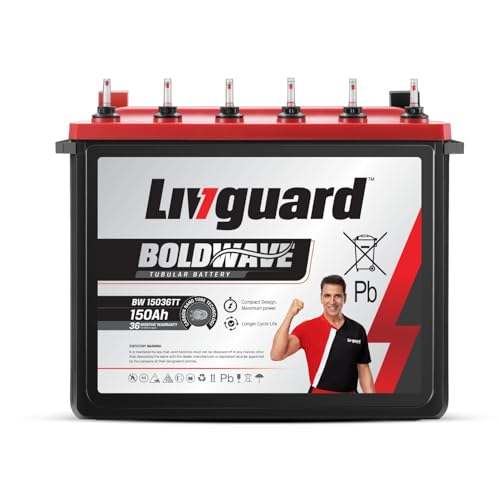
Livguard Value Plus Bold 150Ah Tall Tubular

Exide INVA Master IMTT1500 150Ah Tall Tubular

Tata Green Switch-On 150Ah Tall Tubular
Inverter battery warranty compared
How the shortlist stacks up. Scroll sideways on mobile.
| WWCD Score | Product | Warranty | Key Feature | Price | Deal |
|---|---|---|---|---|---|
| 9.4/10 | Amaron AR150TT54 150Ah | 72 months | Zero maintenance | ₹13,995 | Check Price |
| 9.3/10 | Amaron AR200TT54 200Ah | 72 months | Best ₹/Ah ratio | ₹15,175 | Check Price |
| 9.2/10 | Exide IMTT1500 150Ah | 36 months | Deep discharge champ | ₹13,490 | Check Price |
| 9.1/10 | Luminous Red Charge 200Ah | 36 months | 6000+ service centers | ₹16,348 | Check Price |
| 9.0/10 | Tata Green Switch-On 150Ah | 72 months | Tata reliability | ₹13,150 | Check Price |
| 8.8/10 | Livguard Value Plus Bold 150Ah | 60 months | Best budget value | ₹11,199 | Check Price |

Inverter battery reviews: Ah, warranty and backup
Specs, the honest pros and cons, and who each one is for.
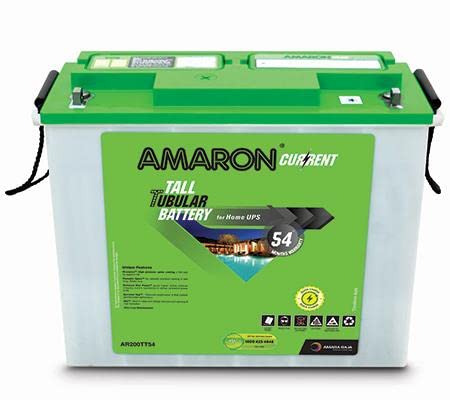
Amaron Current AR150TT54 150Ah Tall Tubular
- Capacity
- 150Ah
- Warranty
- 72 months (36+36)
- Type
- Tall Tubular
- Maintenance
- Zero maintenance
- Technology
- Silvenx Alloy
- Backup
- 4-6 hours
- Ideal for
- 2-3 BHK homes
The Amaron AR150TT54 sets the industry benchmark with its 72-month warranty - double the standard. The patented Silvenx alloy technology ensures longer lifespan and superior deep discharge handling. What truly makes it zero maintenance is the minimal water topping requirement (once every 4-6 weeks vs 2-3 weeks for competitors). Users in 2024-2025 report excellent performance in high power cut areas (8+ hours daily), with the battery maintaining capacity even after 2+ years. The fast recharge capability is a standout feature for areas with erratic power supply.
- + Industry-leading 72-month warranty
- + truly zero maintenance with minimal water topping
- + premium Silvenx alloy for longer lifespan
- + excellent deep discharge handling
- + fast recharge cycles
- + proven reliability in Indian conditions
- - Highest price in 150Ah segment
- - limited availability in Tier-3 cities
- - heavier than competitors
- - premium pricing may not suit budget buyers
Exide INVA Master IMTT1500 150Ah Tall Tubular
- Capacity
- 150Ah
- Warranty
- 36 months (18+18)
- Type
- Tall Tubular
- Maintenance
- Regular (every 2-3 weeks)
- Technology
- Hybrid Alloy
- Backup
- 4-6 hours
- Service Network
- 4500+ centers
Exide brings 75+ years of battery expertise to this INVA Master series. The special hybrid alloy technology is engineered specifically for Indian power conditions - frequent deep discharges and irregular charging cycles. What sets it apart is the factory charged design - you can install and use it immediately without pre-charging. 2024-2025 buyer reviews highlight its exceptional deep cycle performance, maintaining capacity even after daily 100% discharge cycles. The battery excels in extreme climates, with proven performance from Kashmir's sub-zero winters to Rajasthan's 50°C summers. Exide's massive service network (4500+ centers) ensures warranty claims and service are hassle-free across India.
- + Trusted Exide brand with 75+ year legacy
- + excellent deep cycle performance
- + factory charged for immediate use
- + superior deep discharge handling
- + wide service network (4500+ centers)
- + proven in extreme Indian climates
- - Requires regular water topping every 2-3 weeks
- - customer service quality varies by region
- - slightly lower backup compared to Amaron in tests
- - heavier weight (60+ kg)
Tata Green Switch-On 150Ah Tall Tubular
- Capacity
- 150Ah
- Warranty
- 72 months (36+36)
- Type
- Tall Tubular
- Grid Design
- Advanced technology
- Electrolyte
- High reserve
- Backup
- 4-6 hours
- Service
- Tata Motors network
The Tata brand name carries significant weight in India, and this battery lives up to that legacy. What makes it remarkable is the 72-month warranty at ₹13,150 - matching Amaron's industry-leading coverage at ₹845 less. The advanced grid design technology ensures even current distribution, reducing hot spots that typically cause premature battery failure. The high electrolyte reserve means longer intervals between water top-ups. Early adopters from 2024-2025 report excellent build quality and consistent performance in frequent power cut scenarios. Being backed by Tata Motors' service infrastructure provides peace of mind, especially for warranty claims. While it's a newer player in the battery market (launched 2022), the Tata Group's manufacturing excellence is evident.
- + Tata brand trust and quality
- + 72-month warranty matching Amaron at lower price
- + growing service network backed by Tata Motors
- + good build quality
- + competitive pricing with premium warranty
- + works well in high temperatures
- - Newer player in battery market (limited long-term data)
- - service network still expanding compared to legacy brands
- - fewer customer reviews available
- - availability may vary by region
Livguard Value Plus Bold 150Ah Tall Tubular
- Capacity
- 150Ah
- Warranty
- 60 months (30+30)
- Type
- Tall Tubular
- Technology
- IT Titan
- Grid
- Heavy duty design
- Temp Range
- Up to 55°C
- Price/Warranty
- Best value
The standout feature is the price-to-value ratio - at ₹11,199, it's ₹2,796 cheaper than Amaron while offering a respectable 60-month (30+30) warranty. The IT Titan technology (Livguard's proprietary alloy formula) delivers competitive performance in the budget segment. What impresses in 2024-2025 reviews is the extreme temperature tolerance - rated up to 55°C, making it ideal for hot Indian summers. The extra electrolyte reserve and heavy-duty grid design ensure good longevity despite the budget pricing. Livguard has been rapidly expanding its service network (now 2000+ centers), improving from earlier concerns. For budget-conscious buyers, this offers 80% of premium battery performance at 60% of the cost.
- + Best value for money - ₹2,800 less than Amaron
- + excellent 60-month warranty in budget segment
- + strong 2024-2025 performance reviews
- + works well in extreme heat
- + growing service network
- + competitive specifications
- - Newer brand compared to Exide/Amaron (established 2011)
- - service network still expanding
- - limited long-term reliability data
- - some reports of premature capacity degradation in specific regions
Amaron Current AR200TT54 200Ah Tall Tubular
- Capacity
- 200Ah (+33% vs 150Ah)
- Warranty
- 72 months (36+36)
- Type
- Tall Tubular
- Maintenance
- Zero maintenance
- Technology
- Premium Silvenx
- Backup
- 6-8 hours
- Ideal for
- 4+ BHK homes
The standout value proposition: only ₹1,176 more than the cheapest 150Ah battery for 33% more capacity. This is the best ₹/Ah ratio in our entire review. With 200Ah, you can power high-load appliances - refrigerator, 4-5 fans, multiple lights, TV, Wi-Fi router - for 6-8 hours comfortably. The same premium Silvenx alloy technology and 72-month warranty as the AR150TT54, just with larger capacity. Perfect for the increasing trend of work-from-home setups requiring uninterrupted power for extended periods. 2024-2025 buyers report excellent performance running refrigerators during power cuts - a game-changer for food preservation. The battery handles high loads better than two 100Ah batteries in parallel, with simpler installation and maintenance.
- + Best ₹/Ah ratio - only ₹1,180 more than cheapest 150Ah for 33% more capacity
- + industry-leading 72-month warranty
- + zero maintenance convenience
- + ideal for high loads (refrigerator + fans + lights)
- + excellent for 8+ hour power cuts
- - Very heavy (75+ kg) - difficult to move
- - requires high capacity inverter (1400VA+)
- - higher water consumption when topping needed
- - premium price point
Luminous Red Charge RC 25000 200Ah Tall Tubular
- Capacity
- 200Ah
- Warranty
- 36 months (18+18)
- Type
- Tall Tubular
- Plates
- Extra heavy-duty
- Load
- High applications
- Backup
- 8-10 hours
- Service
- 6000+ centers
Luminous is the market leader in inverter batteries with decades of proven reliability. The RC 25000's biggest advantage is the widest service network in India - 6000+ centers - critical for warranty claims and service in remote areas. The extra heavy-duty plates are designed for extreme power cuts (10+ hours daily), making it ideal for tier-2/3 cities with unreliable grids. What buyers appreciate in 2024-2025 reviews is the consistent performance over years - many report 5+ year usage with minimal degradation. The brand reputation means high resale value if you upgrade. While pricier than Amaron's 200Ah and with shorter warranty, the unmatched service accessibility justifies the premium for many buyers, especially in smaller towns.
- + Widest service network in India (6000+ centers)
- + best for remote areas where other brand service is limited
- + market leader for decades with proven reliability
- + excellent for extended power cuts (10+ hours)
- + strong brand reputation
- - More expensive than Amaron 200Ah by ₹1,173
- - lower warranty (36 months vs 72 months)
- - very heavy (75+ kg)
- - requires regular maintenance
- - higher upfront cost
Which inverter battery to buy
Here is who each pick is for, based on the comparison above.
Amaron Current AR150TT54 150Ah Tall Tubular · ₹13,995
72M warranty, zero maintenance
Check Price on Amazon →Livguard Value Plus Bold 150Ah Tall Tubular · ₹11,199
₹11,199 only, 60M warranty
Check Price on Amazon →Exide INVA Master IMTT1500 150Ah Tall Tubular · ₹13,490
75+ year legacy, deep cycle
Check Price on Amazon →Tata Green Switch-On 150Ah Tall Tubular · ₹13,150
72M warranty, Tata trust
Check Price on Amazon →How to choose an inverter battery
-
Understanding Battery Capacity (Ah)
Ampere-hour (Ah) rating indicates battery capacity. For typical Indian homes: 100Ah suits 2-3 fans + lights for 3-4 hours; 150Ah handles 3-4 fans + lights + TV for 4-6 hours; 200Ah supports 4-5 fans + lights + TV + refrigerator for 6-8 hours. Calculate your load: total watts ÷ 12V × backup hours needed × 1.2 (safety factor) = required Ah. Higher Ah means longer backup but also higher cost and weight. Our research shows 200Ah offers best ₹/Ah value when stepping up from 150Ah. -
Tall Tubular vs Flat Plate Batteries
Tall Tubular batteries are the gold standard for home inverters. They offer 20-30% more backup than flat plate, handle 1000+ deep discharge cycles, last 5-8 years with proper maintenance, and work better in high power cut areas. Flat plate batteries are cheaper but last only 3-4 years and degrade faster with frequent cycling. Always choose tall tubular for home use - the extra cost is worth it for longevity and performance. All 6 batteries in our review are tall tubular design. -
Warranty Decoded: 72-Month vs 36-Month
Most warranties are split: first half is full replacement (if battery fails, you get new one free), second half is pro-rata (you pay proportional to remaining warranty period). A "36-month (18+18)" warranty means 18 months full replacement + 18 months pro-rata. Amaron and Tata offer 72 months (36+36) - best in category at double the industry standard. This represents significant long-term value. Keep purchase invoice and warranty card safe. Register warranty online for hassle-free claims. -
Battery Size vs Inverter Compatibility
Match battery capacity to inverter VA rating: 600-800VA inverter: 100-120Ah battery; 900-1100VA inverter: 120-150Ah battery; 1400-1600VA inverter: 150-200Ah battery; 2000VA+ inverter: 200Ah or battery bank. Mismatched pairing reduces efficiency and battery life. Higher Ah with lower VA inverter underutilizes capacity. Lower Ah with higher VA inverter causes deep discharge damage. Check your inverter specifications before purchasing. -
Zero Maintenance vs Regular Maintenance
All lead-acid batteries need some maintenance. "Zero maintenance" batteries like Amaron need water topping every 4-6 weeks instead of 2-3 weeks. Regular maintenance batteries require: checking water level bi-weekly, using only distilled water, keeping terminals clean with petroleum jelly, ensuring proper ventilation, avoiding complete discharge. Both types last equally long with proper care, but zero maintenance offers convenience for busy households. -
Brand Service Network Matters
Luminous: Best nationwide service network (6000+ centers), critical for warranty claims in remote areas. Exide: Strong legacy network (4500+ centers), 75+ year presence in India. Amaron: Growing network (3000+ centers), reliable products need less servicing. Livguard: Expanding network (2000+ growing), newer but improving. Tata: Backed by Tata Motors network. Consider local service availability when choosing, especially in Tier-2/3 cities.
Frequently asked questions
Which is the best inverter battery brand in India for home use?
Is 150Ah battery enough for home, or should I buy 200Ah?
What is the average lifespan of an inverter battery in India?
Do zero maintenance batteries really need no maintenance?
How to calculate what battery capacity (Ah) I need for my home?
What is the difference between 36-month and 72-month warranty?
Can I use a 200Ah battery with my 900VA inverter?
Which battery is better - Amaron or Exide?
Is Livguard battery reliable for long-term use?
Why are battery prices so different for same capacity?
What is the best inverter batteries in India?
You may also like
More guides and reviews to help you decide.
Best home inverters in India 2026 — Okaya, V-Guard, Exide, Microtek and Luminous pure sine wave models from 700VA to 1450VA compared on real specs.
Read more →Best stabilizer for 1.5 ton AC in India 2026. Compare V-Guard, Microtek & more with voltage range, warranty, and prices. Covers inverter and non-inverter ACs.
Read more →We analysed verified owner reviews of 20 desktop UPS units. The Artis Powersafe 2000VA LCD (₹10,299) wins with 1200W, a 140-300V AVR and 2-year warranty.
Read more →