
PRODUCT REVIEW
Best Inverters in India 2026
Best home inverters in India 2026 — Okaya, V-Guard, Exide, Microtek and Luminous pure sine wave models from 700VA to 1450VA compared on real specs.
 By Naveen Bhavnani
Updated
By Naveen Bhavnani
Updated
As an Amazon Associate we earn from qualifying purchases. We could also earn a fee through some links when you click on them.
Home inverter picks by VA rating
Already covered the winner above — here are the picks for specific needs.

V-Guard Prime 1150 Mili Inverter (1000VA/12V Pure Sine Wave)
Exide Star STAR12V900 Inverter (900VA/12V Pure Sine Wave)

Luminous NXG 1450e Solar Inverter (1100VA Pure Sine Wave)
Inverters compared on waveform
How the shortlist stacks up. Scroll sideways on mobile.
| WWCD Score | Product | VA | Waveform | Lithium | Warranty | Rating | Price | Deal |
|---|---|---|---|---|---|---|---|---|
| 9.3/10 | Okaya ATSW 1700 | 1450 VA | True/Pure Sine | Yes (LFP) | 36 months | 4.4★ (53) | ₹8,840 | Check Price |
| 9.2/10 | V-Guard Prime 1150 Mili | 1000 VA | Pure Sine | Multi-Ion & Lithium | 36 months | 4.2★ (1929) | ₹6,799 | Check Price |
| 9.1/10 | Exide Star STAR12V900 | 900 VA | Pure Sine | No | 42 months | 4.4★ (35) | ₹5,834 | Check Price |
| 9.0/10 | Microtek Luxe 1400 | 1100 VA | Pure Sine | No | 3 years | 4.2★ (140) | ₹7,949 | Check Price |
| 9.0/10 | Microtek vTURBO 1600 | ~1250 VA | Pure Sine | Yes — all types | 3 years | 4.0★ (2) | ₹8,589 | Check Price |
| 9.0/10 | Luminous NXG 1450e Solar | 1100 VA | Pure Sine | No | 36 months | 3.9★ (1260) | ₹9,149 | Check Price |
| 9.0/10 | Luminous Zelio+ 1100 | 900 VA | Pure Sine | No | 36 months | 4.1★ (10660) | ₹7,369 | Check Price |
| 8.9/10 | Luminous Eco Volt Neo 1050 | 900 VA | Pure Sine | No | 24 months | 4.0★ (430) | ₹6,099 | Check Price |
| 8.7/10 | Luminous Power Sine 800 | 700 VA | Pure Sine | No | 36 months | 3.9★ (1044) | ₹4,467 | Check Price |
| 8.5/10 | Microtek Super Power 900 | 800 VA | Square / Quasi-sine | No | 24 months | 4.2★ (768) | ₹5,390 | Check Price |



Home inverter reviews: VA, waveform and warranty
Specs, the honest pros and cons, and who each one is for.
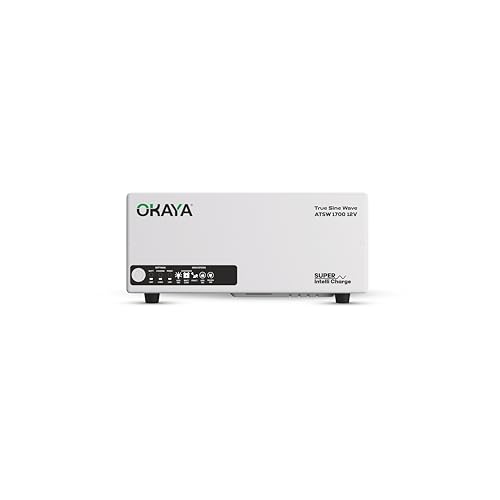
Okaya ATSW 1700 Inverter (1450VA/12V Pure Sine Wave)
The most capable pure-sine inverter here — runs a whole home without breaking a sweat.
- VA Rating
- 1450 VA
- Output Power
- 1160 W
- Battery
- 12V single battery
- Waveform
- True/Pure Sine Wave
- Lithium
- Yes (disable fast charge for LFP)
- Display
- LED status panel
- Warranty
- 36 months
- Weight
- 10.95 kg
With 1450VA/1160W of clean pure-sine power, lithium compatibility and the field's highest rating, the Okaya ATSW 1700 is the best all-round home inverter for medium-to-large homes. Its only caveats are a modest review count and the usual occasional DOA risk.
- + Highest rated in the field at 4.4★
- + best single-battery capacity here (1450VA/1160W)
- + true pure sine wave safe for sensitive electronics
- + works with lithium/LFP packs
- + compact light SMT/SMD build
- + full protection suite with auto-reset
- - Smaller review base (53) than mainstream rivals
- - one buyer received a defective unit
- - no dedicated surge protection noted
- - Okaya less familiar than Luminous/Microtek
V-Guard Prime 1150 Mili Inverter (1000VA/12V Pure Sine Wave)
The proven, lithium-ready value champion for the average Indian home.
- VA Rating
- 1000 VA
- Peak Load
- 800 W
- Battery
- 12V 80–230Ah single
- Waveform
- Pure Sine Wave
- Lithium
- Multi-Ion & Lithium compatible
- Charging
- Fast charge — flat/tubular/local
- Warranty
- 36 months
- Weight
- 9.4 kg
The V-Guard Prime 1150 pairs clean pure-sine output with the best battery flexibility in the field — including lithium — at a keen ₹6,799. With nearly 2,000 ratings behind it, it's the safest mainstream pick; just be ready for a loud status beep.
- + Huge proven track record of 1929 ratings at 4.2★
- + widest battery support from lead-acid 80–230Ah to Multi-Ion & lithium
- + fast charging with selectable battery modes
- + compact and light at 9.4 kg
- + excellent value at ₹6799 with a 3-year warranty
- + many owners report 2.5+ years trouble-free
- - Loud persistent beep/buzzer alarm annoys several users
- - a few warranty-term disputes (3-year claim vs 2 honoured)
- - manual sometimes missing and battery cables short
- - isolated reports of charging stopping after months
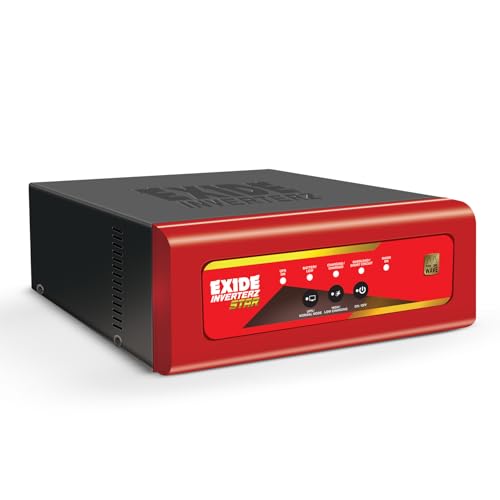
Exide Star STAR12V900 Inverter (900VA/12V Pure Sine Wave)
Exide reliability and the longest warranty here, for a 1–2BHK home.
- VA Rating
- 900 VA
- Battery
- 12V 135–150Ah recommended
- Waveform
- Pure Sine Wave
- Technology
- PLEX
- Display
- LED
- Protections
- Overload + thermal reset + bypass
- Warranty
- 42 months (36 + 6 on registration)
- Weight
- 9.5 kg
For a 1–2BHK home that wants a silent, appliance-safe pure-sine inverter from a trusted name, the Exide Star 900 is hard to beat — 4.4★, genuinely quiet, and a 42-month warranty no rival matches.
- + Longest warranty in the field at 42 months with registration
- + backed by Exide — India's most trusted battery name
- + confirmed silent operation with clean pure sine output
- + manual bypass switch for emergencies
- + strong value at ₹5834 for a 1–2BHK home
- + handles fans/lights/TV and a fridge on one unit
- - Newer listing with a small review base (35)
- - real continuous output suits lighter loads (~650W effective)
- - a couple of first-use failures reported
- - occasional packaging concerns on delivery
Microtek Luxe 1400 Pure Sine Wave Inverter (1100VA/825W)
A modern 1100VA pure-sine workhorse with a 3-year warranty.
- VA Rating
- 1100 VA
- Output Power
- 825 W
- Battery
- 12V single battery
- Waveform
- Pure Sine Wave
- Charging
- Turbo charging
- Display
- LED
- Warranty
- 3 years
- Weight
- 9.63 kg
The Microtek Luxe 1400 offers a bit more capacity than the 900VA crowd, clean pure-sine output and a long warranty. It's a strong mid pick — just inspect it carefully on delivery, as packaging-damage complaints are common.
- + Extra headroom at 1100VA/825W over typical 900VA units
- + clean appliance-safe pure sine wave
- + handles momentary overloads gracefully per owners
- + 3-year warranty from an established brand
- + modern compact design
- + multiple reports of 2+ years trouble-free use
- - Frequent complaints of units arriving damaged from poor packaging
- - display omits battery voltage and charging current
- - occasional humming under load
- - no explicit lithium-battery support
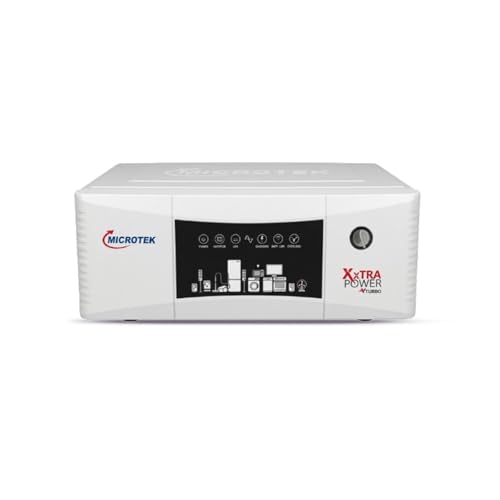
Microtek XXtra Power vTURBO 1600 Pure Sine Wave Inverter
Feature-rich and lithium-ready — if you're comfortable being an early adopter.
- VA Rating
- ~1250 VA (1600 model name)
- Output Power
- ~1000 W
- Battery
- 12V single battery
- Waveform
- Pure Sine Wave
- Lithium
- Yes — all battery types
- Protections
- Inbuilt MCB + bypass switch
- Warranty
- 3 years
- Weight
- 10.34 kg
The vTURBO 1600 packs lithium support, an inbuilt MCB and a bypass switch that few rivals offer. But with just two reviews and a model name that overstates its VA, it's a promising-but-unproven pick best for buyers who value features over a long track record.
- + Lithium and all-battery-type support with selectable charging currents
- + clean pure sine wave output
- + inbuilt MCB and bypass switch rare at this price
- + good real-world capacity (~1250VA/1000W)
- + 3-year Microtek warranty
- - Only 2 India reviews so reliability is unvalidated
- - misleading model name (1600 is not the VA rating)
- - newer model with limited feedback
- - heavier unit at 10.34 kg
Luminous NXG 1450e Solar Inverter (1100VA Pure Sine Wave)
The pick for homes planning to add solar panels.
- VA Rating
- 1100 VA
- Battery
- 12V
- Waveform
- Pure Sine Wave
- Solar
- Solar-ready (ISOT load sharing)
- Display
- LCD
- Warranty
- 36 months
- Weight
- 14.6 kg
If you have or plan to add solar, the NXG 1450e is the obvious choice — it charges from both panels and grid with clean pure-sine output. Buy from a reliable seller, though: used/repackaged-unit complaints are the main blemish on its record.
- + Solar-ready — charges from panels and grid via ISOT technology
- + large proven review base of 1260 ratings
- + pure sine wave 1100VA for typical homes
- + intelligent load sharing with an informative LCD
- + responsive Luminous service in some cases
- + 36-month warranty
- - Recurring complaints of used/repackaged units with broken seals
- - slightly noisy in operation
- - ~15-second changeover lag reported by some
- - heaviest unit here at 14.6 kg
- - 3.9★ rating trails the field's best
Luminous Zelio+ 1100 Pure Sine Wave Inverter (900VA/12V)
The safe, time-tested default that millions of Indian homes already trust.
- VA Rating
- 900 VA
- Output Power
- 756 W
- Battery
- 12V up to 150Ah
- Waveform
- Pure Sine Wave
- Display
- Smart LCD
- Warranty
- 36 months
- Weight
- 10.65 kg
The Zelio+ 1100 is the inverter everyone's neighbour owns — clean pure-sine power, a smart display and an unmatched track record. It's not the highest capacity, and after-sales can be hit-or-miss, but for a no-surprises 1–2BHK pick it's the benchmark.
- + By far the most proven model with 10660 ratings at 4.1★
- + reports of 5+ years of reliable service
- + clean pure sine wave output
- + smart LCD display with intuitive indicators
- + backed by Luminous's wide service network
- + 36-month warranty
- - Mixed after-sales experiences with slow technicians and service charges
- - audible hum when grid power returns on some units
- - 900VA/756W limits heavier simultaneous loads
- - occasional early failures reported
Luminous Eco Volt Neo 1050 Pure Sine Wave Inverter (900VA/12V)
A sleek, affordable pure-sine inverter for the everyday home.
- VA Rating
- 900 VA
- Output Power
- 756 W
- Battery
- 12V up to 150Ah
- Waveform
- Pure Sine Wave
- Display
- LED
- Warranty
- 24 months
- Weight
- 9.5 kg
The Eco Volt Neo 1050 delivers clean Luminous pure-sine power in a compact, good-looking package for ₹6,099. It's a sensible budget-conscious pure-sine choice, with only minor noise and the occasional seller-quality complaint against it.
- + Clean pure sine wave at a low ₹6099
- + sleek compact and light at 9.5 kg
- + trusted Luminous brand and service network
- + good value for a 1–2BHK home
- + solid 4.0★ over 430 reviews
- - Audible noise while charging or under load
- - some buyers received used/scuffed units
- - shorter 24-month warranty than its siblings
- - basic display and feature set
Luminous Power Sine 800 Pure Sine Wave Inverter (700VA)
The cheapest way into clean pure-sine power for a small home.
- VA Rating
- 700 VA
- Output Power
- ~560 W
- Battery
- 12V single battery
- Waveform
- Pure Sine Wave
- Display
- LED
- Warranty
- 36 months
- Weight
- 7.5 kg
For a 1BHK or a light backup need (fans, lights, a TV, a router), the Power Sine 800 is the most affordable pure-sine option going. Just respect its 700VA ceiling — load it heavily and it will trip.
- + Cheapest pure-sine inverter here at ₹4467
- + clean appliance-safe pure sine output
- + very light and compact at 7.5 kg for easy wall-mounting
- + large review base of 1044 for a budget unit
- + 36-month warranty
- - Only 700VA/~560W so it overloads on heavier loads
- - not suitable for a fridge plus multiple high-draw appliances
- - some units arrive damaged
- - 3.9★ reflects capacity limits and QC variance
Microtek Super Power 900 Advanced Digital Inverter (800VA/12V)
A proven budget square-wave workhorse for basic backup.
- VA Rating
- 800 VA
- Battery
- 12V single battery
- Waveform
- Square / Quasi-sine
- Display
- Digital
- Warranty
- 24 months
- Weight
- 9.7 kg
The Super Power 900 is a dependable, well-loved budget inverter — but despite the 'pure sine' label, owners confirm it behaves like a square-wave unit (humming, slower fans). Fine for fans, lights and a TV; skip it if you need clean power for sensitive gear.
- + Hugely popular and proven at 4.2★ over 768 reviews
- + inexpensive and dependable for basic backup
- + durable Microtek build
- + digital display
- + good value at ₹5390
- - Effectively square/quasi-sine output despite the pure-sine listing (causes appliance hum and slows fans)
- - not ideal for sensitive electronics or inverter fridges
- - older design with a 24-month warranty
- - occasional units arrive damaged
Which home inverter to buy
After weighing capacity, output quality, battery flexibility, reliability and price, here is who each top pick is for.
Okaya ATSW 1700 · ₹8,840
Buy this for a 2–3BHK home that needs real headroom. It has the highest usable capacity here (1450VA/1160W), is lithium-ready and carries the field's top 4.4★ rating.
Check Price on Amazon →V-Guard Prime 1150 Mili · ₹6,799
The smart-money pick. Clean 1000VA pure sine, the widest battery and lithium support in this list and nearly 2,000 ratings behind it — just expect a loud status beep.
Check Price on Amazon →Exide Star STAR12V900 · ₹5,834
For a 1–2BHK home that wants brand trust and peace of mind: genuinely silent pure-sine output and the longest 42-month warranty here from India's most trusted battery name.
Check Price on Amazon →Luminous NXG 1450e Solar · ₹9,149
The obvious choice if you have or plan to add solar — it charges from both panels and grid via ISOT. Buy from a reputable seller and check the seal on arrival.
Check Price on Amazon →How to choose a home inverter
-
VA rating: match it to your real load
An inverter's VA rating tells you how much load it can carry, but the usable wattage is lower (power factor ~0.7–0.8). A 900VA unit delivers roughly 700–750W, a 1100VA around 825W, and a 1450VA about 1160W. Add up your backup load — each fan ~70–80W, LED bulb ~10W, tube light ~20W, LED TV ~80–120W, inverter fridge ~150–250W running. For a 1BHK with fans, lights and a TV, 700–900VA is enough. For a 2–3BHK that also backs up a fridge, choose 1000–1450VA. Always leave 20–30% headroom so the inverter isn't running at its limit. -
Pure sine wave vs square wave — why it matters
Pure sine wave inverters reproduce the clean, smooth power your grid supplies and are safe for everything: fridges, computers, routers, medical devices and modern LED TVs. Square (or 'quasi/modified') wave inverters are cheaper but produce a choppier output that makes fans hum, can slow motors and stresses sensitive electronics. Watch out for listings that say 'pure sine' but behave like square wave — the Microtek Super Power 900 is a known example. For any home with electronics worth protecting, pay the small premium for a genuine pure sine wave unit. -
Battery compatibility and lithium-readiness
Most home inverters run on a single 12V lead-acid battery (flat-plate or tall tubular, typically 120–200Ah). Higher-capacity models (1500VA+) may need two batteries (24V) — a bigger upfront cost and footprint. If you're considering a lithium (LFP) battery for longer life and zero maintenance, check the inverter explicitly supports it: the V-Guard Prime 1150, Okaya ATSW 1700 and Microtek vTURBO all do. With lithium, disable 'fast/turbo charge' unless the manual says otherwise. Remember the battery is almost always sold separately. -
Charging current and switchover time
A higher charging current refills your battery faster after a long cut, which matters in areas with frequent outages — look for selectable charging modes for flat/tubular/lithium batteries. Changeover (transfer) time is how quickly the inverter takes over when the grid fails; most home UPS units switch in 10–20 milliseconds, fine for fans and lights, though desktops without their own dedicated computer UPS may briefly blink. A few units have a noticeable lag or a hum on changeover (reported on some Luminous models) — check recent reviews. -
Protection, display and noise
Good inverters include overload, short-circuit, deep-discharge and over-temperature protection; an inbuilt MCB and a manual bypass switch (so you can power the house directly if the inverter fails) are valuable extras — the Microtek vTURBO and Exide Star include them. An LCD/LED display showing battery voltage, charge status and load helps you spot problems early. Finally, factor in noise: a persistent status beep (a common V-Guard complaint) or a transformer hum can be irritating in a bedroom, so read reviews for noise mentions. -
Warranty, brand and after-sales service
Inverters are long-term purchases, so warranty and service reach matter. Standard cover is 24–36 months; Exide's Star leads here with 42 months (with registration). Established brands — Luminous, Microtek, V-Guard, Exide, Okaya — have the widest service networks, which counts when something fails. After-sales experiences vary by city, so check for local service complaints. Also buy from a reputable seller: a recurring theme across listings is receiving used or repackaged units, so inspect the box seal and unit on delivery and report issues immediately.
Frequently asked questions
Which is the best home inverter in India in 2026?
What VA inverter do I need for a 2 BHK home?
Which battery should I buy with my inverter?
Can I run an air conditioner on a home inverter?
How do I know if my inverter battery needs replacement?
Is a solar inverter better than a regular home inverter?
Pure sine wave or square wave — which should I buy?
Can I use a lithium battery with these inverters?
What is changeover time and does it matter?
Why does my inverter hum or beep, and how do I avoid a used unit?
You may also like
More guides and reviews to help you decide.
We analysed verified owner reviews of 20 desktop UPS units. The Artis Powersafe 2000VA LCD (₹10,299) wins with 1200W, a 140-300V AVR and 2-year warranty.
Read more →Best stabilizer for 1.5 ton AC in India 2026. Compare V-Guard, Microtek & more with voltage range, warranty, and prices. Covers inverter and non-inverter ACs.
Read more →Find the best inverter battery in India 2026. Research-based reviews with detailed comparisons, prices, pros & cons to help you pick the right one.
Read more →